
Title: How to Build a Remote Team While Living the Digital Nomad Lifestyle
In a world that has witnessed a seismic shift towards remote work, the allure of the digital nomad lifestyle has never been stronger. Picture this: you’re lounging in a sun-drenched café in Bali, your laptop open, the faint sound of waves crashing in the distance, and the vibrant scents of local cuisine wafting through the air. While this may seem like a dream, it’s a reality for many who have embraced the freedom of remote work. However, for those looking to maintain a successful business from afar, the challenge lies not just in finding the perfect locale, but also in building and managing an effective remote team.
This article will guide you through the essentials of assembling a cohesive and motivated team, regardless of where your travels may take you. From leveraging technology to fostering communication, we’ll explore how you can empower your team to thrive in a remote environment while you continue to explore the world. Whether you’re a seasoned digital nomad or just starting to dip your toes into this new lifestyle, understanding the dynamics of remote team-building will ensure that your work-life balance remains as fulfilling as the adventures waiting just beyond your doorstep. Join us as we delve into the strategies that will enable you to cultivate a remote workforce while embracing the wanderlust that lies at the heart of being a digital nomad.
Crafting a Cohesive Team Culture Across Borders
Building a strong team culture among remote workers who often find themselves in different parts of the world requires intentionality and clear communication. To foster a sense of unity, consider organizing regular team check-ins, which can help in sharing updates and allowing team members to connect personally. Incorporating virtual team-building exercises can also play a crucial role in reinforcing interpersonal bonds. Here are some methods to strengthen your remote team’s culture:
- Hold weekly video calls to discuss both work and personal achievements.
- Encourage team members to share their local experiences, such as cuisine or customs.
- Implement a buddy system where new members are paired with seasoned employees to ease their transition.
Creating an inclusive environment also means respecting diverse cultural backgrounds, which can enrich the team’s overall dynamics. You might consider establishing a shared online platform for team members to showcase their unique traditions and holidays. This helps cultivate a sense of belonging and appreciation among the team. Below is a simple table illustrating how diversity can enhance team performance:
| Aspect | Benefit |
|---|---|
| Varied Perspectives | Diverse ideas lead to innovative solutions. |
| Enhanced Creativity | Mixing cultures sparks greater creativity. |
| Improved Problem Solving | Different backgrounds enhance decision-making. |

Essential Tools for Seamless Communication and Collaboration
In today’s interconnected world, leveraging the right tools can dramatically elevate your remote team’s productivity and cohesiveness. Essential communication platforms enable seamless interactions, making it easier to share ideas and updates instantaneously, regardless of your team’s geographical location. Consider incorporating tools such as Slack, which provides channels for specific topics, or Microsoft Teams, which combines chat, video, and file-sharing functionalities in one platform. Additionally, ensure your team is equipped with robust project management software like Trello or Asana, enabling clear task assignments and deadline tracking, thereby fostering accountability and progress.
Equally important are collaborative tools that enhance teamwork and creativity. Take advantage of platforms like Google Workspace for real-time collaboration on documents, spreadsheets, and presentations, ensuring everyone stays in sync. For brainstorming and visual collaboration, apps like Miro or MindMeister can help facilitate innovative processes, allowing your team to share their ideas visually. Introducing such tools will not only streamline workflows but also create a culture of open communication and shared goals, essential for a thriving remote team living the digital nomad lifestyle.
Navigating Time Zones: Strategies for Scheduling Success
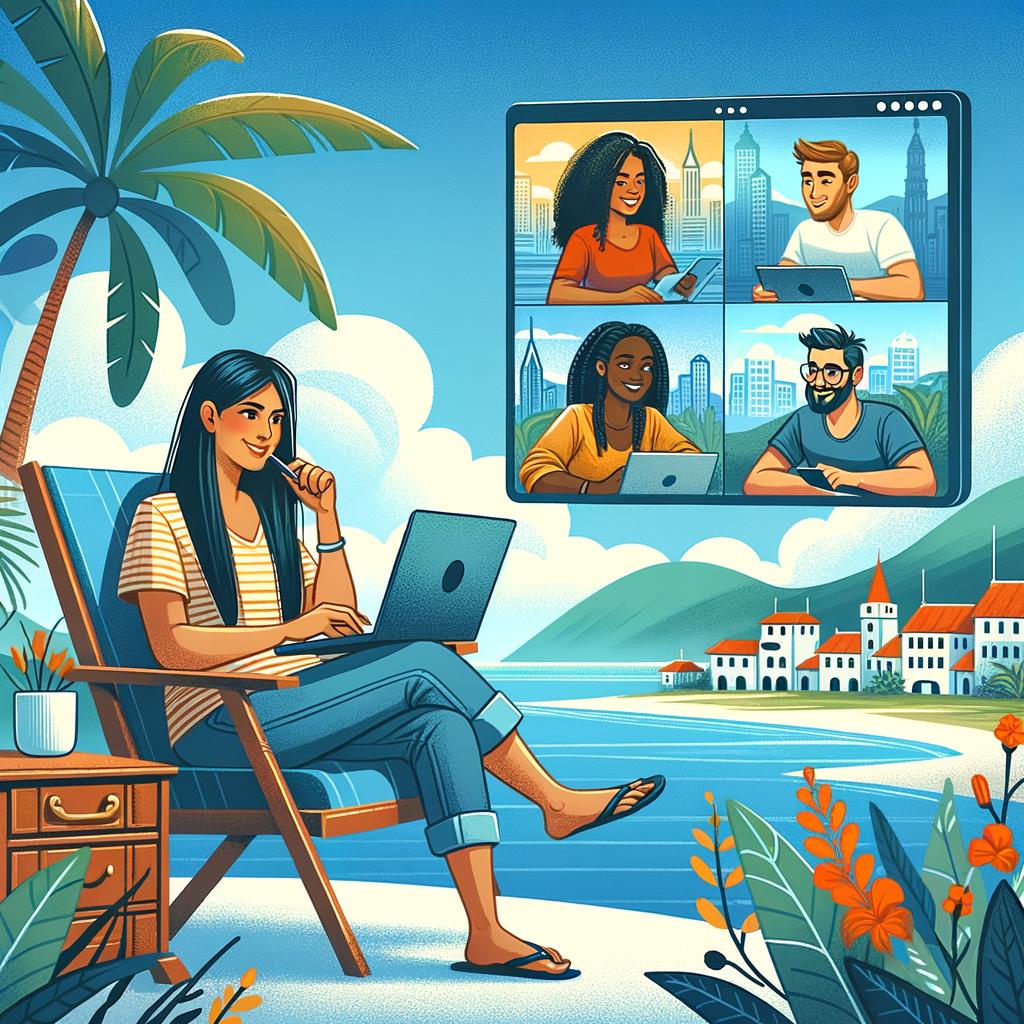
Successfully managing a remote team while embracing the digital nomad lifestyle requires a keen understanding of time zone differences. To streamline collaboration, consider implementing the following strategies:
- Use a Time Zone Tool: Leverage online tools like World Time Buddy or Time Zone Converter to visualize overlapping working hours.
- Establish Core Hours: Set specific times during the day when all team members are available for real-time communication or meetings.
- Rotate Meeting Times: To accommodate different time zones, alternate meeting schedules so that no single group is consistently burdened with inconvenient hours.
Additionally, maintaining a shared calendar can be invaluable. Consider creating a simple table to outline each team member’s working hours:
| Team Member | Location | Working Hours (UTC) |
|---|---|---|
| Alice | Bali, Indonesia | UTC +8: 12 PM – 8 PM |
| Jordan | Los Angeles, USA | UTC -7: 9 AM – 5 PM |
| Haruto | Tokyo, Japan | UTC +9: 1 PM – 9 PM |
This table can help your team visualize their schedules and identify the best times to connect, fostering a sense of unity and collaboration despite geographical distances.

Balancing Work and Adventure: Setting Boundaries as a Digital Nomad
As a digital nomad, the allure of working from exotic locations can easily lead to blurred lines between professional commitments and personal adventures. To truly thrive in this lifestyle, it is essential to establish boundaries that honor both work and exploration. Start by defining your work hours clearly; this enables you to allocate set times for productivity while leaving ample opportunities for adventure. Consider creating a daily schedule that includes:
- Focused Work Blocks: Designate specific hours for deep work with minimal distractions.
- Adventure Breaks: Plan short breaks for exploration or relaxation to rejuvenate your creativity.
- Weekly Reviews: Allocate time each week to assess your progress and adjust your plans as needed.
Additionally, leveraging technology can aid in maintaining these boundaries effectively. Utilize digital tools for seamless communication with your remote team while setting clear expectations around availability. A simple table can help outline team roles and times when they are reachable, fostering a collaborative atmosphere while still respecting individual spaces.
| Team Member | Role | Availability |
|---|---|---|
| Alice | Project Manager | Mon-Fri, 9 AM - 5 PM |
| Bob | Developer | Mon-Sat, 10 AM – 4 PM |
| Charlie | Designer | Wed-Sun, 11 AM – 3 PM |
Q&A
Q&A: How to Build a Remote Team While Living the Digital Nomad Lifestyle
Q1: What does it mean to live the digital nomad lifestyle, and how does it relate to building a remote team?
A1: Living the digital nomad lifestyle means having the freedom to travel while working remotely from anywhere in the world. This lifestyle inherently connects with building a remote team, as the essence of both is creating a flexible, distributed work environment that transcends traditional office boundaries. Building a remote team while embracing this lifestyle allows you to tap into global talent, leverage diverse perspectives, and maintain your wanderlust without sacrificing professional ambitions.
Q2: What are the first steps to take when trying to form a remote team?
A2: The first step in forming a remote team is defining your vision and goals. Ask yourself what skills and attributes you need in your team members. Next, create a comprehensive job description that reflects your team culture and expectations. Following this, leverage platforms like LinkedIn, remote job boards, or social media to find potential candidates who resonate with your objectives. Lastly, establish clear communication channels to facilitate collaboration from the get-go.
Q3: How can I ensure effective communication among team members located in different time zones?
A3: Effective communication in a remote team scattered across time zones requires deliberate planning. Use tools like Slack or Microsoft Teams for real-time communication, and employ project management software such as Trello or Asana to keep everyone aligned on tasks and deadlines. To address time zone challenges, encourage asynchronous communication; provide updates and feedback through recorded videos or written notes, so every team member can contribute when it suits them best.
Q4: What tools or technology do you recommend for managing a remote team?
A4: When it comes to managing a remote team, having the right tools is crucial for productivity and collaboration. Here are some essentials:
- Video Conferencing: Zoom or Google Meet for meetings and face-to-face interactions.
- Project Management: Asana, Trello, or ClickUp to track projects and tasks.
- Communication: Slack or Discord for daily chats and quick updates.
- File Sharing: Google Drive or Dropbox for easy access to documents and resources.
- Time Tracking: Toggl or Clockify to monitor hours worked, especially beneficial for freelancers.
Q5: How can I support my team members’ well-being while living a nomadic lifestyle?
A5: Supporting your team’s well-being is vital, especially as remote work can blur the lines between personal and professional life. Establish regular check-ins to discuss work progress and personal well-being. Foster an inclusive culture that encourages taking breaks and setting boundaries. Create virtual ‘watercooler’ moments or facilitate activities centered around team bonding and personal interests. Offering mental health resources or subscriptions to wellness apps can also demonstrate your commitment to their overall health.
Q6: What are the common challenges faced when building a remote team, and how can I overcome them?
A6: Common challenges include misunderstandings due to lack of face-to-face interaction, feelings of isolation, and difficulties in team cohesion. To overcome these, prioritize clarity in communication by practicing transparency in your messaging. Regularly engage in team-building activities, even if they are virtual, to foster relationships. Encourage feedback and be open to evolving your team dynamics as everyone grows together. Lastly, celebrate achievements—big or small—to build a sense of shared purpose, irrespective of distance.
Q7: what advice do you have for maintaining work-life balance as a digital nomad with a remote team?
A7: Maintaining work-life balance is vital for sustaining the digital nomad lifestyle. Set clear work hours that align with your productivity peaks but also enable personal exploration. Create a dedicated workspace, even if it’s a corner in a cozy café, to physically delineate work from leisure. Regularly evaluate your workload and adjust as needed to prevent burnout. Remember that it’s okay to unplug and embrace your surroundings—your adventures can also inspire creativity and innovation within your team.
Final Thoughts
crafting a successful remote team while embracing the digital nomad lifestyle is not just an aspiration—it’s an achievable reality for those willing to adapt and embrace the evolution of work. By leveraging technology, fostering open communication, and prioritizing trust and collaboration, you can build a team that transcends geographical barriers. As you navigate this exciting journey, remember that the essence of teamwork lies in shared values and connectedness, not just physical proximity. So, pack your bags, set your sights on a new horizon, and embark on this adventure knowing that a thriving remote team is just a few intentional steps away. The world is your office, and the possibilities are endless—happy nomading!