
Property ownership is a key part of the American dream. A property title is the legal document that proves you own a piece of land or personal property. Knowing about property titles is important for easy real estate deals and keeping your investments safe.
In this guide, we’ll cover why property titles matter, the different ways to own property, and how to transfer a title. Our goal is to help you understand property ownership better.
Understanding Property Titles and Their Legal Significance
Property titles are more than just papers. They are the legal basis for clear title, or undisputed ownership, of real estate. On the other hand, an encumbered title may have liens or claims that make ownership complicated. It’s vital to understand titles and the need for detailed title searches for anyone buying or selling property.
A property title is the official record of who owns the land. It proves property rights with documented evidence. This document details the property’s specifics, like address and boundaries. It also lists any restrictions or covenants that affect how the land can be used.
| Deed Type | Description |
|---|---|
| Grant Deed | A notarized and recorded deed that provides a “free and clear” transfer of ownership, free of any defects. |
| Warranty Deed | A deed that offers protection, warranting and defending the title against any claims. |
| Quitclaim Deed | A deed that releases an individual’s interest in a property without any promises or warranties. |
Doing a detailed title search is key in any real estate deal. It reveals any hidden problems or issues that could affect legal ownership. By grasping the importance of property titles, we can make better choices and safeguard our investments.
Types of Property Titles and Ownership Structures
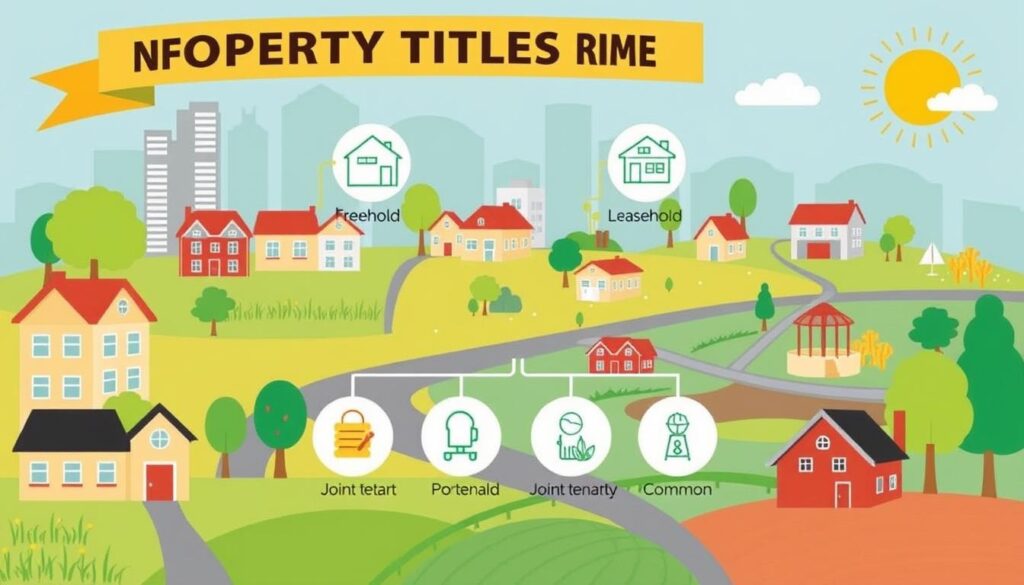
Understanding property rights can be complex. There are different types of property titles and ownership models. Let’s explore these to help you manage your assets better.
Personal Property Titles
Personal property titles cover movable assets like jewelry, stocks, and household items. These personal property titles show who owns what. It’s important to manage these titles well to protect your belongings and ensure smooth ownership transfers.
Real Property Titles
Real property titles deal with land, structures, and the air above. They outline the legal rights and duties of land ownership. Keeping real property titles accurate is key for successful land transactions and protecting your rights.
Vehicle Title Classifications
Vehicle titles have different classifications like clear, salvage, and reconstructed. Each type affects ownership, insurance, and resale value. Knowing these classifications helps when buying or selling a vehicle.
Understanding property titles and ownership structures is crucial. It helps protect your assets and ensures a secure financial future. Knowing about different titles and models empowers you to make informed decisions for your property needs.
Discover strategies to improve yourblog’s Google and enhance your online visibility.
| Property Title Type | Description | Key Considerations |
|---|---|---|
| Personal Property | Covers movable assets like jewelry, stocks, and household items | Protects ownership and enables smooth transfers |
| Real Property | Represents ownership of land, structures, and airspace | Serves as the foundation for real estate transactions and landowner rights |
| Vehicle Titles | Classifications include clear, salvage, and reconstructed titles | Impacts ownership, insurance, and resale value |
How to Transfer Property Title: Step-by-Step Guide
Understanding the title transfer process can be tough. But, with the right information, you can safeguard your property rights. This guide will help you through the key steps, from getting the right documents to recording the transfer.
- Gather Necessary Documents: Get the property deed and any other important papers like a title transfer form. Make sure all details are correct and current.
- Review Legal Requirements: Learn about the legal requirements for title transfers in your area. This includes things like notarization, fees, and forms. A lawyer can help make sure you follow all the rules.
- Complete the Transfer Process: You might need to give the property deed and other recording documents to the county or state office. Make sure to follow all instructions to avoid problems.
- Record the Transfer: After the transfer is done, make sure the new title is recorded. This protects your ownership transfer. Keep all documents safe for your records.
Knowing the title transfer process and how to avoid issues will help you protect your property rights. Stay alert and ask for help if you need it.
Common Title Issues and How to Avoid Them
Property transactions can face many challenges. Issues like undiscovered liens, boundary disputes, and errors in public records are common. A detailed title search is key to finding these problems and reducing risks.
Title Search Process
The title search process looks into the property’s history and legal documents. It helps find any title defects, liens, or encumbrances on the property. A thorough search can solve these issues before the sale is done.
Title Insurance Benefits
Title insurance protects against unexpected claims or disputes after the sale. It covers legal defense and financial losses from title issues. Getting title insurance helps manage the risks of owning property.
Knowing about common title issues and the role of title search and insurance helps us make smart choices. By tackling these problems early, we can ensure a safe and successful property deal.
Conclusion
As we wrap up our exploration of property titles and ownership rights, it’s clear that a clear title is key. It ensures secure and hassle-free property ownership. We’ve learned about different types of titles, the transfer process, and common issues.
This knowledge helps us confidently handle property transactions. It also helps us make smart choices that protect our valuable assets.
Understanding the legal importance of property titles is vital. It helps us protect our ownership rights and keep our investments safe. The best practices for title transfer we’ve discussed help us manage the process well.
By following these practices, we can avoid risks and ensure a smooth transfer of ownership.
As we look into more property opportunities, let’s use what we’ve learned. This will help us and our community make smart decisions. It will protect our property rights and help us reach our financial goals.
With a good grasp of title-related legal protections, we can confidently move towards personal and financial freedom.