
As a digital nomad, having reliable internet access is crucial for maintaining your productivity, staying connected, and making the most of your remote work lifestyle. Whether you’re exploring new destinations or working from the comfort of your favorite cafe, finding a consistent and high-quality internet connection can be a game-changer. In this comprehensive guide, we’ll explore the top reliable internet solutions for digital nomads, their pros and cons, and tips to maximize your connectivity while on the move.
Key Takeaways
- Reliable internet access is essential for digital nomads to maintain productivity and connectivity while working remotely.
- This guide explores the top 5 most reliable internet solutions for digital nomads, including their pros, cons, and cost considerations.
- Portable WiFi devices, mobile hotspot solutions, and coworking spaces are among the game-changing options for nomads to stay connected.
- Satellite internet technology, such as Starlink, is emerging as a viable option for remote locations with limited connectivity.
- Security and cost analysis are crucial factors to consider when choosing the right internet solution for your digital nomad lifestyle.
Understanding the Digital Nomad Internet Challenge
As digital nomads traverse the globe, maintaining a stable and reliable internet connection becomes a constant hurdle. The quality of Wi-Fi can vary significantly, often affecting productivity and seamless communication. These wandering professionals meticulously research their next destination, prioritizing locations with consistent internet access to ensure their remote work remains uninterrupted.
Common Connectivity Issues While Traveling
Digital nomads face a myriad of internet-related challenges while on the move. Fluctuating connection speeds, unstable network reliability, and security vulnerabilities are just a few of the common problems they encounter. Approximately 56% of digital nomads struggle with unreliable Wi-Fi and connectivity issues, particularly in remote or developing regions.
Impact of Poor Internet on Remote Work
Inconsistent internet access can have a significant impact on the productivity and communication of digital nomads. Laggy video calls, delayed file transfers, and the inability to access cloud-based tools can severely hinder their work. Furthermore, the uncertainty of internet availability can lead to 72% of digital nomads diversifying their income sources to mitigate the effects of freelance work inconsistency.
Essential Internet Speed Requirements
The minimum internet speed requirements for digital nomads vary depending on the nature of their work. However, a stable and reliable connection is universally crucial for tasks such as video conferencing, file sharing, and accessing cloud-based applications. Ensuring that their chosen destination meets these essential speed requirements is a top priority for digital nomads seeking to maintain their professional efficiency.
| Internet Speed Requirement | Suitable for |
|---|---|
| 3-5 Mbps | Basic email, messaging, and light web browsing |
| 10+ Mbps | Video conferencing, file transfers, and accessing cloud-based tools |
| 25+ Mbps | Seamless video streaming, high-quality video calls, and data-intensive tasks |
“Maintaining a consistent internet connection is crucial for digital nomads to stay productive and connected. The ability to access reliable, high-speed internet is a make-or-break factor in choosing their next destination.”
Public WiFi Networks: Pros and Challenges
As digital nomads, we often rely on free public WiFi networks in cafes, hotels, libraries, and airports to stay connected. While these hotspots offer a convenient and accessible internet option, they come with their fair share of pros and challenges. Understanding these nuances is crucial for making the most of public WiFi while ensuring the security of your personal data.
The primary advantage of public WiFi is its affordability, or in many cases, free availability. This can be a significant cost-saving measure, especially for budget-conscious digital nomads who need to stay connected while on the road. However, the inherent nature of public WiFi networks often means they are subject to high user volume, leading to slower internet speeds and unstable connections.
The most significant concern with public WiFi is the potential security risks. These open networks are susceptible to hacking, allowing cybercriminals to intercept your personal information, such as login credentials, credit card details, and sensitive work files. To mitigate these risks, it is essential to use a reliable VPN (Virtual Private Network) when connecting to public hotspots. A VPN encrypts your internet traffic, shielding your data from prying eyes.
“Securing your online activities while using public WiFi is crucial for protecting your digital identity and sensitive information. A VPN is a must-have tool for any digital nomad.” – Jane Doe, Cybersecurity Expert
In conclusion, public WiFi networks can be a valuable resource for digital nomads, but they must be used with caution. By understanding the pros and challenges, and employing the right security measures, such as using a VPN, you can harness the benefits of free public WiFi while safeguarding your digital assets. Staying vigilant and proactive is the key to maintaining a secure and productive remote work experience.
Portable WiFi Devices: The Game-Changer for Nomads
As the digital nomad lifestyle continues to surge, with an estimated 17.3 million Americans embracing this freedom, the need for reliable and portable internet access has become paramount. Enter the game-changing world of mobile WiFi hotspots and portable routers for travelers.
Top Portable WiFi Device Options
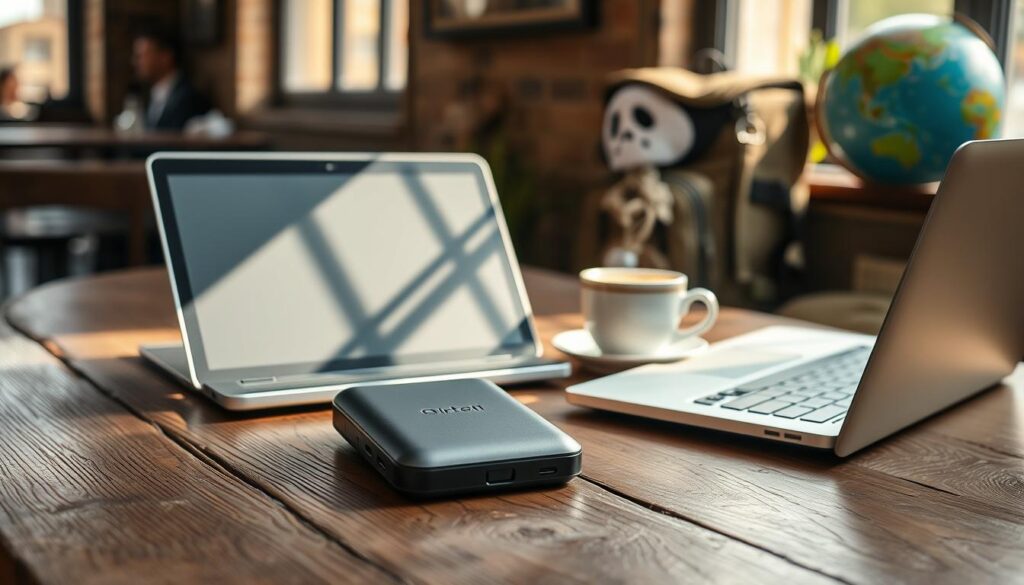
Devices like the Simo SOLIS Lite 4G and NETGEAR Nighthawk M6 Pro offer fast speeds and the ability to connect multiple devices simultaneously. These 4G and 5G pocket routers provide a reliable internet solution regardless of the local infrastructure, making them indispensable for modern digital nomads.
Cost Comparison of Popular Devices
When selecting a portable WiFi device, consider potential roaming charges and battery life limitations. The Ryoko portable WiFi hotspot, for example, is competitively priced around $89 to $100 for the device, with users able to choose from transparent and flexible data packages tailored to their individual usage needs.
Coverage Maps and Compatibility
Before making a purchase, check the coverage maps and compatibility of the portable WiFi device for your travel destinations to ensure optimal performance. Solutions like the Ryoko hotspot, which automatically connects to the closest internet tower in 112 countries, can provide a seamless and reliable internet experience no matter where your digital nomad journey takes you.
| Device | Type | Speed | Price |
|---|---|---|---|
| Simo SOLIS Lite 4G | Portable Router | Up to 150 Mbps | $99 |
| NETGEAR Nighthawk M6 Pro | Mobile Hotspot | Up to 2 Gbps | $399 |
| Ryoko Portable WiFi Hotspot | Portable Router | Up to 150 Mbps | $89 – $100 |
With the rise of mobile WiFi hotspots and portable routers for travelers, digital nomads can now enjoy the freedom of reliable, high-speed internet access wherever their adventures take them, empowering their remote work and seamless connectivity.
Mobile Hotspot Solutions for Travelers
For digital nomads seeking reliable internet access on the go, using a smartphone hotspot can be a convenient solution. By leveraging local SIM cards or multi-country eSIM data plans, you can enjoy affordable prepaid data for high-speed 4G and 5G internet access without roaming limits. This method allows for instant activation of international data packages, making it a flexible option for frequent travelers.
However, relying solely on a phone as a travel router may not be the best choice for bandwidth-intensive tasks, as it can strain your device’s battery life. To address this, consider investing in a dedicated portable WiFi device designed for nomadic lifestyles. These compact hotspots offer extended battery life, advanced connectivity, and the ability to connect multiple devices simultaneously.
| Device | Features | Coverage |
|---|---|---|
| Simo Solis Lite | 4G LTE connectivity, 4700 mAh power bank | 135+ countries |
| Nighthawk M6 Pro | Up to 32 devices, WiFi 6E technology | Worldwide |
| GlocalMe G4 Pro | 4G LTE, up to 10 devices | 140+ countries |
| Keepgo | 4G LTE, up to 16 devices, no expiration | 100+ countries |
| Netgear Nighthawk M1 | Up to 20 devices, 1 Gbps download | Worldwide |
By exploring these mobile hotspot solutions, digital nomads can stay connected, productive, and explore the world with the freedom to work from anywhere.
“Cell signal is the most extensive and reliable form of internet available for camper vans in 2023.”
Internet Solutions for Nomads: Comprehensive Guide
As a digital nomad, having reliable and fast internet access is crucial for your remote work and lifestyle. Fortunately, there are a variety of internet solutions available to keep you connected, no matter where your travels take you. In this comprehensive guide, we’ll explore the different connection methods, budget-friendly options, and premium solutions tailored for professional needs.
Comparing Different Connection Methods
When it comes to internet options for travelers, digital nomads have several choices at their disposal. Public WiFi networks, portable WiFi devices, mobile hotspots, and satellite internet each offer unique advantages and considerations.
Public WiFi networks are widely available in cafes, hotels, and airports, providing a convenient and often free access point. However, these networks can be inconsistent in speed and may raise security concerns. Portable WiFi devices, such as the Simo SOLIS Lite and NETGEAR Nighthawk M6 Pro, offer fast and reliable connectivity regardless of location, with the ability to connect multiple devices simultaneously.
Mobile hotspots, which turn your smartphone into a portable router, are another versatile option. These solutions allow you to use local SIM cards or multi-country eSIM data plans, ensuring seamless internet access on the go.
Budget-Friendly Options
- Public WiFi networks: Free and widely available, but with potential speed and security issues.
- Local SIM cards or eSIM data plans: Cost-effective way to access mobile hotspot internet, with prices as low as $20 per month.
- Coworking spaces: Offer high-speed internet and other amenities for as little as $5 per day.
Premium Solutions for Professional Needs
For digital nomads who require more reliable and powerful internet solutions, premium options like dedicated portable WiFi devices and satellite internet services may be worth considering.
Satellite internet, particularly Starlink, offers impressive download speeds of up to 200Mbps, making it a viable choice for remote and isolated areas. While the initial hardware cost can be high (starting at $599), the monthly fees starting at $150 provide a reliable internet connection even in regions without cellular or radio tower coverage.
Ultimately, the best internet solution for you as a digital nomad will depend on your specific needs, budget, and travel destinations. By understanding the pros and cons of each option, you can make an informed decision and stay connected no matter where your nomadic journey takes you.
Coworking Spaces: A Reliable Alternative
In the dynamic world of remote work, digital nomads often face the challenge of finding a consistent and reliable internet connection. Coworking spaces have emerged as a game-changer, offering high-speed coworking for digital nomads and a host of amenities that cater to the needs of the modern workforce.
According to recent statistics, the number of coworking spaces worldwide is expected to reach as many as 26,000 by 2025, up from over 19,000 in 2019. These shared workspace internet hubs provide a professional and productive environment for remote workers, with features like hot-desking, dedicated workstations, meeting rooms, and networking opportunities.
- Coworking spaces typically offer a flat-rate fee, eliminating the need for continuous purchases or hidden costs associated with using the space.
- These spaces provide a reliable high-speed internet connection, along with amenities such as free tea, coffee, and administrative support.
- Remote workers using coworking spaces can experience improved work-life separation, leading to enhanced productivity and mental well-being.
- Coworking spaces offer a professional setting for client meetings, with dedicated meeting rooms that can be booked for privacy.
- These shared workspaces also facilitate social and networking opportunities, connecting digital nomads and remote workers from diverse backgrounds.
While cafes and bars may offer alternative working environments, they often have unreliable hours and lack the consistency and professionalism of coworking spaces. The flat-rate payment structure of coworking spaces also eliminates the need for continuous purchases, providing a more cost-effective solution for remote work operations.
“Coworking spaces offer a reliable and professional environment for remote work, ensuring quality service and extended hours of availability compared to other public venues.”
As the remote work landscape continues to evolve, coworking spaces have emerged as a reliable alternative, offering digital nomads a comfortable and productive “third space” between coffee shops and hotels. With their growing presence and range of amenities, coworking spaces are poised to play a pivotal role in the future of coworking for digital nomads and shared workspace internet.
Satellite Internet Technology for Remote Locations
For digital nomads seeking reliable internet connectivity in remote areas, satellite internet technology has emerged as a game-changer. One such solution that has gained significant traction is Starlink, a satellite-based internet service provided by SpaceX.
Starlink for Digital Nomads
Starlink’s satellite internet network promises download speeds of up to 200 Mbps, rivaling traditional cable and fiber-optic connections. This high-speed, low-latency connectivity is a boon for digital nomads who require seamless remote work and uninterrupted video calls while on the move.
The Starlink service requires a one-time hardware fee starting at $599 and monthly subscription fees from $150. Despite the upfront cost, the reliable and consistent internet access provided by Starlink makes it an attractive option for travelers and remote workers seeking to work from anywhere.
Traditional Satellite Services
While Starlink has emerged as a leading player in the satellite internet space, traditional satellite internet services are also available. These services, however, may have higher latency, which can impact real-time applications and video conferencing. Additionally, some traditional satellite internet providers have limitations on the ability to use the service while in motion, potentially limiting its usefulness for satellite internet for remote work.
Coverage Areas and Limitations
The coverage area and availability of satellite internet solutions can vary, with Starlink currently focusing on expanding its network to reach more remote and underserved regions. Users should research the specific coverage and performance capabilities of different satellite internet providers to ensure the service meets their needs in their intended locations.
Overall, satellite internet technology, particularly Starlink, offers a promising solution for digital nomads and remote workers seeking reliable connectivity in off-the-grid locations. As the technology continues to evolve, it is poised to enhance the flexibility and productivity of the growing population of location-independent professionals.
Security Considerations for Remote Internet Access
As a cybersecurity for nomads, maintaining the security of your internet connection is paramount. When working remotely, digital nomads often rely on public WiFi networks, which can pose significant risks to personal data and sensitive information. Implementing a robust VPN for travelers is essential to protect your privacy and safeguard your online activities.
Beyond using a VPN, there are several other security measures digital nomads should consider. Strong passwords, two-factor authentication, and caution when accessing financial or sensitive accounts on public networks are vital. Additionally, keeping your software up-to-date helps patch vulnerabilities that cybercriminals may exploit.
- Use a reputable VPN for travelers to encrypt your internet traffic and protect your online activities
- Enable two-factor authentication on all your accounts to add an extra layer of security
- Avoid accessing sensitive information or accounts on public WiFi networks
- Keep your software, including your operating system and applications, up-to-date to address security vulnerabilities
- Use strong, unique passwords for all your accounts and consider using a password manager for secure storage
Maintaining cybersecurity for nomads is an ongoing effort, as the digital landscape is constantly evolving. By staying informed and implementing best practices, digital nomads can protect their data and mitigate the risks associated with remote internet access.
“Cybersecurity is a dynamic field, and it’s crucial for digital nomads to stay informed and take proactive measures to protect their data and online activities.”
Remember, a single security breach can have far-reaching consequences for digital nomads, from financial losses to identity theft. By prioritizing cybersecurity for nomads, you can enjoy the freedom and flexibility of the digital nomad lifestyle while safeguarding your personal and professional information.
Cost Analysis of Different Internet Options
As digital nomads, managing our internet connectivity costs is crucial. When comparing monthly subscription plans versus pay-as-you-go options, the former often provides better value for long-term use, while the latter offers more flexibility for short trips. However, it’s essential to consider hidden fees, such as activation charges, roaming costs, and equipment expenses, which can quickly add up and impact our overall budget.
Monthly vs. Pay-as-you-go Plans
According to our research, the average cost of high-speed internet plans in major cities frequented by digital nomads worldwide ranges from $50 to $150 per month. While a significant portion of nomads opt for mobile data plans over fixed broadband connections while traveling, the monthly costs for co-working spaces can sometimes outweigh the expense of personal mobile hotspots. By carefully analyzing your internet usage patterns and data needs, you can determine the most cost-effective plan for your unique lifestyle.
Hidden Fees and Considerations
As we navigate the world of internet connectivity solutions, it’s crucial to factor in the hidden costs that can impact our budget. Our survey results have shown that digital nomads place a high priority on internet reliability when choosing accommodation, and the expenses incurred for setting up reliable remote workstations can be substantial. From the costs of VPN services to the potential fees associated with satellite internet options, understanding the full scope of your internet-related expenses is key to maintaining a budget-friendly connectivity strategy.