Travel is the only thing you buy that makes you richer. But how do you afford it? Many of us trade 40-hour work weeks for stuff we don’t need, trapping us in cycles of debt and obligation. With John Spencer Ellis, you can fast-track to minimalist travel strategies that turn your life around. Imagine trading a mortgage for a $12-a-night bed in Asia, where $27 a day buys comfort and freedom. We’ve seen travelers thrive by owning only what fits in a 70-liter backpack—proving that less truly means more.
Consider this: one traveler spent a year exploring the world with just a cellphone and a juicer as their only expensive purchases. By shedding possessions, they slashed costs to $27 daily in Asia—$12 for lodging, $5 for meals, $5 for extras. This isn’t just a lifestyle shift; it’s a blueprint for location independence that’s within reach. Research shows experiences boost happiness more than stuff, and communities embracing minimalism are proving it daily.
Psychologists like UCLA’s Rena Repetti found that cluttered lives lead to stress, while studies by Leaf van Boven show experiences create deeper joy than material goods. By choosing fewer possessions, we cut down on expenses and mental noise, freeing time to explore the world. The minimalist lifestyle’s roots in 1960s art movements now empower digital nomads to live freely while reducing their carbon footprint.
Key Takeaways
- Minimalist travel slashes daily costs to $27 in Asia, freeing funds for lifelong experiences.
- Less possessions means more mobility: a 70-liter backpack holds everything needed to live anywhere.
- Research shows experiences boost happiness 2x more than material goods, per studies by Leaf van Boven.
- Minimalism’s rise since the 2000s aligns with tech and environmental trends, enabling location independence for modern professionals.
- Reducing clutter cuts stress, improves focus, and lets you prioritize relationships over possessions.
The Freedom of Letting Go: How Materialism Blocks Your Path to Location Independence
Materialism isn’t just about buying things—it’s a chain holding you back from the life you want. Every item you own ties you to work, storage costs, and mental clutter. To embrace location independence, you must first see how possessions drains your finances and freedom.
The Hidden Costs of Excessive Possessions
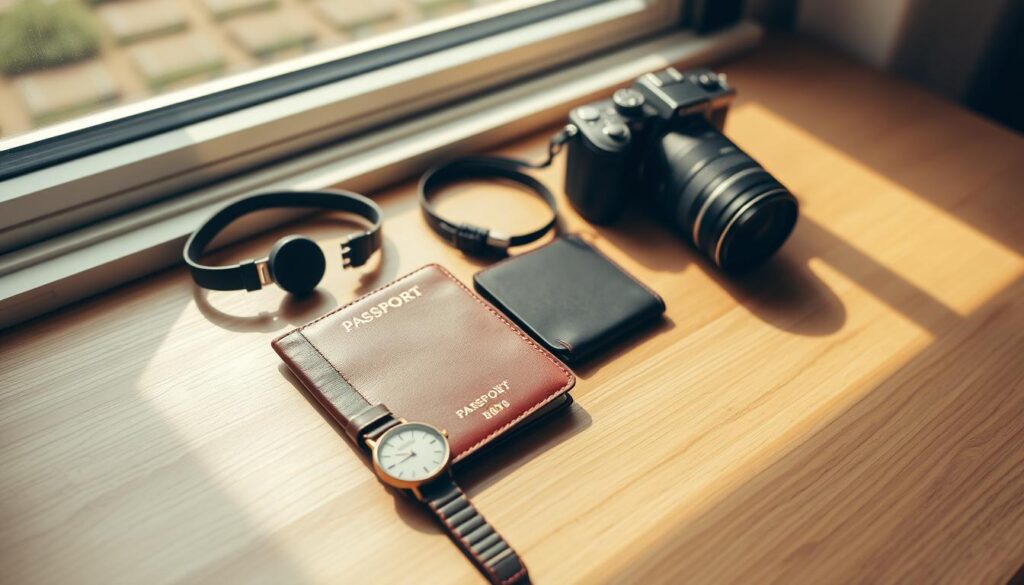
Hidden costs don’t vanish because you ignore them. Storage fees, maintenance, and depreciation eat into budgets meant for adventures. A single vehicle costs over $35k upfront—and keeps draining money every year. Even small purchases add up: think lamps replaced every 3 months or clothes worn once. These expenses block financial independence and trap you in a cycle of earning to pay for stuff you don’t use.
Breaking the Cycle of Work-and-Spend
Marketing tells us to buy “status symbols,” but this fuels debt and ties us to 9-to-5 jobs. Break free by asking: Does this item serve my goals? Use these digital nomad tips:
- Set a 30-day wait period before purchases
- Calculate how many work hours an item costs
- Invest in durable gear over fast fashion
Every dollar saved here becomes a step towardlocation independence.
Minimalist Travel: Lighter Luggage, Richer Experiences
Less baggage means more freedom. Imagine flying with just a carry-on, skipping lines and saving time. One traveler packed 5 shoes to Mexico—only used flip-flops. Minimalist travel lets you adapt to any destination. Pack versatile pieces: moisture-wicking fabrics, multi-use gadgets. When you carry less, you engage more—with locals, cultures, and spontanous adventures.
The Psychological Benefits of Owning Less
Decluttering frees mental space. Studies show 40% who downsized felt lighter, more creative. “The report highlights how loneliness plagues nomads who cling to materialism,” says a study on digital nomad mental health. Letting go of things reduces decision fatigue, letting your focus shift to growth and connection.
Practical Steps to Let Go of Materialism for Location Independence
Transitioning to minimalist travel starts with actionable steps that align your possessions with your digital nomad goals. Here’s how to begin:
- Digitize First: Scan documents, photos, and media. Shred or recycle physical copies to reduce clutter. This step alone slashes packing weight and mental stress.
- Keep Only Essentials: Ask: Does this item hold irreplaceable sentimental value? Will I use it on my next trip? Items failing both tests go. Keep high-quality, versatile gear—like multi-functional tools—to align with digital nomad tips.
- Dispose Strategically: Sell high-value items for travel funds. Donate gently used goods. Follow John Spencer Ellis’s advice: “Turn excess into resources.” Learn his full strategy here.
“The cycle of buying to feel ‘enough’ never ends. Minimalism breaks this loop.”
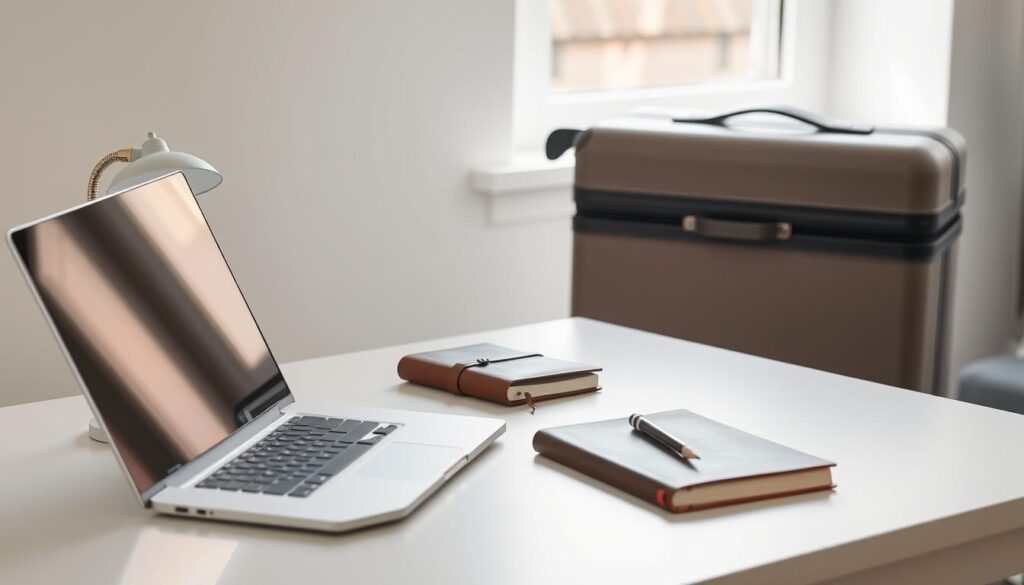
Pair these steps with financial discipline. Use proceeds from sales to fund your journey. Follow John Spencer Ellis’ blog for guides on budgeting and tax-smart donations. Focus on experiences over possessions—like choosing a lightweight laptop over a bulky TV.
Remember: Minimalist travel isn’t about deprivation. It’s about curating spaces for what truly fuels freedom. Start small—empty one drawer weekly. As you simplify, your mobility and mental clarity will grow.
Conclusion: Your Journey to Location Freedom Starts Today
Embracing financial independence and location independence begins with small, intentional steps. Over 80% of Americans carry debt, but breaking free starts by rethinking how you spend and save. Ryanne and Jay proved this by saving $35,000 each from traditional jobs—enough to buy their first home and build a thriving rental business. Their story mirrors what countless others achieve: lower living costs abroad or rural areas let you live better while saving more.
History shows this isn’t new—Aesop’s fables and books like Your Money or Your Life have long championed mindful spending. Yet today, tools like compound savings (like turning $500 into $5,000) and side hustles (like Ryanne and Jay’s eBay sales) make it easier than ever. Financial independence isn’t about sacrifice—it’s about choosing experiences over possessions, like traveling to Paris or Barcelona without tying yourself to a 9-to-5 grind.
Start by auditing your expenses and identifying what truly fuels your goals. Need guidance? Explore strategies to build a flexible remote business here. Remember Saint Augustine’s wisdom: every dollar saved today is a page added to the book of your life’s adventures. Whether you’re downsizing now or planning a future move, every step toward minimalism brings you closer to owning your story.
Join the growing community of location-independent travelers who’ve traded debt cycles for global opportunities. Financial freedom isn’t a distant dream—it’s a choice to act. Let your next move be the first step toward a life unshackled from place or paycheck.