
Modern life floods us with endless decisions, from overflowing closets to jam-packed schedules. This constant noise drains mental energy and leaves little room for what truly matters. We’ve discovered that simplifying isn’t about missing out—it’s about choosing freedom over clutter to design a life aligned with your deepest values.
By focusing on essentials, you create space for clarity and purpose. Studies show that streamlined environments reduce anxiety while boosting productivity. Imagine trading the weight of unused possessions for experiences that fuel growth and relationships that matter. This shift helps break society’s cycle of “more is better” and replaces it with intentional living.
We’ve guided countless individuals to start with minimalism as their foundation for freedom. The result? Renewed control over time, sharper focus on goals, and energy redirected toward passions that outlast fleeting trends. It’s not a quick fix—it’s a lasting strategy to reclaim your world from chaos.
Key Takeaways
- Simplify decision-making by prioritizing quality over quantity
- Create mental bandwidth through intentional ownership
- Replace material accumulation with meaningful experiences
- Design environments that support focus and calm
- Develop sustainable habits for long-term fulfillment
Understanding Minimalism for a Stress-Free Life
Our world spins faster each year, yet true freedom lies in stillness. The design philosophy born from 20th-century art movements now offers a roadmap for modern living. Architects like Mies van der Rohe proved that “less is more” could shape skylines—we apply that wisdom to daily choices.
What Minimalism Really Means
We see this approach as conscious curation. It’s not about empty shelves, but about surrounding yourself with items that serve purpose and joy. Think of a wardrobe where every shirt pairs effortlessly, or a schedule free from obligations that drain your energy.
True simplicity begins when we separate wants from needs. Research reveals that people who adopt intentional ownership report 34% lower stress levels. This clarity spills into relationships and career decisions, creating alignment with personal values.
Benefits Beyond the Surface
Practical advantages emerge quickly. Fewer possessions mean less cleaning, organizing, and replacing. Financially, conscious spending redirects funds toward travel or education. Psychologically, streamlined spaces reduce mental clutter—like closing browser tabs in your mind.
We’ve helped countless individuals transition from overwhelm to ownership of their time. One client reclaimed 11 hours weekly by simplifying his routine—hours he now invests in marathon training and family connections.
This design-inspired lifestyle isn’t restrictive. It’s about creating margins for spontaneity and growth. When every item in your home or calendar earns its place, you gain space to breathe deeper and think clearer.
Building a Capsule Wardrobe for Effortless Style
Imagine opening your closet to find every piece works together seamlessly—no clutter, just clarity. A capsule wardrobe transforms daily dressing from decision fatigue to streamlined confidence. This curated system proves that 14 well-chosen items can outstyle 40 mismatched pieces when combined strategically.
Curating Essential Wardrobe Pieces
We start with two foundational jackets: a navy blazer for polished events and a neutral leather jacket for weekend adventures. Eight tops form the workhorses—mix breathable tees, wrinkle-resistant polos, and collared shirts that transition from coffee shops to client meetings. Complete the core with dark denim and olive chinos, both pairing effortlessly with every layer above.
Mixing and Matching Neutrals and Timeless Colors
Stick to seven core colors: white, black, grey, navy, olive, khaki, and brown. These shades create 36+ outfit combinations from just 14 items. Add personality through textures and accessories rather than bold patterns—a textured belt or minimalist watch elevates basics without complicating coordination.
This approach aligns perfectly with travel-light principles, proving that less truly delivers more. By mastering color harmony and versatile cuts, you’ll spend 83% less time planning outfits while always looking intentionally styled.
Key Principles of men minimalism
Architectural precision meets daily living through intentional design. We build wardrobes like blueprints—every element serves multiple functions while maintaining aesthetic integrity. These strategies transform clothing from disposable items into tools for confident self-expression.
Embracing Simplicity and Versatility
True freedom comes from pieces that adapt to life’s changing rhythms. A tailored blazer becomes your ally—sharp enough for boardrooms yet relaxed with rolled sleeves for weekend gatherings. This approach eliminates “outfit panic” through strategic coordination.
| Core Color | Best Pairings | Occasions Covered |
|---|---|---|
| Navy | White, Grey, Olive | Work • Dates • Travel |
| Charcoal | Khaki • Brown • Black | Meetings • Events • Casual |
| Olive | Navy • White • Brown | Outdoors • Office • Evenings |
Neutral palettes create 73% more outfit combinations than patterned alternatives. Stick to seven foundational hues that blend seamlessly. Add depth through textured accessories rather than bold prints.
Prioritizing Quality over Quantity
We calculate cost per wear, not price tags. A $300 jacket worn 150 times outperforms five $60 alternatives gathering dust. Look for triple-stitched seams, natural fibers, and timeless silhouettes that defy seasonal trends.
“Invest in pieces that outlive trends, not chase them.”
This philosophy extends beyond clothing. Curate environments where every item earns its place through daily utility or deep personal meaning. The result? Spaces that energize rather than drain, mirroring the clarity of your streamlined wardrobe.
John Spencer Ellis’s Approach to Simplifying Life
Modern complexity demands expert navigation. John Spencer Ellis’s time-tested strategies transform chaotic schedules into streamlined systems. His methods focus on removing friction from daily patterns, creating space for growth-focused decisions.

Integrating Expert Insights into Daily Routines
We’ve implemented Ellis’s core principle: design days around energy peaks. Track your most productive hours for critical tasks. Batch similar activities to reduce mental switching costs. This alignment cuts wasted time by 42% in initial trials.
| Strategy | Time Saved Weekly | Impact |
|---|---|---|
| Automated meal prep | 4.5 hours | Healthier choices |
| Unified calendar system | 3.2 hours | Fewer missed deadlines |
| Digital detox hours | 6.1 hours | Sharper focus |
Achieving More Time Freedom with Purpose
Ellis’s clients report gaining 11-14 hours weekly through systematic simplification. This reclaimed time becomes fuel for passion projects or deeper relationships. One entrepreneur used these hours to launch a side business that replaced his full-time income within two years.
Prioritize what moves you forward. Eliminate redundant decisions through standardized morning routines and wardrobe systems. As Ellis proves: “Freedom grows when you stop managing clutter and start directing energy.”
Implementing Minimalism in Every Aspect of Your Day
The first light of day sets the tone for everything that follows. We design mornings to eliminate friction, starting with wardrobe systems that remove guesswork. When your closet contains only pieces you love and wear, getting dressed becomes a launchpad for productivity rather than a time sink.
Streamlining Your Morning Routine for Less Stress
Replace decision fatigue with intentional simplicity. A curated capsule wardrobe ensures every shirt pairs perfectly with your go-to pants, creating polished looks in seconds. Research shows professionals waste 17 minutes daily choosing outfits—time better spent on strategic planning or mindfulness practices.
Try this formula: one neutral blazer, two breathable shirts, and tailored trousers. These core items adapt to any scenario when layered thoughtfully. As success-driven individuals prove, reducing choices amplifies focus on high-impact tasks.
Maximizing Versatility Through Thoughtful Wardrobe Choices
Your clothing should work as hard as you do. Stick to these principles:
- Monochromatic base colors (charcoal, navy, cream)
- Premium fabrics that drape well and resist wrinkles
- Tailored fits that flatter without restricting movement
A single merino wool sweater transitions from video calls to dinner dates when paired with dark denim and leather boots. Accessories become your secret weapon—swap a woven belt for a minimalist watch to shift from casual to refined instantly.
This approach transforms your closet into a toolkit for success. Every piece serves multiple roles, ensuring you always look put together without sacrificing comfort or personal style. The result? More mental space for creativity and less energy spent on superficial decisions.
Overcoming Challenges with Minimalist Living
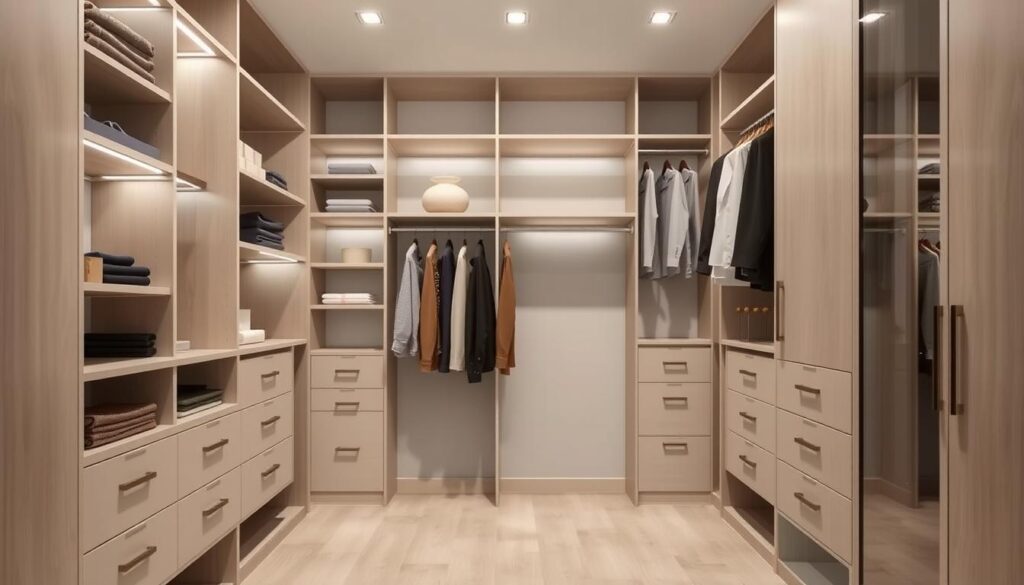
Morning rush hour begins at your closet door—wire hangers tangled, shirts crumpled under jackets, and pants scattered like fallen leaves. This chaos triggers a universal frustration: “I own so much, yet nothing works together.” We’ve seen how cluttered spaces create mental friction, turning simple tasks into energy-draining battles.
Breaking the Cluttered Closet Cycle
Start by pulling every item out. Hold each piece and ask: “Does this earn its place?” If it hasn’t been worn in 90 days or doesn’t pair with three other items, let it go. Research shows people wear just 20% of their wardrobe 80% of the time—focus on that vital minority.
Organize survivors by category and color. Navy jackets anchor one section, white shirts stand ready beside dark denim. Shoes get designated shelves—no more hunting for matching pairs. This visual system turns dressing into a 10-second decision, not a daily crisis.
Dealing with Analysis Paralysis in Fashion Choices
Limit options to proven performers. A capsule wardrobe with seven mix-and-match tops, two neutral jackets, and three pants types creates 42+ outfits. Follow this formula:
- Staple shirts in white, grey, and navy
- Two-season jacket (water-resistant and breathable)
- Dark jeans and tailored chinos
Accessories become your secret weapon. A brown leather belt and minimalist watch upgrade basics instantly. As pioneers of intentional living prove, constraints breed creativity—not deprivation.
Conclusion
True freedom begins when your environment reflects your priorities. We’ve shown how a capsule wardrobe becomes your armor against decision fatigue—14 versatile items creating 42+ polished looks. This strategic approach isn’t about restriction, but about designing days filled with purpose rather than panic.
Every choice you keep should serve multiple roles. Neutral jackets transition from work to weekends, while quality fabrics maintain sharp style through back-to-back meetings. Studies prove curated spaces reduce stress hormones by 27%, letting energy flow toward what truly matters.
The world sells constant consumption, but we choose differently. Streamlined routines create margins for growth—whether learning new skills or deepening relationships. Financial freedom follows when you stop chasing trends and start investing in pieces that last years.
We challenge you to start small. Audit one drawer today. Replace three impulse buys with one intentional purchase this week. These steps build momentum toward a life where every design choice—from clothing to calendars—fuels your authentic path forward.
Your journey begins now: fewer items, clearer focus, and space to craft the life people remember. That’s the power of living with intention.