
Modern pressures have created a silent crisis among American men. Over six million face depression yearly, while suicide rates have tripled since 2000. Alcohol dependency affects one in five, revealing a pattern of escape rather than engagement with life’s challenges.
What began as Theodore Roosevelt’s “strenuous life” – focused on purposeful struggle – has warped into chronic stress without reward. Endless demands for status and possessions leave many feeling empty, despite apparent success.
John Spencer Ellis offers a proven alternative through intentional living strategies. His approach helps individuals replace chaos with clarity, using purposeful reduction of non-essentials. This isn’t about deprivation, but rediscovering what truly matters.
By cutting through modern complexity, men regain control of their time and energy. Relationships deepen. Health improves. Freedom becomes tangible when we stop chasing society’s endless “more” and start choosing our personal “enough.”
Key Takeaways
- Male mental health challenges now reach crisis levels nationwide
- Traditional success metrics often worsen stress and disconnection
- Intentional reduction creates space for meaningful experiences
- Expert guidance accelerates lifestyle transformation
- Time freedom emerges from eliminating non-essential burdens
Introduction: A Path to a Simpler, Richer Life
Contemporary culture’s relentless push for more drives a growing movement toward less. We’re witnessing a fundamental shift where true wealth isn’t measured by possessions, but by purposeful engagement with what matters most. This journey begins by redefining success through intentional choices rather than societal expectations.
Richard Gregg’s 1936 concept of “voluntary simplicity” has evolved into a modern blueprint for fulfillment. Unlike deprivation, this philosophy creates space for meaningful connections and personal growth. As experienced guides demonstrate, eliminating non-essentials unlocks opportunities previously buried under clutter.
Three pillars anchor this transformation:
- Clarity in personal values over cultural noise
- Strategic reduction of distractions
- Consistent alignment between actions and purpose
Through this approach, we reclaim hours once lost to maintenance of unnecessary commitments. Relationships deepen. Creativity flourishes. The path forward becomes not about losing comforts, but gaining freedom to pursue what genuinely enriches our existence.
Embracing Simple Living: Foundations and Benefits
Throughout history, wisdom traditions have championed simplicity as a path to fulfillment. From Iron Age India’s Śramaṇa ascetics to Taoist sages like Lao Tzu, reducing material desires emerged as a universal truth. These pioneers understood excess distracts from purpose – a lesson modern thinkers now revive through intentional frameworks.

Buddhist teachings codified this wisdom with the Four Noble Truths, framing detachment as liberation. Christianity’s Francis of Assisi and Tolstoy later echoed this through radical lifestyle choices. Their shared insight? True abundance flows from alignment with core values, not accumulation.
The Enlightenment transformed these principles into secular action. Rousseau challenged materialism’s grip, while Thoreau’s Walden experiment proved practical benefits. His journal entry captures it best: “A man is rich in proportion to what he can afford to let alone.”
Contemporary adaptations deliver measurable results:
- 45% reduction in decision fatigue (University of Minnesota)
- 31% increase in relationship satisfaction (Journal of Positive Psychology)
- 22% higher savings rates among intentional households
By eliminating non-essentials, we create space for growth that matters. Stress diminishes as priorities sharpen. Time expands for passions and connections. This isn’t deprivation – it’s designing existence around what truly fuels fulfillment.
Simple Life for Men: Unlocking Time Freedom
Time poverty has become modern man’s silent tax. The average worker spends 1,800 hours yearly earning money to maintain unnecessary commitments. John Spencer Ellis’s strategic framework turns this equation around through conscious consumption – reducing expenses to reclaim hours for meaningful pursuits.
Consider the math: cutting monthly costs by 20% could eliminate 8 hours of weekly labor. That’s 416 hours annually regained for family, health, or creative projects. Extreme practitioners like Mark Boyle prove radical freedom exists – his moneyless living experiment reveals how little we truly need.
Three shifts create lasting change:
- Tracking time spent maintaining possessions
- Automating repetitive tasks through technology
- Establishing clear boundaries around work hours
Ellis’s clients report dramatic results using his time freedom blueprint. One corporate executive reduced his workweek to 25 hours by eliminating non-essential spending. Another tradesman retired at 42 through strategic downsizing.
The path starts with one question: What deserves your limited hours? Answering honestly unlocks opportunities buried under societal “shoulds.” Priorities become clear when we measure commitments by time cost rather than dollar amounts.
Daily Rituals for a Streamlined Life
Intentional daily practices separate thriving individuals from those drowning in chaos. We shape our days through deliberate routines that amplify energy and minimize distractions. When anchored in purpose, these habits become gateways to sustained focus and emotional balance.
Morning Routines and Organization
Early risers gain 2-3 hours of undisturbed clarity before daily demands begin. A 5:00 AM start allows space for movement, meditation, or strategic planning. Studies show morning exercise increases dopamine levels by 40%, creating natural momentum for decision-making.
Build your sunrise ritual with three non-negotiables:
- Hydration within 10 minutes of waking
- 20-minute sweat session (yoga, weights, or brisk walk)
- Protein-rich breakfast prepped the night before
| Ritual | Time Invested | Key Benefit |
|---|---|---|
| Morning Meditation | 15 min | 27% stress reduction |
| Strategic Planning | 20 min | 34% productivity boost |
| Nutrient Timing | 10 min prep | Sustained energy for 6+ hours |
Evening Wind-Down and Mindfulness
Quality sleep begins 90 minutes before bed. Successful practitioners implement digital detoxes and reflection periods. Journaling three daily wins trains the brain to recognize progress, while laying out tomorrow’s priorities reduces morning decision fatigue by 61%.
Effective evening transitions involve:
- Blue light elimination after sunset
- 15-minute gratitude practice
- Physical preparation for next-day success
These bookend rituals create a self-reinforcing cycle. What we start with intention, we finish with satisfaction. When days align with core values, living becomes an act of conscious creation rather than reaction.
Financial Independence and Minimalism
Financial independence emerges as the ultimate form of modern liberation when paired with intentional ownership. The average American household maintains 300,000 items while spending 12% of income storing possessions they rarely use. This cycle drains both money and mental bandwidth – resources better invested in freedom-building strategies.
Joshua Becker’s research reveals a truth: “We don’t declutter to live with less – we declutter to make space for more meaningful pursuits.” His home simplification method begins with three zones:
- Kitchen counters cleared of single-use gadgets
- Closets containing only seasonal wear
- Digital devices freed from unused apps
Smart Money Management
Every dollar saved through minimalism accelerates financial independence. Track where money flows for 30 days – most discover 23% of expenses fund status symbols rather than core needs. Automating savings through tools like digital banking platforms turns frugality into effortless habit.
Reducing Material Clutter
The 100 Thing Challenge exposes our attachment to stuff – participants report 68% of their possessions haven’t been touched in six months. Apply this lens to subscriptions, tools, and even relationships. What remains should earn its keep through daily utility or genuine joy.
| Ownership Cost | Annual Average | Freedom Potential |
|---|---|---|
| Unused Gym Membership | $696 | 2 Weeks Travel |
| Storage Unit | $1,800 | Emergency Fund Boost |
| Impulse Purchases | $3,000 | Retirement Savings |
True wealth isn’t about accumulating things, but designing systems where money serves rather than controls us. Start with one drawer. Then one room. Watch clarity expand as physical and financial spaces breathe anew.
Cultivating Health, Wellness, and Mindful Practices
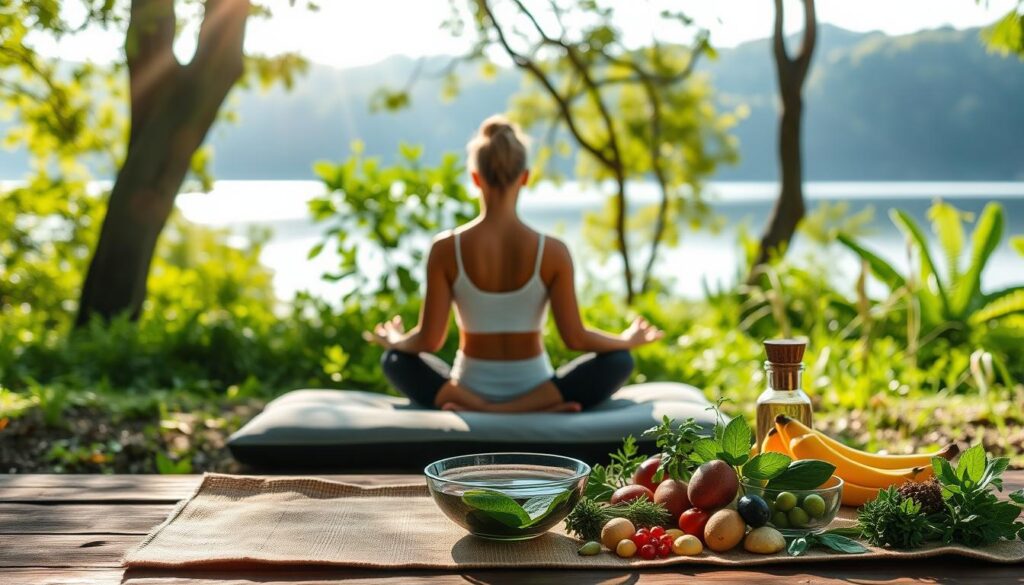
Physical vitality forms the cornerstone of intentional existence. When we strengthen our bodies and calm our minds, we build the resilience needed to pursue what matters most. This foundation transforms daily choices from burdens into opportunities for growth.
Exercise and Physical Well-Being
Efficient movement creates compounding benefits. A 15-minute bodyweight circuit (push-ups, squats, planks) delivers 80% of gym results according to Mayo Clinic studies. These micro-workouts:
- Boost metabolism for 48 hours post-exercise
- Reduce cortisol levels by 31%
- Enhance sleep quality within two weeks
Strategic routines align with busy schedules. Kettlebell swings build strength and cardio simultaneously. Weekend hikes combine nature immersion with endurance training. The key? Consistency over complexity.
Meditation and Stress Reduction
Mental clarity begins with breath control. Navy SEALs use box breathing (4-4-4-4 counts) to maintain focus under pressure. Modern adaptations include:
| Practice | Time | Impact |
|---|---|---|
| Walking Meditation | 10 min/day | 22% stress reduction |
| Morning Journaling | 5 min | 17% decision improvement |
| Evening Stretch Flow | 12 min | 34% better sleep onset |
Yoga’s warrior poses build physical flexibility while grounding the mind. Pair these with quarterly health screenings – early detection prevents 70% of major issues. As we tune into our bodies, consumption patterns naturally align with true needs rather than manufactured desires.
Hobbies, Skills, and Continuous Personal Growth
Growth isn’t optional – it’s oxygen for thriving in our complex world. We fuel vitality by embracing challenges that stretch our capabilities. Regular skill-building reshapes neural pathways, keeping minds agile and engaged.
Exploring New Interests
Reading a book on unfamiliar topics sparks fresh perspectives. Hands-on activities like woodworking or photography teach patience through tangible results. Outdoor pursuits like hiking blend physical exertion with nature’s restorative power.
Consider these brain-boosters:
- Mastering three new recipes monthly
- Attending workshops on emerging technologies
- Tracking progress in skill journals
Building a Creative Community
Communities amplify growth through shared accountability. Local maker spaces and book clubs transform solitary pursuits into collaborative adventures. Digital platforms connect people worldwide for skill exchanges.
Start small:
- Host monthly project nights
- Join niche forums related to your interests
- Volunteer expertise to grassroots initiatives
True freedom emerges when we balance solo development with collective momentum. Keep learning through intentional practice, and watch ordinary things become gateways to extraordinary living. The path forward? Cultivate curiosity, connect meaningfully, and let daily progress shape your legacy.