
Starting a long-term travel journey can change your life. It opens doors to personal growth, new experiences, and career opportunities. Leaving a stable job might seem scary, but it can lead to great rewards in the future.
Research shows that people who travel often are 7% happier than those who don’t. This highlights the mental health benefits of a digital nomad or location-independent lifestyle.
After traveling to 25 countries, you learn a lot. You develop gratitude, problem-solving, minimalism, and communication skills. These skills boost your productivity, adaptability, and ability to work with others.
These skills make you more attractive to employers. Whether you’re a web designer or a software developer, your career can support your travel dreams. The key is finding the right balance between your passions, skills, and the job market.
Understanding the Long-Term Travel Lifestyle
Long-term travel is not like a regular vacation. It’s more like always being on the move, living out of a backpack. You have all the time you need but not much money. The journey can be different for everyone, depending on what they want to get out of it.
Some people travel to make new friends, find jobs, or just to party all the time. But there’s more to it than just fun. A travel-focused career offers deep benefits.
What is Long-Term Travel?
Long-term travel means living in different cultures for a long time, often a year or more. It needs you to be flexible, solve problems, and handle surprises. It’s not always easy or glamorous.
It can be hard on your body and mind. You might feel very happy one moment and very sad or lonely the next.
Benefits of a Travel-Focused Career
- Cultural immersion and personal growth
- Unique job opportunities tailored to the long-term travel lifestyle
- Increased flexibility and autonomy in managing one’s time and work
Common Misconceptions
Many think long-term travel is always a holiday. But it’s not. You spend a lot of time moving, staying in hostels, and dealing with problems. It can be very tiring.
It’s important to know when you need a break. Take time to rest and recharge every 6-8 weeks to avoid burnout.
| Misconception | Reality |
|---|---|
| Long-term travel is always glamorous | It can be physically and mentally demanding, with swings in emotions |
| Long-term travel is easy | It requires adaptability, problem-solving skills, and the ability to handle unexpected challenges |
The long-term travel lifestyle is a unique and changing experience. It offers many personal and professional benefits. But, it’s important to have realistic expectations and be ready for the challenges it brings.
Identifying Suitable Careers for Travel Enthusiasts
If you love to travel, you have many career options. You can find jobs that let you work from anywhere or travel a lot. Let’s look at some great choices for those who love to explore.
Remote Work Opportunities
Remote work has grown a lot. It offers jobs in many fields like tech, marketing, and customer service. These jobs let you work from anywhere, making it easy to travel.
Travel-Related Jobs
There are many jobs in the travel industry. You can be a tour guide, work in conservation, or lead travel camps. Each job has its own needs and tasks.
To be a flight attendant, you need a high school diploma and training. Teaching English abroad requires a degree and a teaching certification. To be a cruise ship captain, you need a degree in marine science or engineering and lots of training.
Freelancing vs. Employment
Freelancing is great for those who love to travel. You can be a social media influencer, travel blogger, or writer. You set your own hours and work from anywhere. But, you need to be disciplined and manage your time well.
Some people prefer traditional jobs. Jobs like being an Au Pair or ski instructor offer structure and the chance to learn new cultures.
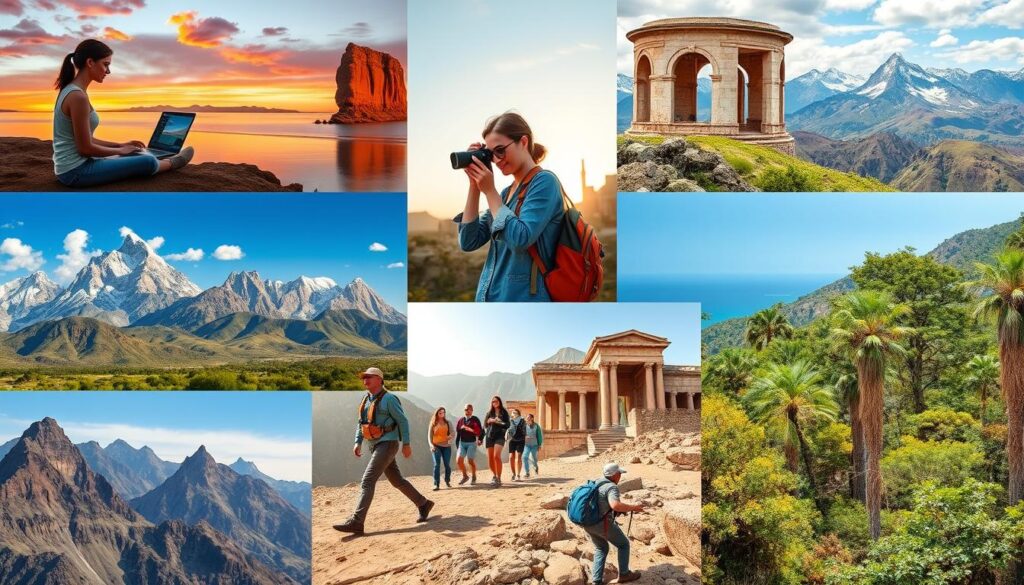
Choosing between freelancing and a job depends on what you want. Think about your skills, goals, and how much freedom you want. This will help you find the right career for your travel lifestyle.
Essential Skills for a Travel Career
Starting a career in travel needs special skills. These skills help professionals deal with the changing world of travel. Key skills include being adaptable, solving problems, managing time, staying organized, networking, and communicating well.
Adaptability and Problem-Solving
Travel often brings surprises, like flight delays or cultural shocks. Adaptability is crucial. Travel pros must think fast and find creative solutions. Problem-solving skills are also key to overcome challenges and keep things running smoothly.
Time Management and Organization
Travel pros need to balance work and exploration. They must be good at time management and organization. Planning well and using tools help them make the most of their time and deliver great results.
Networking and Communication
Doing well in travel careers means building strong relationships. Networking skills help connect with others in the field. Communication skills are also vital for working well with people from different backgrounds.
| Skill | Importance | Percentage of Mentions |
|---|---|---|
| Communication | Essential for various travel and tourism jobs, such as providing directions, sharing regional stories, giving safety briefings, or writing reports. | 5 out of 50 contributors |
| Adaptability | Crucial for handling last-minute changes, such as flight cancellations and natural disasters, in the travel industry. | 1 out of 50 contributors |
| Problem-Solving | Vital for navigating challenges and unexpected situations that may arise in the travel and tourism industry. | 1 out of 50 contributors |
| Time Management | Essential for managing multiple bookings or tasks effectively in the travel and tourism industry. | 2 out of 50 contributors |
| Organization | Crucial for pre-sales, sales, and post-sales operations in the travel industry. | 1 out of 50 contributors |
| Networking | Enables travel professionals to connect with industry peers, discover new opportunities, and collaborate across cultures. | Not quantified |
By focusing on these travel career skills, professionals can thrive in the exciting world of global travel.
Building a Supportive Network
Creating a successful long-term travel career needs more than just skills and drive. It also requires a supportive network. By joining travel communities, using social media for travelers, and finding travel mentors, you lay a strong foundation for your journey.
Finding Travel Communities
Online forums, Facebook groups, and local meetups for travelers are great resources. They offer advice and tips on travel planning and job opportunities. Connecting with others can also lead to new collaborations and insights.
Leveraging Social Media
Social media is a key tool for travel-focused professionals. Sites like Instagram, Twitter, and LinkedIn help you connect with a global network. You can share your experiences and find new opportunities by engaging with your network.
Building Relationships with Mentors
Having mentors in the travel industry can be incredibly helpful. They can guide you through career challenges, share best practices, and connect you with resources. Reach out to industry leaders and build beneficial mentorships.
Networking is powerful for your success in travel. It creates a supportive environment that boosts your journey. The connections you make today can lead to new opportunities and make your journey richer than you thought.
Start Your Journey Today
To start your long-term travel, set clear goals that mix your career dreams with travel desires. Make a detailed plan for money, including budgeting, work, and passive income. Look into visa needs, health insurance, and flexible places to stay for a smooth trip.
Book a meeting with John Spencer Ellis, a pro in travel career planning. He can help you build a career that supports your travel dreams. Use his advice to create a plan that fits your work and personal life.
Setting Travel Goals for Your Career
Think about what you want to see and do on your travels. Maybe you want to work remotely, find travel jobs, or be a freelancer. Make sure your goals fit a long-term plan. Stay open to new chances that come up, as being flexible is important for great travel experiences.
Planning for Financial Stability
Keep your finances safe by making a detailed budget. Include travel costs, living expenses, and ways to make money. Look into remote work, freelancing, or passive income to stay financially stable. Also, find out about health insurance and other important safety measures for your travels.