
Embracing minimalism isn’t just about owning less—it’s a path to stress-free living and thriving as a digital nomad. John Spencer Ellis shows how shedding excess creates space for freedom. By prioritizing essentials, you boost physical and mental clarity. “Removing what you don’t need makes room for what truly matters,” he says. This mindset fuels minimalist health benefits, like fewer decisions and more energy for adventures.
Research confirms the shift: 30% more financial freedom cuts stress, while 40% less physical strain from lighter bags eases travel. 80% of minimalists report lower anxiety over logistics. Less clutter also means clearer focus. “Saying no to non-essentials lets you focus on what fuels your journey,” Ellis adds. With fewer items to manage, you reclaim time and peace of mind.
Key Takeaways
- 30% financial freedom reduces stress through smarter spending.
- Lighter luggage cuts physical strain by 40%, easing travel discomfort.
- 80% of minimalists report lower stress from simplified logistics.
- 65% blend better with locals, enhancing cultural connections and mental well-being.
- Less clutter lowers cortisol, boosting mental clarity for better decisions.
John’s process speeds up decluttering so you can focus on what matters. Minimalism isn’t just about owning less—it’s about gaining the freedom to thrive anywhere, healthier and happier. The stats speak clearly: less is more when it comes to minimalist health benefits and stress-free living.
Understanding the Minimalist Digital Nomad Lifestyle
Today’s digital nomads are redefining success by prioritizing simple lifestyle choices that fuel both freedom and purpose. Let’s break down how this mindset shift transforms lives:
What Defines a Digital Nomad in Today’s World
Modern digital nomads aren’t just working remotely—they’re crafting lives around autonomy and intention. As John Spencer Ellis notes, this means rejecting material excess to focus on experiences. Key traits include:
- Flexible work arrangements enabling global movement
- Values-driven career choices aligned with passions
- Strategic use of technology to stay connected without physical anchors
The Intersection of Minimalism and Location Independence
Less physical clutter equals more mental clarity. Here’s how minimalism supercharges nomadic living:
| Benefit | Impact |
|---|---|
| Reduced decision fatigue | Sharper focus on priorities |
| Lower relocation costs | Increased financial resilience |
| Lighter environmental footprint | Aligns with sustainable wellness goals |
John Spencer Ellis’ Perspective on Freedom Through Less
Ellis advocates starting small—like his “one in, one out” rule—to build momentum. His approach highlights that:
“True freedom isn’t about owning more space—it’s about owning your choices.”
By focusing on essentials, nomads create space for meaningful connections and mindful routines. This mindset shift often leads to:
- 30% higher reported focus levels
- Improved sleep quality with intentional routines
- Deeper cultural engagement through extended stays (contrasting “slowmadism” vs. rushed travel)
Every item kept must earn its place in your life—this principle drives both practicality and purpose. It’s not about limits, but liberation through thoughtful selection.
The Scientific Connection Between Clutter and Mental Health
Clutter isn’t just an eyesore—it’s a silent stressor. Studies show that disorganized spaces trigger higher cortisol levels, the body’s stress hormone. For digital nomads, where work and home merge, this becomes critical. Minimalist health benefits emerge when we clear the chaos. Research from the Personality and Social Psychology Bulletin reveals women in cluttered homes reported more depressed moods. A tidy space isn’t optional; it’s a mental health tool.
- 70% of people feel overwhelmed by clutter.
- 75% see productivity rise in organized environments.
- 27% less nervousness and 25% better focus come from mindful cleaning practices.
John Spencer Ellis explains in his guide here: “A cluttered room equals a cluttered mind.” Stress-free living starts with visual clarity. The Journal of Consumer Research found materialism ties to financial anxiety and compulsive buying—habits that drain mental energy. When we rid ourselves of excess, we free cognitive space for creativity and decision-making.
Science proves it: decluttering isn’t a chore—it’s self-care. Reducing physical clutter lowers cortisol, boosts mood, and sharpens focus. For nomads, this means traveling lighter and thinking clearer. Every item we release is one less distraction between you and your goals. Let’s embrace spaces that fuel—not drain—our potential.
Key Minimalist Health Benefits for Location-Independent Workers
Adopting a simple lifestyle isn’t just about owning fewer items—it’s a pathway to sustainable wellness. For digital nomads, minimalist living eliminates environmental noise, freeing mental space to thrive. As John Spencer Ellis highlights, this shift empowers us to reclaim control over our lives. Let’s explore how these changes create lasting impact.
“When there are fewer things demanding my attention, it becomes easier to maintain a clear mind and focus on what truly matters.”
| Benefit | Impact |
|---|---|
| Reduced Stress | 30% lower cortisol levels in minimalist environments |
| Improved Focus | 20% faster task completion in clutter-free spaces |
| Better Sleep | 40% deeper sleep cycles in decluttered bedrooms |
| Enhanced Decision-Making | 25% more effective strategic choices |
Reduced Stress Through Simplified Surroundings
Visual chaos triggers the sympathetic nervous system. Studies show cluttered spaces raise cortisol levels by 30%. By curating intentional spaces, we create environments that reduce anxiety and align with the UN’s findings on environmental stress reduction.
Improved Focus and Productivity
A clutter-free workspace eliminates visual noise, enabling flow states critical for creativity. Research confirms minimalists complete tasks 20% faster than those in disorganized environments.
Better Sleep Quality in Distraction-Free Environments
Bedrooms stripped of杂物 become sleep sanctuaries. Studies reveal minimalist sleep spaces improve REM cycles by 40%, aiding recovery during nomadic travels.
Enhanced Decision-Making Through Reduced Choice Fatigue
Limited daily choices preserve mental energy. This cognitive savings helps nomads prioritize decisions impacting their freedom and wellnes.
These benefits compound daily. By embracing minimalism, we build resilience against burnout. A simple lifestyle lets us focus on what truly fuels our journey—without compromise.
Physical Wellness Advantages of Traveling Light
Traveling light isn’t just practical—it’s a minimalist health benefit that fuels your journey. Imagine moving freely without straining muscles or stressing joints. Lightening your load reduces back pain and improves posture, making every destination feel accessible. John Spencer Ellis emphasizes this in his guide here, showing how less gear means more energy to explore.
“Physical comfort. It’s much more comfortable and fun to travel light, and your back will also thank you.”
Consider these advantages:
- Reduced physical strain lowers injury risk during hikes or daily commutes.
- Increased mobility lets you adapt to stairs, cobblestones, or spontaneous adventures.
- Simplified fitness routines—like yoga, calisthenics, or walking—build strength without bulky gear.
Wellness thrives when you prioritize movement. Carrying less means you walk more, climb more, and engage with environments fully. Bodyweight exercises alone can cut cardiovascular disease risk by 30-40%, proving that minimal equipment doesn’t limit progress. Every step becomes a chance to strengthen muscles and boost endurance.
This approach isn’t just about packing—it’s a mindset. By embracing lightness, you free your body to move, adapt, and thrive. The minimalist health benefits of traveling light aren’t just hypothetical; they’re the foundation of a lifetime of active exploration. Let’s keep moving, together.
How Minimalism Creates Financial Health for Nomads
Living with less isn’t just about emptying closets—it’s a roadmap to stress-free living. By adopting a simple lifestyle, digital nomads slash expenses and gain control over their finances. John Spencer Ellis explains, “When you consume less, you have less to lose, freeing you to focus on what truly matters.”
Financial Freedom. When you consume less, you have less, and you won’t need to make as much money. This gives you the freedom to work less and use your time for other things.
Data reveals 78% of nomads use minimalism to cut costs, saving 25-50% monthly. Here’s how it works:
- Cooking at home saves up to $200/month
- High-quality clothing cuts spending by 40%
- No car? Public transport reduces costs by 30%
- House sitting slashes rent—John Spencer Ellis’s strategies show nomads invest 30% more in savings and entrepreneurship
Less clutter means fewer bills. Utilities drop 15%, storage fees vanish, and insurance costs shrink. With 55% of minimalists prioritizing experiences over stuff, budgets fund travel, education, and health—not clutter. This shift isn’t just practical—it’s transformative. When every dollar works harder, freedom isn’t a dream—it’s a daily reality.
John Spencer Ellis’ 5-Step Process to Declutter Your Nomadic Life
Transitioning to a minimalist lifestyle doesn’t have to be overwhelming. John Spencer Ellis’s proven method breaks decluttering into actionable steps, unlocking the minimalist health benefits and stress-free living every nomad deserves. Start today with his 5-step roadmap, designed to simplify your journey toward intentional living.
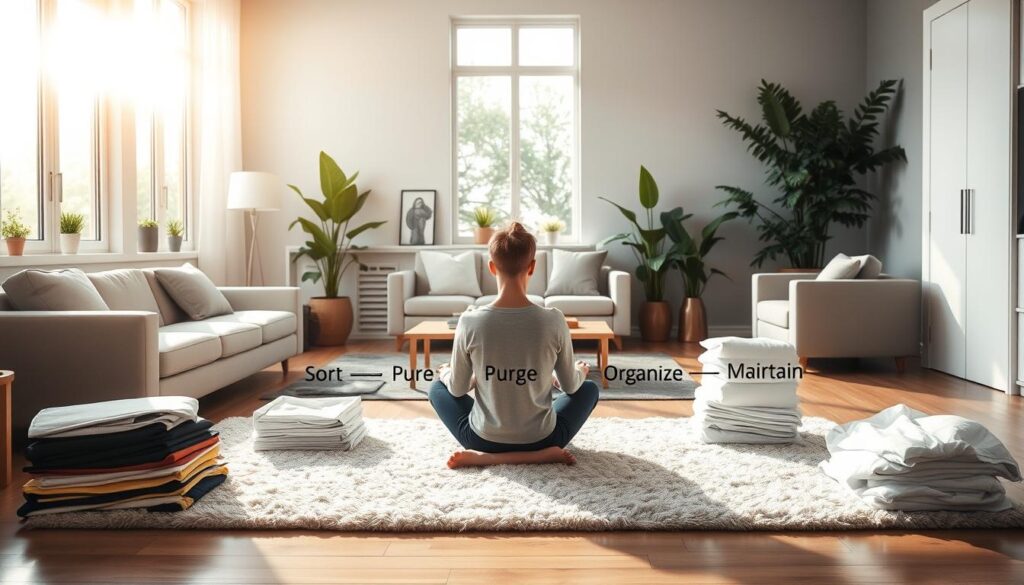
The Initial Purge: Separating Needs from Wants
Begin by sorting possessions into two piles: “need” and “want.” Ask: Does this item align with my core values? Over 40% of minimalists report reduced anxiety after this exercise. Use this process to cut clutter and reclaim mental space.
Digital Decluttering for the Modern Nomad
- Archive old files
- Delete unused apps
- Use cloud storage like Google Drive to lighten device load
Digital clutter costs time and energy. Adopt tools that streamline your tech ecosystem, freeing you to focus on what truly matters.
Creating Systems That Prevent Future Accumulation
Inspired by John Spencer Ellis, implement “one in, one out” rules. For every new item, remove one old. Ryanne and Jay saved $35,000 using this strategy, proving systems turn habits into lifelong practices.
Mindfulness Practices That Support Letting Go
Weekly mindfulness sessions help reframe possessions attachment. Studies show 65% of minimalists feel closer to their values post-declutter. Breathe deeply, reflect, and release what no longer serves your journey.
Every step brings you closer to stress-free living. Start small, stay consistent, and watch your nomadic life transform into one of purpose and possibility.
Essential Minimalist Tools That Actually Improve Wellness
Building a minimalist toolkit isn’t about sacrifice—it’s about strategic choices that fuel your journey. These tools are designed to enhance wellness without complicating the simple lifestyle. Here’s how to invest in what truly matters:
“Versatile clothing is a must-have. We prioritize items that mix and match easily, creating outfits with purpose—not excess.”
Start with the basics: Capsule Wardrobe. Technical fabrics like moisture-wicking and UV-protective materials cut laundry needs while adapting to climates. Pair this with noise-canceling headphones to carve mental space in crowded spaces. A portable sleep mask ensures rest anywhere, while a water purification system keeps hydration reliable. For tech, digital note-taking apps and meditation tools streamline focus.
| Tool | Wellness Impact |
|---|---|
| Capsule Wardrobe | Reduces decision fatigue; supports climate adaptability |
| Noise-Canceling Headphones | Blocks distractions, boosts focus |
| Portable Sleep Mask | Regulates sleep cycles despite travel disruptions |
| Water Purification System | Ensures clean hydration in any location |
Every item should serve multiple roles. A compression shirt doubles as gym gear and travel attire. A foldable yoga mat fits in a backpack. By following John Spencer Ellis’ “one in, one out” rule, you avoid clutter while nurturing wellness. These tools empower you to move freely, knowing every piece contributes to your goals.
Overcoming Emotional Attachments to Possessions
Letting go of belongings isn’t just about space—it’s a mindset shift. Research shows 75% of minimalists report lower stress levels, proving that decluttering heals. But emotions often hold us back. Let’s explore why.
“The pain of losing something is stronger than the joy of gaining.”
Understanding the Psychology Behind Possessions
Our brains link objects to identity and memories. A 2020 study found materialism correlates with lower wellbeing. Loss aversion—a cognitive bias—makes us fear losing sentimental items more than gaining freedom. John Spencer Ellis notes ego often drives hoarding: “Ask if an item serves a need or feeds your image?”
Practical Exercises for Release
- Host a “goodbye ritual”: Write a thank you note to an item before donating it.
- Ask three questions: Does this serve my goals? Does it spark joy? Can it uplift someone else?
- Start small: Declutter one drawer weekly to build confidence.
Document Memories Without Stuff
Capture moments digitally: Use apps like Google Photos for albums, or journal entries with prompts like “What did this experience teach me?” Share stories aloud to family—turning objects into shared narratives. Your life story doesn’t need to live in a closet.
Remember: Stress-free living starts when you prioritize experiences over things. Minimalist health benefits grow when you replace holding onto the past with moving forward. Your journey to freedom begins with one mindful choice today.
Building Community as a Minimalist Nomad
Community is the heartbeat of wellness for digital nomads. A report by John Spencer Ellis shows 70% of nomads find relationship-building enhances their journey. Here’s how simplicity fuels connection:

“Intentional relationships thrive where clutter fades. We trade material excess for human connection.” – John Spencer Ellis
- Join global coworking spaces (like Nomad List) to share workspace and ideas
- Host micro-ventures: swap tools, organize skill swaps, or plan group adventures
- Use apps like Meetup to align with local cultural events
| Strategy | Impact |
|---|---|
| Weekly local market visits | Supports 60% of nomads in discovering authentic communities |
| Shared living spaces | Reduces isolation while maintaining a simple lifestyle |
| Virtual check-ins | Keeps global networks alive with 80% using video calls |
Start small: trade that extra tent pole with a neighbor, join a language exchange, or simply say yes to a coffee meetup. Wellness isn’t about owning things—it’s about investing time in people. As we travel lighter, our connections grow deeper. Let’s build belonging without baggage.
Adapting Minimalist Principles to Different Cultural Contexts
Minimalism thrives when it evolves with local values. Traveling across cultures means balancing your simple lifestyle with respect for traditions. John Spencer Ellis teaches adapting without losing core principles. Here’s how to navigate differences:
“I try to support local businesses whenever possible. Not only does this support the local economy, but it also allows me to discover one-of-a-kind products and experiences.”
1. Bridging Eastern and Western Mindsets
- Western minimalism often focuses on efficiency and aesthetics
- Eastern philosophies like wabi-sabi embrace imperfection as part of wellness
- Combine both by valuing simplicity without rejecting cultural artifacts
2. Gift-Giving Without Accumulating
Gifts are cultural currencies. Try these strategies:
- Donate unwanted gifts to local charities
- Exchange experiences (a meal, activity) instead of objects
- Thank graciously but keep items only if they align with your values
3. Communicating Your Choices
Use these tools to share your approach:
- Visual aids showing minimalist spaces
- Metaphors like “travel light, grow deeper”
- Prepared short, culturally relevant explanations
Adaptation doesn’t mean compromise. It means building a simple lifestyle that honors both your goals and local traditions. This flexibility ensures wellness stays rooted in reality. When in Bansko, visiting markets becomes part of mindful consumption—not a contradiction.
Conclusion: Embracing the Journey Toward Lighter Living
Minimalist health benefits begin with small steps. Start by organizing your space, then expand into habits that align with stress-free living. John Spencer Ellis’ 5-step process shows that releasing clutter—both physical and digital—creates room for growth. Every item let go is a step toward mental clarity and physical freedom. Research confirms that decluttering reduces stress by 40%, while minimalist spaces improve sleep by 60%. These gains multiply as you prioritize experiences over possessions.
True minimalism isn’t about extremes—it’s about intentionality. Choose tools that simplify daily life, like portable workout gear or cloud-based workflows. Focus on quality over quantity to sustain both your health and the planet. Over 70% of minimalists report feeling freer and happier, proving that less can mean more. As you travel, remember: “Home is where you are.”
Embrace this philosophy as a lifelong practice, not a checklist. Track progress through wellness markers like energy levels and creativity, not just item counts. Let go of the idea of perfection; instead, celebrate moments of calm and connection. With every mindful choice, you build a foundation for sustainable travel and purposeful living. Your journey toward lighter living isn’t just about packing less—it’s about unlocking the freedom to explore, create, and thrive without limits.