
The global pandemic in 2020 changed how we work, with companies like Twitter and Shopify leading the way. They now allow remote work for the long term. This shift has made the digital nomad lifestyle more popular, offering time freedom and location independence.
Digital nomads use technology to work from anywhere, exploring the world. They can plan their days around their own needs and adventures, not just a 9-5 job.
This lifestyle lets people dive into new cultures, grow personally, and save money. For example, Sarah, a software developer, makes $7,500 a month from freelance work. Her monthly expenses in Lisbon, Portugal, are just $3,000, leaving her with $4,500 to spend.
Tom, an IT consultant, also found a better life and lower costs by moving to Chiang Mai, Thailand. He left New York City behind.
But, being a digital nomad isn’t easy. It can be hard to stay stable, fight loneliness, and need a lot of self-discipline. Alex, a digital marketer, says it’s important to handle legal and financial stuff well to succeed long-term.
To do well as a digital nomad, you need to balance work and travel. You must also adapt to new places and create routines that help you stay productive and happy. Tools like communication apps and travel apps can make a big difference, as Jane, a marketing strategist, and others have found.
Consult with John Spencer Ellis to increase your time freedom.
Key Takeaways
- The digital nomad lifestyle offers unprecedented time freedom and location independence, enabling individuals to structure their days around personal rhythms and adventures.
- Digital nomads can leverage cost-effective living in various locations, leading to increased savings and improved quality of life.
- Maintaining stability, combating loneliness, and requiring strong self-discipline are some of the challenges digital nomads face, requiring proactive planning and community-building efforts.
- Utilizing technology tools like communication platforms, project management software, and travel apps can enhance the productivity and efficiency of digital nomads.
- Establishing sustainable routines and rituals can help digital nomads create stability and maintain their mental and emotional well-being.
Understanding the Digital Nomad Lifestyle and Location Independence
The digital nomad lifestyle is a new way to live. People work from anywhere with internet. They choose to work from cafes, co-working spaces, or beautiful outdoor spots.
Breaking Free from Traditional Work Environments
Digital nomads work from anywhere, not just offices. They use technology to work with others no matter where they are. This freedom lets them explore new places and meet new people while working.
Embracing Cultural Immersion While Working
Working from different places lets digital nomads dive into local cultures. They learn about customs and traditions. This experience broadens their views and sparks creativity.
The Role of Technology in Location Independence
Technology is key for digital nomads. It gives them the tools to work from anywhere. With internet, cloud tools, and remote platforms, they can manage their work and teams worldwide.
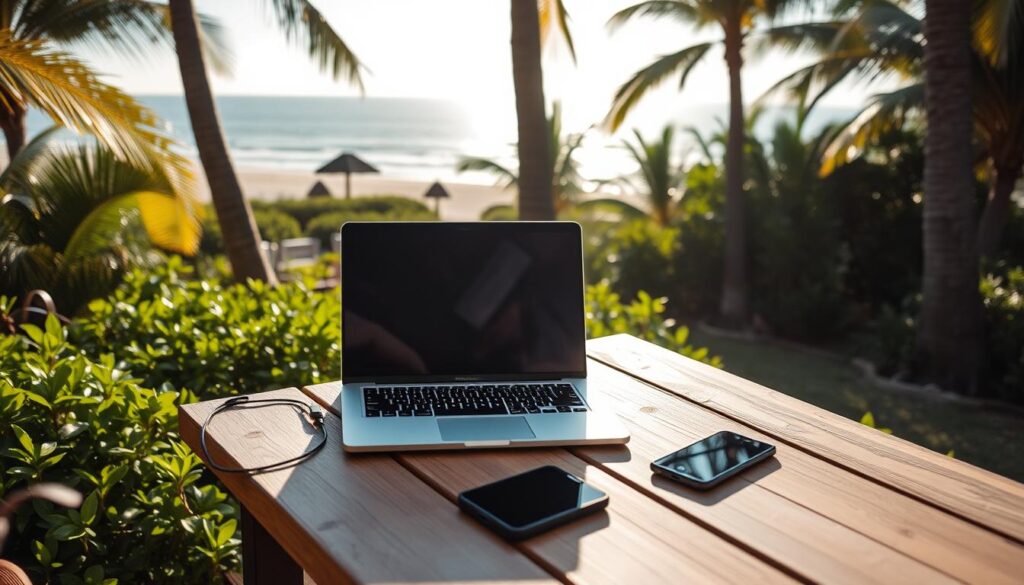
But, digital nomads face challenges like time zones and staying productive. They need to be adaptable and use the right tools. By keeping up with technology, they can succeed in their careers.
Time Freedom Through Flexible Scheduling and Work-Life Balance
As digital nomads, we get to make our own schedules. This lets us work smarter and travel more. With flexible scheduling, we match our work with our energy and travel plans. This way, we can see new places without giving up our jobs.
But keeping a good work-life balance is key to our happiness. We need to set clear work hours and have a dedicated space, even when we’re on the move. Good time management, like focusing on important tasks and avoiding distractions, helps us find that balance.
We also need to watch out for burnout. Knowing when we’re working too much and taking breaks is important. By finding the right balance, we enjoy the freedom of being a digital nomad. This leads to better work, loyalty, and happiness.