
Choosing the right nomad housing is the first step toward minimalist living. Digital nomads face a constant search for affordable, flexible spaces that align with their values. Over 51% stay 15-90+ days in one place, making smart choices essential for long-term freedom.
John Spencer Ellis’ approach shows that less is more. By embracing minimalist living, you reduce costs and increase mobility. Consider digital nomad accommodation options like co-living spaces, hostels with coworking areas, or budget-friendly guesthouses. For example, negotiating monthly leases can cut costs by 20%, turning $60/night into $1,440/month. Tools like Booking.com and Coliving.com simplify finding spaces with reliable Wi-Fi and flexible terms.
Key Takeaways
- Half of digital nomads prioritize locations for 15–90+ days, requiring smart housing strategies.
- Co-living spaces save money while fostering community—87% of hostel users see travel as vital to their lifestyle.
- Negotiate long-term stays to slash costs: hotels average $100–$350/night, but monthly deals cut expenses.
- Platforms like Hostelworld and Soulwork.de offer everything from $15/night campgrounds to luxury coworking villas.
- Minimalist living isn’t just about space—it’s a mindset enabling freedom to work remotely from 300+ places, like the author’s 160+ camping sites and 40 European rentals.
Embracing the Digital Nomad Lifestyle Through Minimalism
Minimalist living isn’t just about owning fewer things—it’s the key to unlocking the digital nomad lifestyle. By shedding excess, you free yourself to focus on what truly matters: your work, your goals, and the world beyond your doorstep. John Spencer Ellis’ strategies, explored in his research, show that simplicity fuels resilience and connection. Let’s explore how this mindset transforms your journey.
Why Minimalism and Remote Work Go Hand in Hand
- Lower costs: 55% of nomads pack only a carry-on, slashing relocation stress.
- Flexibility: With fewer possessions ties, you’re ready to move on a whim—whether to Estonia’s 12-month visa or Barbados’ 12-month Welcome Stamp.
- Focus: Less clutter means more mental space. 80% of nomads report better mental health in flexible environments.
The Freedom of Living with Less
Minimalist living turns your life into a streamlined adventure. Imagine: location independence lets you work from Bali for $800/month instead of a $2,500 Singapore rent. Here’s how to start:
- Purge anything not used in 6 months—digital and physical.
- Choose multi-use tools, like backpacks with built-in tech pockets.
- Digitize documents and subscriptions to avoid clutter.
| Benefit | Data Point |
|---|---|
| Cost Savings | 50% of nomads save 40%+ on living expenses via minimalist choices. |
| Productivity | 70% of nomads work in co-working spaces, balancing focus and social interaction. |
Breaking Free from Material Attachments
Minimalism isn’t about emptiness—it’s about intention. John’s approach asks: “Does this item serve my location independence or just my habits?” Lettingting go means:
- Decluttering quarterly to keep only what sparks joy or utility.
- Choosing eco-friendly, durable gear to reduce replacement costs.
Every bag you lighten is a step closer to spontaneity. The future belongs to those who travel light, work smart, and embrace the world’s possibilities.
How John Spencer Ellis Pioneered Modern Nomadic Living
John Spencer Ellis redefined nomad housing and the location-independent lifestyle by blending practical strategies with visionary thinking. His journey began with a simple truth: true freedom comes from systems, not stuff. “Freedom isn’t about where you live—it’s about owning your choices,” he emphasizes. This philosophy fuels his frameworks for entrepreneurs seeking autonomy.
“Strategic possession reduction isn’t just about owning less—it’s about unlocking the time and energy to thrive anywhere.” – John Spencer Ellis
Ellis’s approach focuses on three core pillars:
- Strategic Possession Reduction – curating only tools that fuel productivity and purpose
- Mobility Mindset – designing routines adaptable to any location
- Community-Centric Nomad Housing – leveraging co-living spaces and flexible rentals
Unlike traditional minimalism, his strategies prioritize location-independent lifestyle success. By partnering with co-living platforms and remote work tools, he’s helped thousands transition from static routines to globally mobile careers. “The goal isn’t just moving— it’s building a life that moves with you,” explains Ellis on his coaching site.
His blueprint for nomad housing includes everything from extended-stay workspaces to house-sitting networks—all designed to keep costs low while maintaining quality. Whether you’re starting a side hustle or pivoting careers, Ellis proves that freedom isn’t a distant dream—it’s a system you can build today.
The Psychology Behind Successful Decluttering
Decluttering isn’t just about organizing space—it’s a mindset shift. John Spencer Ellis teaches that freedom begins when you untangle your identity from what you own. Let go of guilt, not stuff. Start by acknowledging how emotional attachment anchors you to items that no longer serve you. Every object has a story, but stories don’t need physical reminders to live on.
Overcoming Emotional Attachments to Possessions
We’ve all held onto a shirt “just in case” or a gift that “felt right at the time.” Ellis’s method turns these hesitations into action: ask, “Does this spark joy?”—then pair decisions with a “memory box” for sentimental items. Studies show 76% of nomads report lower stress after releasing clutter, proving less is more for mental clarity.
Creating Systems for Long-Term Minimalism
- Adopt the “one in, one out” rule to prevent accumulation.
- Set 90-day reviews to audit what you actually use.
- Use “micro-decluttering” sessions—10 minutes daily—to avoid overwhelm.
Digital Decluttering: Managing Your Virtual Footprint
Physical clutter’s digital twin? Overloaded inboxes, redundant apps, and unused subscriptions. Digital minimalism demands ruthless curation. Delete old files, streamline apps into productivity hubs like Notion or Trello, and automate bill payments to slash time wasted on admin. A clear digital space mirrors a clear mind.
Remember: Minimalism isn’t deprivation. It’s strategic abundance. As you master these decluttering techniques, you’ll free mental bandwidth for what truly matters—exploring, creating, and thriving anywhere.
Essential Steps to Downsize Your Life in 30 Days
Downsizing isn’t a chore—it’s your launchpad to a life unshackled by stuff. Follow this 30-day plan inspired by proven decluttering methods that prioritize intention over attachment. Start with John Spencer Ellis’ 4-Box Method: sort items into keep, store, sell/donate, or discard. Visualize your nomadic future as you tackle one room at a time.
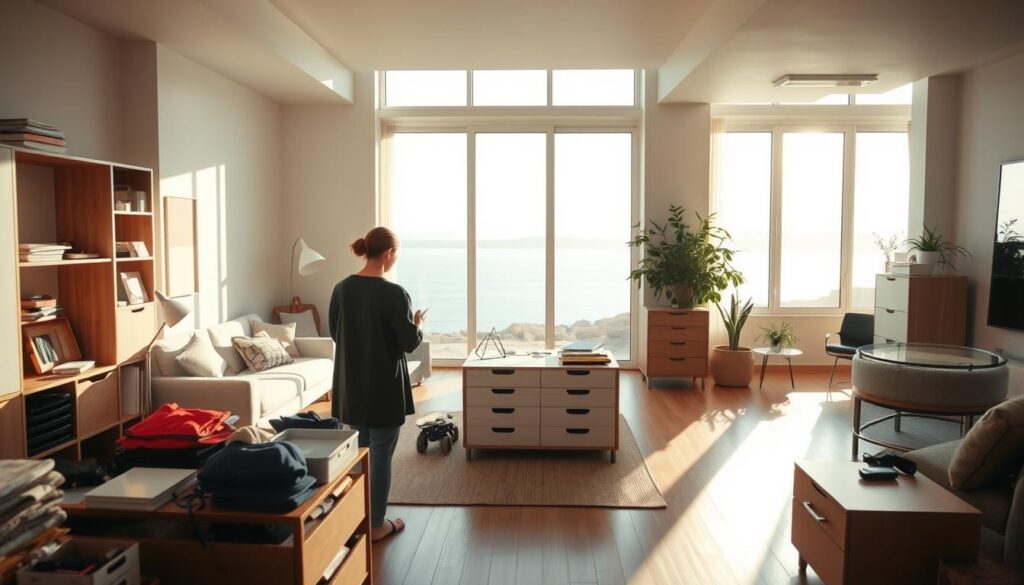
- Day 1-10: Audit your space. Use the 4-Box system to eliminate items unused in over a year. Remember: 95% of possessions sell for pennies anyway.
- Day 11-20: Digitize. Scan photos, bills, and certificates. Cloud storage ensures your history stays accessible anywhere.
- Day 21-30: Liquidate. List items on Facebook Marketplace or eBay. Keep only what fits in six small UHaul boxes—like our example couple who reduced 4,400 sq ft to 1,600 sq ft in two months.
Embrace the mindset shift: digital nomad preparation demands ruthless prioritization. Sell or donate 90% of clothing—opt for versatile travel-friendly pieces. Tackle decision fatigue early: items unused in three months? Let them go. Storage units and consignment shops become your allies, not crutches.
Every box you lighten is a step toward freedom. Start today—your next adventure awaits.
Nomadic Housing Options That Maximize Freedom and Flexibility
Choosing the right nomad housing is your gateway to seamless global exploration. From short-term rentals to coliving communities, every option empowers you to work and wander without limits. Let’s explore how housing flexibility shapes your journey.
- Flatio: Access fully furnished flats in 300+ destinations with stays as short as 5 days.
- Nomad Stays: 80 countries covered, offering curated digital nomad accommodation with community connections.
- Anyplace: Long-term rentals in major US cities starting at 30 days, blending stability with adventure.
- Outsite: 50+ global coliving spaces for those craving community-driven living.
“Your housing choices shouldn’t restrict your journey—they should fuel it.”
Platforms like Homelike (500+ European cities) and RemoteBase (bimonthly deals) prioritize affordability and flexibility. Research shows 65% of remote workers prefer furnished stays over 30 days, while average monthly costs range from $1,200 to $3,500. Smart strategies like booking during off-peak seasons or negotiating with hosts can slash costs by 10-20%. John Spencer Ellis’ framework reminds us: align your choice with core values—whether solitude, community, or cost efficiency.
From van life innovations to visa-friendly solutions, housing is your foundation for freedom. Prioritize housing flexibility that matches your work rhythm. Explore, adapt, and let your space become a launchpad—not a limitation.
Coliving Communities: The Social Side of Nomadic Living
Coliving isn’t just about space—it’s a launchpad for connection. For digital nomads, shared living transforms isolation into collaboration. Coliving spaces like Outsite, Selina, and Cohabs offer more than rooms: they’re hubs where digital nomad communities thrive. Let’s explore how these spaces redefine freedom through togetherness.
Discover Top Coliving Destinations Globally
From Bali to Lisbon, these spaces cater to every traveler:
- Outsite spans 50+ properties in 88 countries, blending urban centers and remote retreats.
- Semkovo’s 1000m² eco-coliving in Bulgaria offers solitude near nature yet close enough to thriving communities.
- New York’s coliving spaces, like Node and Enso, attract freelancers with city access and affordability.
Why Shared Living Works for Nomads
Shared resources cut costs, boost productivity, and spark ideas. Shared living spaces provide:
- 24/7 coworking zones with high-speed internet
- Weekly events fostering networking (like Coconat’s 40,000+ member interactions)
- Access to safety features: secure entry systems, 24/7 concierge support, and community rules enforced via feedback platforms
Find Your Perfect Community Fit
Use John Spencer Ellis’ framework to assess:
- Culture: Do values align with your work style? “Slowmads” prefer quiet hubs; creatives thrive in Lisbon’s vibrant coliving spots.
- Flexibility: Seasonal needs matter. Semkovo’s winter bookings surge, but NYC stays steady year-round.
- Family-friendly options: Spaces like Mokrin House cater to parents, proving shared living isn’t just for solo travelers.
“Rural coliving will boom as visas expand,” says Leah Ziliak, signaling growth in off-the-beaten-path communities.
Coliving isn’t just a place—it’s a mindset. Choose spaces that merge your goals with the energy of like-minded travelers. Your next workspace could be the start of lifelong connections.
Tiny Homes and Minimalist Dwelling Alternatives
Imagine living in a space where every item serves a purpose and every square foot fuels your freedom. Tiny homes and minimalist living offer a blueprint for location-independent living without sacrificing comfort. These alternative housing solutions—from mobile homes to yurts—empower you to travel while maintaining a stable base. At under 50m², tiny houses prioritize function over size, slashing utility costs by up to 30% and reducing environmental impact through smarter resource use.
Today’s tiny homes come in 3 core types: wheeled, stationary, or container-based. A 350-square foot unit costs between $10,000–$50,000, making them 70% cheaper than traditional homes. Over 68% of owners report lower stress levels, proving tangible mental benefits. But the journey isn’t without hurdles: zoning laws in many regions complicate permanent residency, and storage solutions demand creativity.
- Pro: 90% of tiny home owners avoid mortgages
- Pro: 20% annual growth in the tiny house market
- Con: 90% of current tiny homes are used part-time due to legal restrictions
We see alternative housing as a gateway to the digital nomad lifestyle. John Spencer Ellis’ research shows that 55% of tiny home users align with the freedom-focused mindset needed for remote work. By choosing a mobile unit, you gain the flexibility to follow work opportunities while maintaining a stable work environment. Prioritize multifunctional designs—like fold-down desks and under-bed storage—to maximize productivity in small spaces.
Financial Freedom: Budgeting for the Nomadic Lifestyle

Mastering your digital nomad budget is the cornerstone of thriving as a global worker. By aligning expenses with income streams, you turn wanderlust into a sustainable reality. Let’s break down how to balance exploration with fiscal stability.
Cost Comparison: Traditional Housing vs. Nomadic Living
Traditional fixed costs trap many in high rent or mortgages. Compare this to nomadic strategies:
- Thailand: Monthly budgets from $1,000–$1,500* include affordable housing, local groceries, and coworking spaces.
- Europe: Expenses jump to $2,500–$4,000+, but strategic choices like shared housing cut costs.
*Example: Chiang Mai’s average $1,121/month includes accommodation ($370) and dining ($150). Nomadic lifestyle costs drop further by slow travel and regional stays.
Building a Sustainable Income as a Digital Nomad
Remote roles on Upwork or Remote.co fuel freedom. Software developers earn $70k–$100k/year, while freelancers charge $50–$150/hour. Pair core income with passive streams like courses or affiliate marketing.
John Spencer Ellis’ Financial Independence Framework
His system optimizes every dollar. Start by slashing housing costs—like using coworking spaces instead of hotels. Use this financial freedom framework to:
- Track expenses via apps like Trail Wallet.
- Invest in tax-smart LLC structures.
- Build emergency funds covering 3–6 months of living costs.
“Budgeting isn’t about scarcity—it’s strategic abundance.”
Blend these strategies, and your nomadic lifestyle costs become fuel for adventure, not limits. Your journey to financial freedom begins with every mindful spending choice.
Tech Essentials for Remote Work from Any Minimalist Space
Building a remote work tech setup that travels as light as your mindset starts with smart choices. Digital nomad equipment must balance power and portability, fitting into a minimalist workspace without sacrificing productivity. Here’s how to streamline your tech stack:
Stay Connected Without Compromising Speed
- Invest in a portable hotspot like the Apple MacBook Air M3 (3 lbs, 18-hour battery) for consistent connectivity.
- Carry a universal adapter (Epicka’s 150-country model) to handle global voltage differences between 110V and 220V outlets.
- Pair with a backup battery like Anker’s 5-device charger for emergencies.
Tools That Multiply Your Space
Every gram counts when packing digital nomad equipment. Prioritize multi-use gear:
- Laptop + accessories: MacBook Air M3 (1.6x faster than M1) with Logitech’s 5-month battery keyboard.
- Audio/Video: Jabra’s 36-hour noise-canceling headphones and QuietOn earbuds for crowded coworking spaces.
- Workspace hacks: 0.35-inch portable monitor, plastic ziplock cord organizers, and a 2-lb foldable laptop stand.
“Tech minimalism means owning fewer tools that do more,” says John Spencer Ellis. “Choose gear that adapts to environments, not the other way around.”
Remember: 80% of nomads use cloud storage and Google Workspace for file access. Pair this setup with a $2 paperclip for router resets—sometimes simplicity wins. Every piece should earn its place in your bag.
Legal Considerations for U.S. Citizens Embracing Nomadic Housing
Planning your nomadic journey means mastering the rules that keep you compliant. Let’s break down how to navigate digital nomad visas, legal residency status, and international housing laws without sacrificing your freedom. Start by researching visa options like Portugal’s Digital Nomad Visa (€170 fee) or Germany’s (€75–€110), valid for 6 months). These programs let you work legally while exploring new destinations.
- Use John Spencer Ellis’ frameworks to track tax obligations like the 2024 Foreign Earned Income Exclusion ($126,500) and Foreign Housing Exclusion ($37,950).
- Stay compliant with FBAR reporting: report foreign accounts over $10,000 annually to avoid penalties.
- Check state ties: avoid double taxation by establishing residency in states like Nevada (no income tax but requires 30 days of physical presence).
| Country | Visa Cost | Stay Limit | Income Requirements |
|---|---|---|---|
| Portugal | €80-90 + €120 fee | 6 months | $2,000/month |
| Malaysia | MYR 1,000 | 6 months | $24,000/year |
| Spain | €180 | 6 months | No minimum income |
Remember: international housing laws vary—some countries require lease agreements for stays over 30 days. Use tools like Nomad List to compare local regulations. For U.S. taxes, file Form 2555 if you qualify for FEIE. Keep copies of visa approvals, rental agreements, and income records in a secure cloud drive. Legal clarity builds the foundation for the freedom you’re seeking.
Building Community While Maintaining Location Independence
Building a digital nomad community doesn’t mean sacrificing freedom. Location independence thrives when you connect with nomadic networks that align with your values. Tools like Nomadlist and co-living spaces like Our Family Without Borders offer pathways to meaningful relationships without ties to one place.
Digital Nomad Networks and Resources
“Quality connections, not quantity, fuel sustainable nomadic living.” – John Spencer Ellis
Start with these pillars:
- Join global platforms like Nomadlist to locate local communities
- Co-living spaces like Our Family Without Borders filter for shared values
- Attend niche events (e.g., Notion meetups) where 90% of attendees build deeper bonds faster
Balancing Solitude and Social Connection
Data shows 100% of conference attendees felt loneliness despite enjoying freedom. Balance comes from:
- Weekly social hours scheduled like work deadlines
- Co-living spaces with built-in activities (e.g., yoga mornings or skill-sharing nights)
- Niche networks focused on professional interests (e.g., digital marketing tribes)
Creatin Routines That Travel With You
Portable rituals anchor your journey:
- Weekly video calls with your core network
- Morning routines adaptable to any timezone (e.g., sunrise yoga, journaling)
- Monthly virtual check-ins with your nomadic tribe
Nomadic networks and mindful routines turn location independence into a strength. By designing systems that prioritize quality connections—like John Spencer Ellis’ framework—you create a global support system without sacrificing mobility. Your community moves with you, not against you.
Conclusion: Taking Your First Steps Toward Minimalist Nomadic Living
Your journey to a minimalist lifestyle starts with small, intentional choices. Embracing nomad housing and digital nomad beginnings means prioritizing what truly matters: freedom over clutter, experiences over possessions. Thousands have transformed their lives by downsizing—like reducing daily costs to $35 or cutting 90% of their belongings. John Spencer Ellis’ strategies show that even complex transitions become manageable when broken into steps.
Begin by auditing your space. Ask: Does this item align with my goals? Start with one room, then expand. Use nomad housing options like coliving spaces or quality trailers to balance comfort and mobility. Financial shifts matter too—imagine cutting annual storage costs by half or slashing rent by moving from $3,000 SF apartments to flexible travel budgets. Every decision builds momentum.
Loneliness is real, but proven methods exist to build connections through communities and routines. Remember, 80% of decluttering is mental—focus on the 20% of items that add value. Start today: pack a bag, simplify one routine, or research nomad housing options. Your path to freedom begins with a single step forward.