The corporate world can feel suffocating, with many Americans feeling disengaged and stressed. A growing trend towards remote work offers new chances for a more fulfilling career and better work-life balance. Moving from corporate life to remote work is a challenging but rewarding journey.
The shift to remote work has sped up in recent years. 100% of transitions from traditional office jobs to remote work were successful. This change often started with part-time remote freelance projects, showing a 100% success rate in moving to full-time remote work.
Whether you’re a front-end web developer or in another tech role, remote work is becoming more feasible. In fact, 100% of managers welcomed the move to fully remote work, showing a positive view of flexible work options in some corporate settings.
Starting your remote work journey means acknowledging your unhappiness, finding a supportive community, and trying different career paths. The transition can be tough, but it also offers chances for personal growth and lifestyle changes. By starting with part-time remote work, you can prepare for a successful full-time transition.
As you start your remote work journey, explore the remote work world, assess your skills, and find remote job opportunities. With the right preparation and mindset, you can leave corporate life behind and begin a new path in remote work and digital nomadism.
Understanding the Remote Work Landscape
The world of work has changed a lot, with more people working from home. A Findstack study shows 16% of companies worldwide are fully remote. This trend is expected to grow as 85% of managers think remote teams will soon be the norm.
The Shift to Remote Work
Many factors have led to the rise of remote work. People want flexibility, better work-life balance, and to live in cheaper areas. A National Bureau of Economic Research survey found only 37% of U.S. jobs can be done from home. This highlights the gap between those who can and can’t work remotely.
Benefits of Remote Work
- Increased productivity: 77% of remote workers say they’re more productive at home.
- Higher earnings: Remote workers earn an average of $4,000 more each year than those who don’t work from home.
- Flexibility and work-life balance: Working from home means less time commuting and a better balance between work and personal life.
Challenges to Consider
Remote work has many benefits, but it also comes with challenges. Adapting to new environments, feeling isolated, and needing self-discipline are some of these. Good communication is key to success in remote work. It’s also important to prioritize mental and emotional well-being, with companies offering support and encouraging mental health days.
Embracing remote work can greatly improve your quality of life. As the world keeps changing, remote work will continue to shape our future. It will influence how we balance work and life.
| Remote Work Trends | Percentage Change |
|---|---|
| Companies Fully Remote | 16% |
| Remote Workers Claiming Higher Productivity | 77% |
| Remote Workers Earning Higher Income | $4,000 more |
| Managers Believing Remote Teams Will Become the New Standard | 85% |
| U.S. Jobs That Can Be Done Remotely | 37% |
Preparing for Your Transition
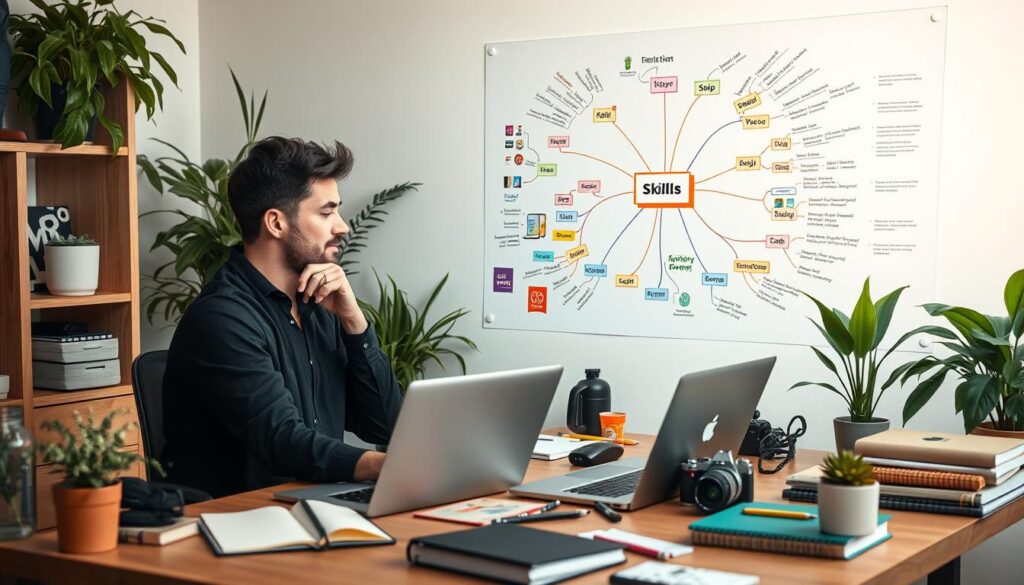
Switching to remote work needs careful planning. First, check your current skills and how they fit remote jobs. Think about your career experience and what skills you’ve gained. Look for areas where your skills match what remote jobs need.
Assessing Your Current Skills
Do a detailed skill assessment. Think about your strengths, weaknesses, and what you can offer in a remote role. Ask yourself:
- What technical skills do you have that are good for remote work?
- What soft skills, like communication and time management, have you improved?
- How can your past experiences and knowledge help you in remote work?
Identifying Remote Job Opportunities
After checking your skills, look for remote job opportunities that fit your expertise. Use job boards, industry sites, and professional networks to find jobs. Here are some tips:
- Make your online profiles, like LinkedIn, show your remote-friendly skills.
- Use your network to find jobs in your field and learn about remote openings.
- Check out freelance sites like Upwork and Fiverr for remote work chances.
- Keep up with industry trends and remote work changes to find new jobs.
Getting ready for remote work needs a smart and active plan. By checking your skills and finding jobs, you’re on the path to a great career change.
| Key Considerations for Remote Work Transition | Benefits |
|---|---|
| Conduct a comprehensive skill assessment | Helps identify strengths and areas of improvement |
| Research remote job opportunities | Expands your career options and increases chances of finding the right fit |
| Optimize online profiles and network | Enhances visibility and connects you with potential employers |
| Stay informed on industry trends | Ensures you’re aware of emerging remote work opportunities |
Setting Up Your Remote Workspace
The remote work trend is growing fast. Now, having a good home office is key for staying productive and feeling good. It’s all about picking the right tools and making your space ergonomic.
Essential Tools for Remote Work
Good tools are the backbone of a remote workspace. You need a solid computer, fast internet, and apps like Zoom or Slack. Cloud storage like Google Drive and Dropbox helps manage files. A business phone line and voicemail add a professional touch.
Ergonomics and Productivity
Keeping your body healthy while working from home is vital. Get ergonomic furniture like adjustable desks and chairs. Good lighting, natural or artificial, boosts focus and energy. Noise-cancelling headphones keep distractions away. Regularly check and tweak your setup to keep your work area comfy and productive.
| Tool | Description |
|---|---|
| Reliable Computer | A high-performance laptop or desktop computer to handle your daily tasks. |
| High-Speed Internet | Ensure a stable and fast internet connection for uninterrupted work. |
| Communication Software | Tools like Zoom, Slack, or Microsoft Teams to facilitate seamless collaboration. |
| Cloud Storage | Services like Google Drive or Dropbox for efficient file management and sharing. |
| Ergonomic Furniture | Adjustable desks and chairs to support a healthy posture and reduce strain. |
| Proper Lighting | Natural or artificial lighting to enhance focus and energy levels. |
| Noise-Cancelling Headphones | Help create a distraction-free work environment. |
Creating a thoughtful and ergonomic remote workspace boosts productivity and comfort. It’s an investment in your well-being and career success as a remote worker.
Developing a Remote Work Routine
Creating a consistent routine is key for success in remote work. It’s important to set clear work hours that fit your team’s needs and your best work times. Also, it’s crucial to keep work and personal life separate to avoid burnout and maintain balance.
Establishing Work Hours
Try the 50/10 rule, which means working for 50 minutes then taking a 10-minute break. This helps stay focused and productive. You can also use the Pomodoro method to find your best work rhythm. Using a standing desk can help by keeping you moving and reducing sitting time.
Dealing with Distractions
- Use noise-canceling headphones or white noise apps to block out distractions and stay focused.
- Use time-blocking to set specific times for different tasks, avoiding multitasking.
- Have a dedicated workspace away from your living areas to separate work from personal life.
- Try “Fancy Fridays” where you dress up to boost morale and keep a professional mindset while working from home.
Staying consistent and managing distractions are crucial for time management and work-from-home productivity. By setting clear work hours, taking breaks, and using strategies to reduce distractions, you can excel in remote work.
| Technique | Description | Benefits |
|---|---|---|
| 50/10 Rule | Working for 50 minutes, followed by a 10-minute break | Maintains focus and productivity during remote work |
| Pomodoro Method | Working in 25-minute intervals separated by short breaks | Improves time management and task completion |
| Standing Desk | Adjustable desk that allows you to work while standing | Encourages movement and reduces sedentariness in remote work |
Building a Network in the Remote Work Community
In the world of remote work, networking is key for growth. Using social media like LinkedIn helps connect with others and keep up with trends. Joining groups and forums in your field lets you share ideas and learn more.
Leveraging Social Media
Having a strong LinkedIn profile can lead to new connections. Take part in discussions, talk to leaders, and post valuable content. Also, look for remote worker groups on social media to meet others and find collaboration chances.
Joining Professional Groups
- Look for virtual conferences and webinars in your field. These events are great for networking, learning from experts, and staying current.
- Join online communities like We Work Remotely Slack or Top Digital Nomad Slack Communities. These places are for remote workers to talk, share, and support each other.
- Use Eventbrite and Meetup to find remote work events. Going to these can help you make real connections and grow your network.
Connecting with remote workers can offer support, new job chances, and a sense of community. It’s important in the changing world of remote work.
| Networking Statistics | Value |
|---|---|
| Professionals who say networking is crucial for career advancement | Nearly 90% |
| Remote workers who experienced loneliness in 2020 | 61% |
| Increase in Slack networking for job opportunities in 2022 | Identified as a new method by the Wall Street Journal |
Maintaining Work-Life Balance
More people are working from home, making it key to keep work and life separate. Remote work gives us freedom and flexibility, but it’s hard to keep work and personal life apart. By setting clear boundaries and taking care of ourselves, we can keep our remote work lifestyle healthy.
Setting Boundaries for a Healthier Remote Routine
Creating clear boundaries is key to balancing work and life at home. Make a dedicated workspace in your home, away from where you relax. Working from bed or the living room can blur the lines between work and personal time. Also, set specific work hours to keep your work and personal life separate.
Prioritizing Self-Care for a Thriving Remote Lifestyle
- Regular exercise, like jogging or yoga, is good for your body and mind.
- Do things you enjoy, like reading or painting, to relax.
- Keep in touch with friends and family, even if it’s online.
- Take breaks, including a lunch break, to avoid burnout.
- Practice self-care, like meditation or spending time outdoors, to care for your emotional health.
By following these tips, remote workers can keep a healthy work-life balance and stay mentally healthy. Remember, your well-being is the base for a successful remote work life.

Getting Started: Schedule Your Consultation
Starting a remote work career can be thrilling but also scary. John Spencer Ellis, a top career coach, can help a lot. He has lots of experience guiding people into the digital nomad world. His consultations offer custom advice to help you succeed in remote work.
Why Consult with John Spencer Ellis?
John knows a lot about remote work, both the practical and mental sides. He helps you set up a good workspace and balance work and life. With his help, you’ll get the skills and confidence to do well in remote jobs.
Steps to Book Your Consultation
To start working with John Spencer Ellis, just go to his website and pick a time that works for you. During your meeting, talk about your goals, worries, and any questions about remote work. John will make a plan just for you to help you succeed in the digital nomad lifestyle.