
As the digital nomad lifestyle becomes increasingly popular, maintaining optimal health and wellness can pose unique challenges. From navigating unfamiliar food options to managing disrupted sleep patterns, remote workers must proactively address the demands of their unconventional lifestyle. However, with the right strategies, digital nomads can thrive and maintain their well-being while embracing the freedom of location independence.
John Spencer Ellis understands the importance of health and wellness for digital nomads. As an experienced coach and entrepreneur, he has helped countless individuals achieve a sustainable balance between work, travel, and personal care. By implementing the following proven tips, digital nomads can unlock the secrets to staying healthy and productive on the go.
Key Takeaways
- Prioritize hydration, balanced nutrition, and regular exercise to maintain physical well-being.
- Develop strategies to manage stress and maintain work-life boundaries.
- Create an ergonomic workspace to prevent physical strain and injury.
- Establish consistent sleep routines to optimize rest and recovery.
- Cultivate a supportive network to combat the potential isolation of the digital nomad lifestyle.
Understanding the Digital Nomad Lifestyle Challenges
The digital nomad lifestyle offers unparalleled freedom and flexibility, but it also presents unique challenges that require intentional strategies to maintain overall health and productivity. From physical health obstacles to mental wellness hurdles and work-life balance struggles, digital nomads must navigate a complex landscape to thrive in their location-independent careers.
Physical Health Obstacles
Constant travel and inconsistent routines can take a toll on the physical well-being of digital nomads. Irregular sleep patterns, disrupted mealtimes, and limited access to exercise facilities can lead to issues such as fatigue, weight fluctuations, and susceptibility to illnesses. Establishing a consistent self-care regimen, even while on the move, is crucial for digital nomads to maintain their health and energy levels.
Mental Wellness Hurdles
The digital nomad lifestyle can also present mental health challenges. Feelings of isolation and loneliness may arise from the lack of a stable social support network, while the constant need to adapt to new environments can be mentally taxing. Maintaining strong connections with loved ones, engaging in mindfulness practices, and prioritizing mental well-being are essential for digital nomads to navigate these hurdles.
Work-Life Balance Struggles
Blurring the lines between personal and professional life is a common challenge for digital nomads. The lack of physical boundaries between work and leisure can lead to burnout, as the temptation to work constantly or neglect personal needs becomes prevalent. Establishing clear work-life boundaries, scheduling regular breaks, and cultivating hobbies outside of work are vital strategies for digital nomads to achieve a healthy work-life balance.
By addressing these multifaceted challenges, digital nomads can thrive in their location-independent careers while prioritizing their overall well-being and maintaining a sustainable, healthy lifestyle.
| Challenge | Solution |
|---|---|
| Coordinating Time Zones | Utilize time zone management tools like World Time Buddy or Time Zone Converter |
| Internet Connectivity | Research Internet reliability before traveling, have backup options like portable Wi-Fi hotspots |
| Loneliness and Community Building | Utilize local co-working spaces, attend social events or networking opportunities to build a community |
| Legal and Financial Matters | Stay informed about visa requirements, tax laws; seek professional advice when needed |
| Maintaining Health and Wellness | Engage in local fitness activities, practice mindfulness techniques, prioritize sleep, balanced diet, and hydration for wellness |
“The digital nomad lifestyle offers unparalleled freedom, but it also presents unique challenges that require intentional strategies to maintain overall health and productivity.”
Essential Nutrition Strategies for Nomadic Living
As a digital nomad, maintaining a healthy and balanced diet can be a challenge, but it’s essential for your overall well-being. Prioritize whole, unprocessed foods and cook when possible to ensure you’re getting the nutrients your body needs. Start your day with a protein and healthy fat-rich breakfast to keep you feeling satiated and energized throughout the day.
Increase your vegetable intake and limit added sugars to support your physical and mental health. Take advantage of local fresh markets when traveling to discover nutrient-dense, regional ingredients for your meals. Pack a variety of healthy snacks, such as nuts, seeds, and fresh fruit, to avoid making poor food choices on the go.
Be mindful of your carbohydrate intake and consider implementing intermittent fasting to reap additional health benefits. Staying hydrated is crucial, as proper hydration aids in temperature regulation, joint lubrication, and cognitive function. Replenish electrolytes lost through sweat, especially during intense activities or in hot environments.
| Healthy Eating Tip | Benefits for Digital Nomads |
|---|---|
| Eat a balanced meal 2-3 hours before exercise | Provides necessary energy without discomfort |
| Refuel after a workout | Supports muscle recovery |
| Incorporate local superfoods | Adds variety and essential nutrients to your diet |
| Plan and prepare meals in advance | Helps maintain a balanced diet and reduce unhealthy eating temptations |
By incorporating these essential nutrition strategies, you can support your physical and mental well-being as you navigate the digital nomad lifestyle and explore the world.
“Maintaining a balanced diet as a digital nomad is crucial for sustaining high energy levels and optimal cognitive function.”
Health Tips for Digital Nomads
As a digital nomad, maintaining your health and well-being on the go can be a constant challenge. From managing time zones to finding ways to stay active, there are several strategies you can implement to prioritize your physical and mental health. Let’s explore some essential health tips for the digital nomad lifestyle.
Creating Daily Wellness Routines
Establishing consistent daily wellness routines is key to keeping your mind and body in top shape. Incorporate a mix of exercise, mindfulness practices, and self-care activities into your daily schedule. Engage in regular exercise, such as yoga, walking, or high-intensity interval training (HIIT), to boost your energy and improve overall fitness. Complement your physical activity with mindfulness techniques like meditation or deep breathing to manage stress and promote relaxation.
Managing Time Zones and Sleep Patterns
Navigating multiple time zones can disrupt your sleep patterns and leave you feeling fatigued. To combat this, gradually adjust your sleep schedule when moving to a new location. Expose yourself to natural light during the day and create a consistent bedtime routine to help your body adapt. Avoid long daytime naps and limit screen time before bed to ensure quality sleep.
Stress Management Techniques
- Practice stress-reducing activities like journaling, listening to calming music, or engaging in creative hobbies.
- Stay connected with friends, family, and support networks, both in-person and virtually, to combat feelings of isolation.
- Schedule regular health check-ups and carry essential medications to maintain your overall well-being.
By prioritizing your health and wellness as a digital nomad, you can build resilience, enhance your productivity, and enjoy the vibrant, location-independent lifestyle to the fullest.
Building a Location-Independent Fitness Routine
As a digital nomad, maintaining a fitness routine can be a unique challenge. With constantly changing environments and limited access to traditional gyms, it’s essential to get creative with your workouts. The good news is that you can build a location-independent fitness routine that keeps you healthy and energized, no matter where your travels take you.
Start with bodyweight exercises that require no equipment, such as push-ups, sit-ups, and squats. These exercises can be performed anywhere, from your hotel room to a scenic park. Supplement your bodyweight routine with resistance bands, which are lightweight, portable, and versatile for strength training.
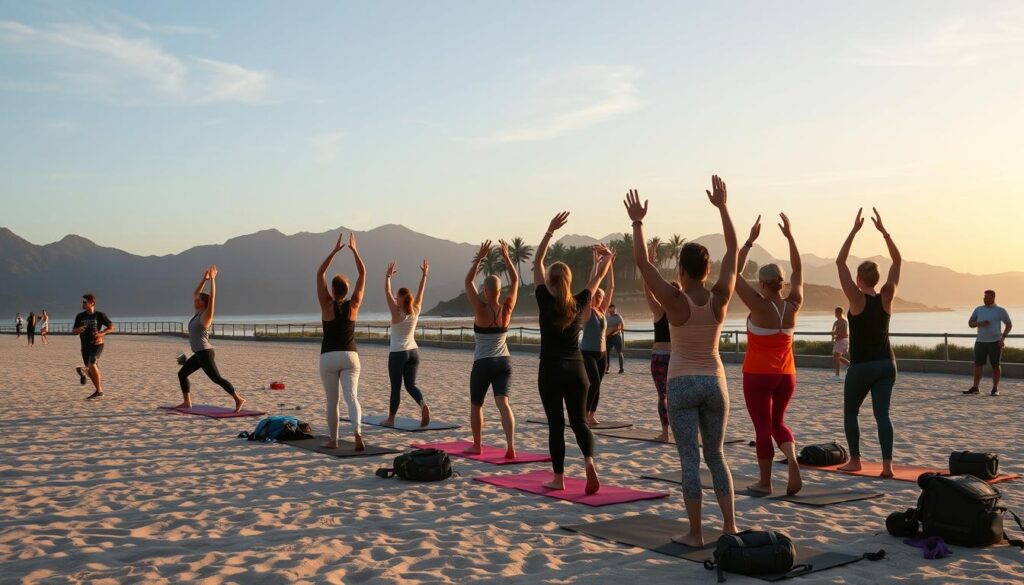
- Leverage outdoor spaces for your fitness needs. Many cities offer public parks, trails, or beaches that can serve as your personal gym.
- Explore local fitness options like day passes to gyms or drop-in classes. This allows you to access facilities and instruction while on the move.
- Utilize workout apps or online classes when traditional exercise options are limited. These provide guided routines you can follow from the comfort of your temporary workspace or accommodation.
The key to building a successful fitness for nomads routine is to remain flexible, adaptable, and consistent. By incorporating a mix of bodyweight exercises, portable equipment, and location-specific activities, you can maintain your workout routines for travelers and exercise on the go, supporting your overall health and well-being on the road.
“Walking for just 30 minutes can burn between 100–200 calories, depending on your speed and weight.”
Mindful Eating While Traveling
As a digital nomad, maintaining a healthy eating routine can be a challenge while constantly on the move. However, with a little planning and mindfulness, you can ensure that your meals nourish both your body and your adventurous spirit. Let’s explore some practical strategies to savor local cuisine while prioritizing your overall wellbeing.
Local Market Shopping Guide
One of the best ways to eat healthy while traveling is to visit local markets. These vibrant hubs offer a treasure trove of fresh, seasonal produce, often at affordable prices. Take the time to explore the stalls, chat with vendors, and discover unique ingredients that can inspire your culinary creations. By sourcing your meals from the local market, you’ll not only enjoy the flavors of your destination but also support the local economy.
Healthy Restaurant Selection Tips
When dining out, it’s important to be selective about your restaurant choices. Look for establishments that prioritize healthy eating abroad by offering a variety of vegetable-rich dishes, lean protein options, and nutrient-dense sides. Practice portion control and be mindful of your cravings – it’s okay to indulge in local specialties, but aim for an 80:20 balance, where 80% of your meals are nutritious and 20% allow for culinary exploration.
Meal Prep in Temporary Spaces
As a digital nomad, you may find yourself in temporary accommodations without access to a full kitchen. But that doesn’t mean you can’t maintain a nomad meal planning routine. Invest in a few essential cooking tools, such as a portable electric cooktop, a sturdy set of knives, and a compact set of containers for storage. With a little creativity, you can whip up simple, nourishing meals using the local produce and pantry staples available to you.
Remember, the key to healthy eating abroad is finding a balance between indulging in the local cuisine and prioritizing your overall wellbeing. By incorporating these strategies into your nomadic lifestyle, you’ll be able to fuel your adventures with the nutrients your body craves.
“Mindful eating is not a diet, it’s a lifestyle. It’s about savoring each bite, appreciating the flavors, and nourishing your body with the sustenance it needs to thrive on the road.”
Creating Ergonomic Workspaces Anywhere
As a digital nomad, maintaining good posture and an ergonomic workspace setup is crucial for your physical well-being. According to the National Institute of Health, 45.5% of office workers experience mild to severe neck pain, often due to poor ergonomic setup and improper posture. To prevent such issues, it’s essential to prioritize ergonomics in your nomadic lifestyle.
One effective strategy is to invest in portable standing desks or create makeshift ergonomic setups in temporary spaces. The Kensington SmartFit® Easy Riser™ Go Adjustable Ergonomic Riser, for example, is designed for 17-inch laptops or less, allowing you to elevate your workspace and maintain a neutral body position. Complementing this, the Multi-Device Dual Wireless Compact Keyboard offers wireless and Bluetooth connectivity options, making it a versatile choice for remote work environments.
Incorporating regular breaks and stretching into your routine can also alleviate muscle tension and improve your overall well-being. Consider packing a tennis ball or massage ball to release muscle tension in your neck, shoulders, and back. When flying, make an effort to stand and move around whenever possible to avoid prolonged sitting, which can lead to various health concerns.
| Product | Description | Key Feature |
|---|---|---|
| Kensington SmartFit® Easy Riser™ Go Adjustable Ergonomic Riser | Designed for 17-inch laptops or less, this riser helps maintain a neutral body position. | Adjustable height for optimal ergonomic setup |
| Multi-Device Dual Wireless Compact Keyboard | Offers both wireless and Bluetooth connectivity options, suitable for remote work environments. | Versatile connectivity options |
| Kensington’s Pro Fit® Ergo Vertical Wireless Mouse | Designed to keep your wrist in a neutral position, reducing soft tissue compression. | Ergonomic design for reduced strain |
| USB-C Single 4K Portable Docking Station | Provides versatile video connections for external displays, compatible with various operating systems. | Flexible video connectivity options |
| Kensington’s Contour™ 2.0 Business Laptop Backpack | Distributes weight to your center of gravity, with features like a heat-dissipating design and RFID security pocket. | Ergonomic and secure design |
By prioritizing ergonomic tips for travelers and creating a nomad workspace setup that supports your remote work posture, you can maintain your physical and mental well-being while embracing the freedom of a digital nomad lifestyle.
Mental Health Maintenance for Nomads
As digital nomads, maintaining mental wellness can be a constant challenge amid the frequent travel and ever-changing environments. However, with the right strategies, nomad mental health can thrive, ensuring a fulfilling and sustainable digital wellness journey. Let’s explore practical ways to build support networks, incorporate work-life balance for travelers, and cultivate a healthy mindset on the road.
Building Support Networks
One of the key factors in preserving mental health for digital nomads is establishing a sense of community. Joining online forums and social media groups dedicated to the nomadic lifestyle can provide a valuable network of like-minded individuals, offering emotional support, advice, and a sense of belonging. Additionally, making an effort to connect with locals in each new destination can enrich your travel experience and foster a deeper sense of connection.
Digital Detox Strategies
The constant connectivity and reliance on technology can be both a blessing and a curse for digital nomads. Implementing regular digital detox periods, where screens are put away and time is devoted to offline activities, can significantly improve mental clarity and reduce stress levels. Consider setting boundaries around work hours, designating tech-free zones or days, and engaging in mindfulness practices to find a healthier balance.
Maintaining Work-Life Boundaries
Striking a harmonious work-life balance for travelers is crucial for sustaining mental well-being. Establish clear boundaries between work and personal time, prioritizing activities that nourish your mind and body. Engage in local cultural experiences, explore new destinations, and make time for hobbies and self-care. By maintaining these boundaries, you can prevent burnout and cultivate a sense of fulfillment in your nomadic lifestyle.
Remember, the key to thriving as a digital nomad lies in prioritizing your mental health. By building supportive networks, practicing digital detox, and maintaining a healthy work-life balance, you can ensure that your nomad mental health remains strong, allowing you to fully embrace the joys and adventures of the digital nomad lifestyle.
Sleep Optimization for Frequent Travelers
As a digital nomad, maintaining a consistent sleep schedule can be a constant challenge when navigating through different time zones. However, prioritizing sleep optimization is crucial for your overall health, productivity, and well-being. By implementing a few key strategies, you can manage jet lag and ensure you get the rest your body needs, even while constantly on the move.
One of the essential tips is to create a restful sleeping environment, no matter where you are. Invest in travel-friendly accessories like earplugs, eye masks, and lightweight curtains to block out external light and noise. Avoiding blue light exposure from digital screens before bedtime can also aid in better sleep quality. Practicing relaxation techniques, such as meditation or deep breathing, can help your mind and body wind down for a more restful night’s sleep.
Gradually adjusting to new time zones is another key strategy for managing jet lag. Upon arrival, try to align your sleep-wake cycle with the local time as soon as possible, utilizing natural light to reset your internal clock. Resist the temptation to take naps, as they can disrupt your ability to adapt to the new schedule. Aim for at least seven hours of sleep per night, as this optimal duration supports overall health and productivity, even in the face of travel-induced fatigue.