
Living a location independent lifestyle means you’re free to work and live anywhere. This breaks the mold of traditional office jobs. Many people now want a more fulfilling life, leading to a rise in interest in this lifestyle.
This lifestyle, also known as digital nomadism or remote work, is becoming more popular. It’s thanks to the growth of remote work options in many jobs. Social media has also shown the benefits of this lifestyle, featuring those who have made the switch.
With location independence, you can choose where you live and work. This lets you explore new cultures and save money by living in cheaper places. It also helps you grow personally through new experiences.
This lifestyle is different from digital nomadism. It focuses on the freedom to work from anywhere, not constant travel. To start this lifestyle, you need to plan well, thinking about work, money, and challenges.
But the benefits are worth it. You get to live and work on your own terms. Start your journey to a location independent lifestyle by scheduling a consultation with John Spencer Ellis now.
Understanding the Location Independent Lifestyle
The location independent lifestyle lets people work from anywhere, without a traditional office. It’s become more popular, especially since the pandemic. People now want to balance work and life better.
Definition and Key Concepts
This lifestyle means working from anywhere, like a digital nomad or an online business. It’s about remote work, starting your own business, and enjoying travel freedom. It gives you freedom to design your day, choose where to work, and focus on your well-being.
History and Evolution of the Concept
The idea of working from anywhere has grown a lot. It started with telecommuting and has now become global. The gig economy and better technology have made it more appealing. Now, many jobs are available, from writing to digital marketing, helping people find financial freedom and happiness.
It’s important to know the difference between location independence, digital nomadism, and remote work. Each has its own benefits and challenges. You need to think about these before starting your journey to location-independent living.
The Benefits of Being Location Independent
Living without a fixed location opens up a world of advantages. You can shape your day as you like and save money by living in cheaper places. Plus, you get to experience different cultures and grow personally.
Flexibility in Daily Life
Being location independent means you can set your own schedule. You can work from anywhere, like your home, a café, or a coworking space. This freedom helps you balance work and life better.
Financial Advantages
Living on your own terms can save you a lot of money. By choosing places like Colombia or Thailand, you can cut down on expenses. Digital nomads can save up to $7,000 a year by avoiding commute and work clothes costs. Plus, you can find better-paying jobs around the world.
Enhancing Personal Growth
Living without a fixed location means you can explore new cultures. You can learn new languages and grow personally. Meeting others in digital nomad communities adds to the experience, offering support and new connections.
While the benefits of location independence are great, finding a balance can be tough. You need self-discipline and flexibility to thrive in this lifestyle.
Common Misconceptions About Location Independence
The idea of working from anywhere sounds great, but it’s not all sunshine and rainbows. Being a digital nomad or remote worker has its own set of challenges. Social media often shows a different side of this lifestyle.
The Myth of Constant Travel
Many think you’re always on the move and working on beautiful beaches. But, the truth is, it’s hard work and dedication. Most people choose to stay in one place for a while to stay productive and stable.
Work-Life Balance Issues
Finding a good work-life balance is tough when you work from anywhere. It’s hard to separate work from play. The remote work challenges of staying focused and motivated are bigger when you’re always on the move.
The digital nomad reality isn’t as perfect as it looks on social media. The travel lifestyle myths of always being on vacation and being super productive are not true. People who succeed in this lifestyle are self-motivated and can handle risks.
| Misconception | Reality |
|---|---|
| Constant travel and leisure | Requires hard work, long hours, and can be stressful |
| Easy work-life balance | Blurred lines between work and leisure, challenging to maintain boundaries |
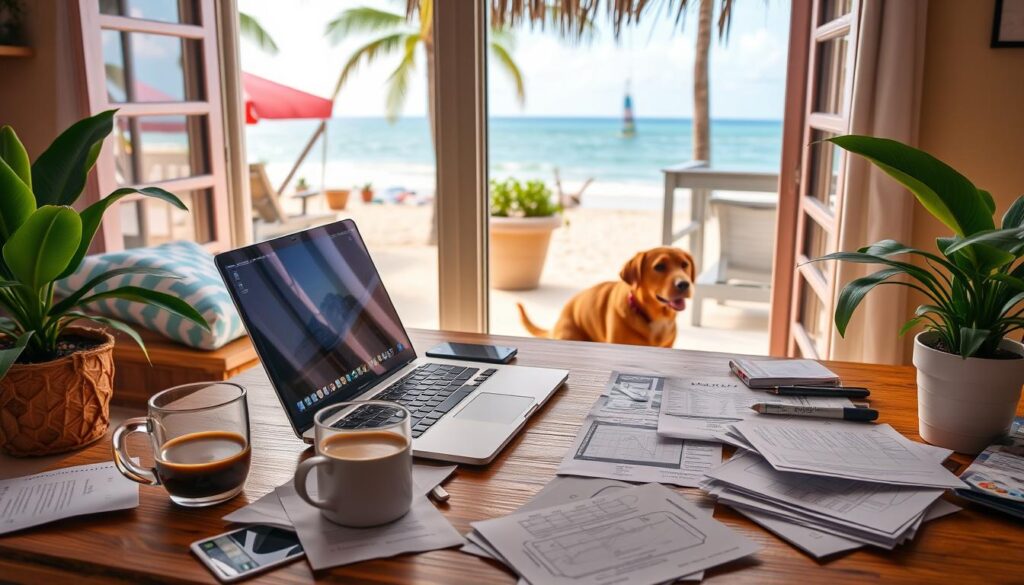
Knowing the truth about location-independent living helps you prepare. It’s important to understand the challenges and benefits of this lifestyle. This way, you can make the most of it.
Essential Tools for a Location Independent Lifestyle
Digital nomads and location-independent entrepreneurs need the right tools for remote work. These tools help us stay productive and enjoy our adventures. From tech to apps, these resources are key to our success.
Technology That Supports Remote Work
Our laptops and smartphones are essential for work on the go. We invest in durable devices and a reliable internet connection. Remote work tools like project management software and cloud storage help us work together from anywhere.
Must-Have Apps for Organization
Staying organized is crucial for location-independent living. Productivity apps help us manage tasks, finances, and travel plans. Tools for time zone management and VPNs keep our data safe.
Backup solutions, portable chargers, and noise-canceling headphones are also vital. With the right tools, we can balance work and adventure perfectly.
How to Transition to a Location Independent Lifestyle
Switching to a location independent lifestyle needs careful planning. Before you start, follow these key steps to succeed:
Steps to Take Before Making the Leap
- Check if your current job can be done remotely. Many jobs can be adapted for remote work with the right setup.
- Learn skills that are in demand for remote and freelance work. This includes writing, editing, virtual assistance, or consulting.
- Start building a freelance client base while still working full-time. This creates a financial safety net before you go fully remote.
- Think about starting an online business. Options include dropshipping, blogging, or becoming a virtual assistant.
- Look into visa requirements for countries you might visit on your location independent journey.
- Build a strong online presence and connect with digital nomad communities.
Be ready for challenges and stay flexible with your plans. It’s smart to try out short-term remote work before fully committing to a location independent lifestyle.
Finding Remote Work Opportunities
With more remote job search platforms and freelance marketplaces, finding location independent work is easier than ever. Websites like remote job search, freelance opportunities, and online business ideas offer a range of remote and freelance options. Use your existing skills and build a diverse client base to excel in a location independent career.
Managing Finances While Living Independently
Managing your money is key for a digital nomad lifestyle. You need a budget that changes with your location. Look into international banking and how to get your money when you’re away. It’s also vital to know your taxes at home and abroad.
Budgeting for a Mobile Lifestyle
The 50/30/20 rule is a good start for budgeting. Spend 50% on needs like housing and food. Use 30% for wants like dining out and travel. Save 20% for the future.
Don’t forget health insurance and saving for retirement. Watch exchange rates and fees when using your money abroad.
Handling Taxes and Legal Matters
As a digital nomad, taxes and laws can be tricky. Look for services that help with your finances, banking, and taxes. Keep good records of your money to follow tax rules.
| Aspect | Consideration |
|---|---|
| Emergency Fund | Aim to build an emergency fund of at least $500 to cover unexpected expenses. |
| Retirement Savings | Allocate 15% of your gross income towards long-term retirement savings. |
| Debt Repayment | Focus on paying off high-interest debt, such as credit cards and personal loans. |
| Automated Savings | Set up automatic transfers to ensure consistent savings and debt payments. |
By managing your finances well, you can stay stable and flexible in your location independent life.

Building a Supportive Community Online
As digital nomads, we often look for a sense of belonging. The digital age has given us many ways to connect with others. We can build supportive networks online.
Networking with Like-minded Individuals
Social media platforms are great for digital nomad networking. LinkedIn, Instagram, and Facebook groups are perfect for connecting. They let us share experiences and ideas with others who get what we’re going through.
Finding Virtual Coworking Spaces
Virtual coworking spaces are also popular. They offer a community and structure that’s hard to find when working from anywhere. Sites like Nomad Collective and Outsite have events and networking, helping us stay connected.
Going to virtual conferences and online meetups is also key. Tools like Zoom and Skype make it easy to connect and form lasting bonds.
Offline, expat communities in our travel spots are also great. They host meetups and activities, making us feel at home wherever we are.
By using these online and offline chances, we can grow a strong digital nomad community. This community supports our personal and professional growth, making our location-independent lifestyle better.
Challenges Faced by the Location Independent Lifestyle
Living a location independent lifestyle has its own set of challenges. Digital nomads often face issues like staying productive, balancing work and life, and dealing with loneliness. It’s key to know these obstacles and find ways to beat them.
Loneliness and Isolation
One big challenge for digital nomads is feeling lonely and isolated. Always moving around makes it hard to keep a stable social circle. This can be tough for those who love being around people and can affect their mental health.
Maintaining Productivity on the Road
Working remotely can be tough, especially when you’re always on the move. Changes in environment, time zones, and distractions can mess up your routine. It’s important to stay disciplined and manage your time well to stay productive.
Other common challenges for digital nomads include:
- Reliable internet connectivity: Bad internet can really slow down your work, causing delays and missed chances.
- Cultural adaptation: Adapting to new cultures and languages can be hard, needing you to be flexible.
- Health and safety concerns: Traveling a lot can put you at risk, so you need to stay safe.
- Financial and legal considerations: Dealing with taxes, banking, and laws in different countries is complex and time-consuming.
To beat these challenges, digital nomads should set routines, draw clear boundaries, take care of themselves, and find a supportive community. By tackling these issues, they can enjoy a fulfilling life as a digital nomad.
Success Stories: Real Life Examples
Many people have found success as digital nomads. They show us different ways to live without being tied to one place. Their stories teach us about the value of never giving up, being flexible, and always learning.
Inspirational Individuals Leading the Lifestyle
Cody McKibben has been traveling the world for over 7 years. He’s been featured in the New York Times and International Living Magazine. Jodi Ettenberg started traveling in 2008 and turned her adventures into a business.
Benny Lewis, known as Fluent in 3 Months, speaks seven languages. He shares tips on learning languages fast. Chris Guillebeau’s book, “The Art of Nonconformity,” has been a hit worldwide.
Lessons Learned from Their Journeys
These stories teach us about managing our time well and building strong networks. They also show the need to balance work and travel. Hannah Dixon, for example, has been traveling solo since she was 16.
Her experiences as an online business manager have helped her work with over 100 virtual assistants. These stories offer valuable lessons and advice for those looking to live a location-independent life.