
More professionals are breaking free from conventional routines by choosing locations that blend low costs with high-quality lifestyles. We’ve discovered this movement isn’t just about saving money—it’s about maximizing freedom while maintaining career momentum. Coach John Spencer Ellis emphasizes, “Strategic location choices create opportunities to thrive without financial strain.”
What defines an ideal spot for this lifestyle? Key factors include visa policies allowing extended stays, stable internet access, and communities that support entrepreneurship. Affordable housing options like budget-friendly rentals and co-working spaces matter just as much as clean air and reliable healthcare.
We’re not settling for less—we’re prioritizing value. Successful individuals focus on cities where their income stretches further without sacrificing safety or connectivity. These places eliminate bureaucratic hurdles, letting you focus on growth rather than paperwork.
This shift reflects a deeper truth: living well abroad costs less than many assume. By aligning priorities with practical needs, professionals unlock new levels of flexibility. The right location becomes a launchpad for both personal and professional breakthroughs.
Key Takeaways
- Extended visa access and minimal bureaucracy enable long-term productivity abroad
- Affordable housing and coworking spaces directly impact financial sustainability
- Health infrastructure and air quality are non-negotiable for extended stays
- Reliable internet remains the backbone of remote work success
- Cost-effective cities amplify earning potential through favorable exchange rates
- Local entrepreneurial communities accelerate professional growth
Introduction to Affordable Living for Digital Nomads
Choosing where to live transforms how we work and grow. Locations with lower expenses let us redirect funds toward experiences and goals. Financial flexibility becomes the catalyst for designing lifestyles that align with our values, not just our budgets.
Why Cost-Effective Choices Shape Success
We’ve learned that spending less on basics creates space for bigger opportunities. Meals under $6 and apartments below $500/month aren’t exceptions—they’re benchmarks in thriving hubs. Local markets and budget rentals form the backbone of sustainable routines.
Long-term stays become feasible when housing and food costs stay manageable. This stability lets us build relationships with neighbors and focus on projects. One entrepreneur shared, “Saving $1,200 monthly meant I could launch my consultancy debt-free.”
| Region | Avg. Monthly Rent | Meal Cost | Internet Speed |
|---|---|---|---|
| Asia | $320 | $3.50 | 65 Mbps |
| Latin America | $480 | $5.20 | 50 Mbps |
| Europe | $680 | $8.90 | 85 Mbps |
Lower overhead doesn’t mean sacrificing quality. Many communities offer coworking spaces with reliable infrastructure. The hours saved from negotiating prices become hours invested in skill development or exploring new markets.
We prioritize locations where daily life fuels creativity rather than draining resources. Affordable areas often reveal authentic traditions and untapped business niches. This balance between cost and culture drives both personal satisfaction and professional momentum.
Embracing the Digital Nomad Lifestyle for Men
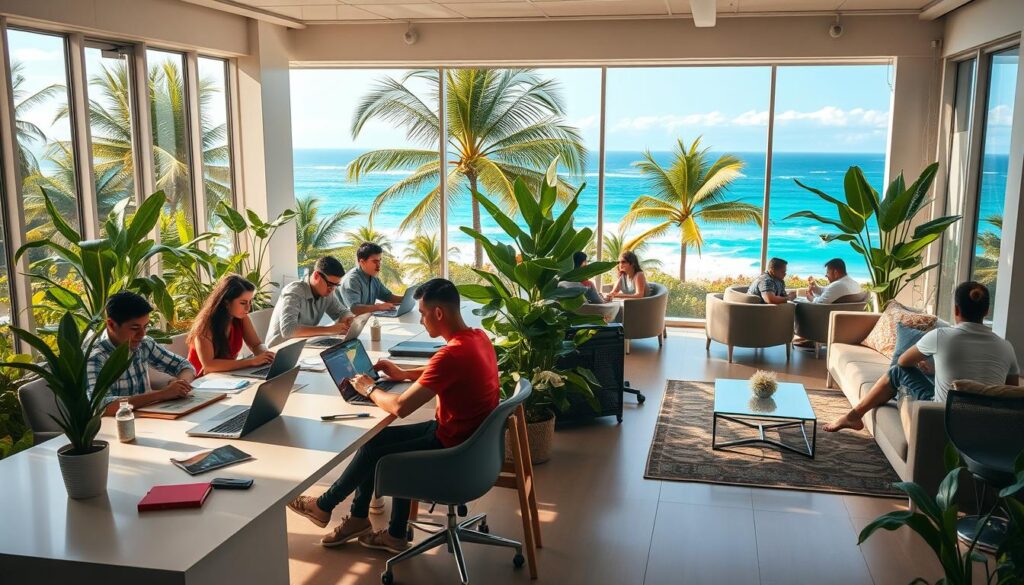
Choosing a mobile lifestyle empowers men to design their lives around passion and purpose. We’ve seen firsthand how strategic location independence fuels both career growth and personal transformation. This path isn’t about running from responsibility—it’s about claiming control over time, resources, and experiences.
Key Benefits and Opportunities
Living abroad accelerates skill development through constant cultural exchange. One developer shared how bargaining in Georgian markets improved his negotiation tactics with clients. Another entrepreneur built a six-figure consulting network while based near Guatemala’s volcanic highlands.
Communities thrive where costs stay low and connections run deep. In Myanmar’s Hpa An region, $1.50/day 4G plans keep teams online while limestone caves inspire weekend adventures. These environments turn challenges into growth opportunities—like mastering boat-based grocery runs on Lake Atitlán.
Real-Life Experiences and Insights
We’ve watched professionals transform through immersive travel. A UX designer tripled his income after collaborating with Eastern European startups. A writer found his voice chronicling Tbilisi’s vegan food scene between work sessions.
“Living this way taught me to spot global trends before they hit mainstream,” notes a fintech specialist who splits his year between three continents. These stories prove remote work success hinges on adaptability—not just internet speed.
True freedom comes from blending professional goals with cultural curiosity. When we embrace unfamiliar traditions, we gain fresh perspectives that reshape business strategies and personal priorities alike.
Digital Nomad Destinations: Affordable Cities and Towns
Smart location choices unlock both financial freedom and cultural richness for modern professionals. Our team compared dozens of global hubs to identify spots where daily costs shrink without sacrificing productivity or comfort.
Comparative Cost Analysis
We found striking price differences between regions. Tbilisi’s outskirts offer €100/month rentals with central apartments under €300, paired with €3-6 meals. Plovdiv provides Airbnbs at $300-600 monthly alongside $5-7 restaurant dishes. Bulgaria’s Bansko delivers €180/month studios with breakfasts under €3.
Portugal’s Portimão keeps apartment rentals below €600 with hearty €5-7 lunches. Cuenca stands out with $650 modern studios and $2.50 three-course meals. These aren’t temporary deals—they’re standard rates for year-round stays.
Hidden expenses matter too. Visa fees vary from €20/month in Georgia to €90/month in Portugal. Health insurance ranges between $40-$120 monthly depending on coverage. We prioritize cities where these add-ons stay manageable against local earning potential.
Smaller towns often outperform capitals. Bansko’s mountain setting costs 40% less than Sofia while offering faster internet. Cuenca’s markets beat Quito’s prices by 55% for fresh produce. Strategic choices here amplify savings while deepening cultural connections.
“Knowing true costs lets us redirect funds toward growth,” notes a project manager splitting time between Plovdiv and Portimão. When housing and meals become predictable expenses, creativity thrives in unexpected ways.
Exploring Off-the-Beaten-Path Towns
True cultural discovery happens where guidebooks end and local life begins. We’ve found that lesser-known towns offer unmatched opportunities to connect with authentic traditions while maintaining productivity. These places thrive on simplicity—think morning markets buzzing with fresh produce and evenings filled with community-led festivals.
Hidden Gems Beyond the Tourist Trails
Hpa An, Myanmar, exemplifies this ethos. Rugged karst mountains frame rice fields where farmers share harvest stories over $1.50 noodle bowls. Scooter rides reveal thousand-year-old Buddhist caves still used for meditation—experiences untouched by mass tourism. Similarly, Croatia’s Zadar and Šibenik blend Roman ruins with Adriatic seafood feasts, minus Dubrovnik’s crowds.
Local Living and Cultural Immersion
In Auroville, India, we’ve collaborated with artists-turned-farmers in permaculture workshops. “Living here reshaped how I view sustainability,” notes a former tech executive turned eco-entrepreneur. These communities welcome outsiders not as visitors, but as temporary neighbors contributing to local projects.
Key advantages of unconventional towns:
- Deeper connections: Weekly fish markets become networking hubs with café owners and craftsmen
- Cost efficiency: $300/month apartments fund language classes or regional travel
- Creative fuel: Ancient traditions spark innovative business ideas
We recognize that integrating into these cultures requires curiosity, not just Wi-Fi. The rewards? Friendships that outlast your stay and insights that transform how you work.
Highlights of Affordable Living in Global Regions
Global exploration meets practical living when we align location choices with regional strengths. Our team analyzed three continents to identify areas where low costs meet high-value lifestyles without compromising productivity.
Europe’s Budget Havens
Eastern Europe delivers Western comforts at half the price. Tbilisi offers €100-300 rentals near coworking hubs serving €3-6 meals. Plovdiv combines $300 Airbnbs with Roman amphitheaters, while Bansko’s €180 studios sit minutes from ski slopes. Portugal’s Algarve coast balances €500 rentals with seafood feasts under €7.
Asia’s Economic Retreats
Urban and rural areas here redefine value. Chiang Mai’s countryside provides fiber-optic internet beside $1.50 noodle stalls. George Town merges $400 modern lofts with heritage shophouses. Angeles City attracts professionals with $250 studio deals and 24/7 coworking cafés.
Latin America’s Affordable Paradises
Proximity to US time zones meets cultural richness. Cuenca’s $650 furnished apartments include weekly cleaning, while $2.50 lunches fuel afternoon productivity. Merida’s colonial homes convert into offices steps from Mayan ruins. Salento offers $300 rentals surrounded by coffee plantations.
| Region | Avg. Monthly Rent | Meal Cost | Notable Features |
|---|---|---|---|
| Europe | €100-600 | €3-7 | UNESCO sites, ski passes |
| Asia | $250-500 | $1.50-4 | 24/7 coworking, heritage zones |
| Latin America | $300-650 | $2.50-6 | Expat networks, colonial architecture |
We prioritize regions where local currencies amplify international incomes. One developer shared: “My euro savings bought a Bali villa lease, freeing capital for app development.” Strategic choices here transform geographical diversity into financial leverage.
Budget Considerations for Nomads
Mastering financial strategy begins with understanding how regional pricing shapes nomadic budgets. We’ve mapped expense patterns across five hubs to reveal actionable insights for maximizing value. Smart money management transforms location choices from financial burdens into growth accelerators.
Cost of Living Breakdown
Our framework accounts for seven core expense categories that determine budget success. Housing dominates at 30-50% of total costs, making rental decisions pivotal. In Tbilisi, €100-300 apartments leave room for business investments, while Cuenca’s $650 studios include cleaning services.
| Location | Monthly Rent | Daily Meals | Data Plan | Key Features |
|---|---|---|---|---|
| Tbilisi, GE | €100-300 | €3-6 | 5GB/€6 | No visa fees |
| Plovdiv, BG | $300-600 | $5-7 | Unlimited/$15 | Roman ruins access |
| Bansko, BG | €180 | €9 total | 100GB/€10 | Ski resort proximity |
| Portimão, PT | €500-600 | €5-7 | 60GB/€20 | Coastal coworking |
| Cuenca, EC | $650 | $2.50 | Unlimited/$25 | Medical affordability |
Food expenses reveal dramatic savings potential. Street food in Georgia costs 75% less than imported groceries, while Ecuador’s markets offer avocados at 3/$1. As Coach John Spencer Ellis notes in his guide to strategic budgeting practices, “Local purchasing habits directly determine financial runway length.”
We prioritize destinations where fixed costs like internet (€6-25/month) and healthcare ($30 specialist visits) remain predictable. Transportation often surprises newcomers—Bansko’s €10 monthly bus passes outperform Sofia’s pricier metro system. These variables form a financial ecosystem requiring holistic analysis.
True budget control emerges when we treat pricing data as a growth tool rather than a constraint. By aligning spending with regional strengths, professionals unlock capital for skill development and market exploration. The numbers prove it: strategic locations can triple your financial flexibility without compromising productivity.
Community, Networking, and Social Life
Building relationships forms the core of sustainable mobile lifestyles. We’ve found that authentic connections emerge when shared purpose outweighs transactional networking. From Balkan tech hubs to Asian creative collectives, every location offers unique ways to engage.
Where Passion Meets Professional Growth
Plovdiv demonstrates how diverse communities thrive. Former doctors now running organic farms collaborate with startup founders in co-working spaces. Policemen-turned-artists host gallery nights where projects spark over rakia cocktails. These interactions prove that meaningful bonds form through curiosity, not agendas.
Cluj-Napoca’s festival-driven energy attracts innovators. Young professionals mingle at specialty coffee shops before collaborating on AI prototypes. “Our best partnerships started at Electric Castle concerts,” shares a mobile app developer. Smaller towns like Zadar reveal quieter magic—sunset coding sessions with fishermen’s market vendors.
We prioritize locations where people exchange skills as naturally as business cards. Tbilisi’s creative cafes host weekly skill swaps, from Georgian dance lessons to blockchain workshops. As Coach John Spencer Ellis outlines in his guide to strategic networking approaches, lasting relationships require giving value first.
True community strength lies in mutual uplift. Whether organizing Lisbon meetups or mentoring newcomers in Chiang Mai, we’ve seen how shared efforts create ecosystems where everyone thrives. The best connections aren’t found—they’re built through consistent contribution.
Navigating Local Culture and Cuisine
Exploring local culture transforms how we connect with the world around us. Food becomes more than sustenance—it’s a bridge to understanding traditions and building relationships. We’ve found that markets and eateries offer unmatched opportunities to engage with communities while fueling creativity.
Street Food Delights and Local Markets
Markets reveal a region’s pulse. Morning vendors in Bangkok serve $1.50 pad thai beside fresh tropical fruits, sparking conversations about family recipes. Night markets in Oaxaca blend mole tastings with artisan crafts, turning meals into cultural exchanges. These spaces teach us to value simplicity while supporting local economies.
In Thailand, street stalls showcase culinary diversity—from fiery tom yum soup to sweet mango sticky rice. As highlighted in this guide to Thailand’s cultural appeal, these experiences foster genuine connections. Spending $5 daily on meals becomes an investment in belonging.
Authentic Dining Experiences
We prioritize restaurants where chefs explain heritage dishes. A Hanoi pho master shared his broth secrets while discussing Vietnam’s coffee culture. These moments matter—they turn dinners into lessons on history and innovation.
Home-cooked meals deepen bonds further. Learning to make Georgian khinkali dumplings or Peruvian ceviche builds skills that outlast any stay. Shared tables remind us that growth thrives where curiosity meets flavor.
FAQ
Which cities offer the best balance of affordability and reliable internet?
How can I connect with other remote workers in budget-friendly destinations?
What’s the average monthly budget for Southeast Asia versus Latin America?
FAQ
Which cities offer the best balance of affordability and reliable internet?
Chiang Mai, Thailand, and Medellín, Colombia, consistently rank high for fast Wi-Fi, low living costs, and vibrant communities. Lisbon, Portugal, also provides strong infrastructure with coworking spaces like Second Home Lisboa, though prices have risen slightly in recent years.
How can I connect with other remote workers in budget-friendly destinations?
A> Join local Facebook groups like “Chiang Mai Digital Nomads” or attend events at hubs like Dojo Bali. Platforms like Meetup.com also list coworking gatherings, skill-sharing workshops, and casual networking nights in cities like Mexico City and Budapest.
What’s the average monthly budget for Southeast Asia versus Latin America?
A> In Thailand or Vietnam,
FAQ
Which cities offer the best balance of affordability and reliable internet?
Chiang Mai, Thailand, and Medellín, Colombia, consistently rank high for fast Wi-Fi, low living costs, and vibrant communities. Lisbon, Portugal, also provides strong infrastructure with coworking spaces like Second Home Lisboa, though prices have risen slightly in recent years.
How can I connect with other remote workers in budget-friendly destinations?
A> Join local Facebook groups like “Chiang Mai Digital Nomads” or attend events at hubs like Dojo Bali. Platforms like Meetup.com also list coworking gatherings, skill-sharing workshops, and casual networking nights in cities like Mexico City and Budapest.
What’s the average monthly budget for Southeast Asia versus Latin America?
A> In Thailand or Vietnam, $1,200–$1,800 covers a private apartment, street food, and coworking memberships. Colombia or Guatemala ranges from $1,500–$2,200, with higher costs in trendier neighborhoods like Medellín’s El Poblado. Europe’s budget spots, like Belgrade or Tbilisi, average $2,000–$2,800.
Are there hidden fees I should watch for in affordable destinations?
A> Visa runs, SIM card deposits, and “foreigner pricing” at markets can add up. Always confirm rental agreements include utilities, and use apps like Grab or Bolt to avoid taxi scams. In Bali, check if your Airbnb charges extra for electricity.
Which regions have the best street food scenes for long-term stays?
A> Bangkok’s night markets, Mexico City’s tacos al pastor, and Penang’s hawker stalls offer diverse, budget-friendly meals. For dietary needs, Istanbul and Kuala Lumpur blend affordability with vegetarian/vegan options at spots like HappyCow-listed eateries.
How do I find apartments that aren’t listed on mainstream platforms?
A> Local real estate agencies in Da Nang (Vietnam) or Las Palmas (Spain) often have lower rates. Facebook Marketplace and WhatsApp groups—like “Lisbon Rentals for Expats”—are goldmines for sublets. Always visit in person first to avoid scams.
What’s the safest way to manage finances across multiple currencies?
A> Use borderless accounts from Wise or Revolut to limit exchange fees. In cash-heavy countries like Morocco or Peru, withdraw larger sums to minimize ATM charges. Always carry a backup card, and notify your bank of travel plans to avoid frozen accounts.
,200–
FAQ
Which cities offer the best balance of affordability and reliable internet?
Chiang Mai, Thailand, and Medellín, Colombia, consistently rank high for fast Wi-Fi, low living costs, and vibrant communities. Lisbon, Portugal, also provides strong infrastructure with coworking spaces like Second Home Lisboa, though prices have risen slightly in recent years.
How can I connect with other remote workers in budget-friendly destinations?
A> Join local Facebook groups like “Chiang Mai Digital Nomads” or attend events at hubs like Dojo Bali. Platforms like Meetup.com also list coworking gatherings, skill-sharing workshops, and casual networking nights in cities like Mexico City and Budapest.
What’s the average monthly budget for Southeast Asia versus Latin America?
A> In Thailand or Vietnam, $1,200–$1,800 covers a private apartment, street food, and coworking memberships. Colombia or Guatemala ranges from $1,500–$2,200, with higher costs in trendier neighborhoods like Medellín’s El Poblado. Europe’s budget spots, like Belgrade or Tbilisi, average $2,000–$2,800.
Are there hidden fees I should watch for in affordable destinations?
A> Visa runs, SIM card deposits, and “foreigner pricing” at markets can add up. Always confirm rental agreements include utilities, and use apps like Grab or Bolt to avoid taxi scams. In Bali, check if your Airbnb charges extra for electricity.
Which regions have the best street food scenes for long-term stays?
A> Bangkok’s night markets, Mexico City’s tacos al pastor, and Penang’s hawker stalls offer diverse, budget-friendly meals. For dietary needs, Istanbul and Kuala Lumpur blend affordability with vegetarian/vegan options at spots like HappyCow-listed eateries.
How do I find apartments that aren’t listed on mainstream platforms?
A> Local real estate agencies in Da Nang (Vietnam) or Las Palmas (Spain) often have lower rates. Facebook Marketplace and WhatsApp groups—like “Lisbon Rentals for Expats”—are goldmines for sublets. Always visit in person first to avoid scams.
What’s the safest way to manage finances across multiple currencies?
A> Use borderless accounts from Wise or Revolut to limit exchange fees. In cash-heavy countries like Morocco or Peru, withdraw larger sums to minimize ATM charges. Always carry a backup card, and notify your bank of travel plans to avoid frozen accounts.
,800 covers a private apartment, street food, and coworking memberships. Colombia or Guatemala ranges from
FAQ
Which cities offer the best balance of affordability and reliable internet?
Chiang Mai, Thailand, and Medellín, Colombia, consistently rank high for fast Wi-Fi, low living costs, and vibrant communities. Lisbon, Portugal, also provides strong infrastructure with coworking spaces like Second Home Lisboa, though prices have risen slightly in recent years.
How can I connect with other remote workers in budget-friendly destinations?
A> Join local Facebook groups like “Chiang Mai Digital Nomads” or attend events at hubs like Dojo Bali. Platforms like Meetup.com also list coworking gatherings, skill-sharing workshops, and casual networking nights in cities like Mexico City and Budapest.
What’s the average monthly budget for Southeast Asia versus Latin America?
A> In Thailand or Vietnam, $1,200–$1,800 covers a private apartment, street food, and coworking memberships. Colombia or Guatemala ranges from $1,500–$2,200, with higher costs in trendier neighborhoods like Medellín’s El Poblado. Europe’s budget spots, like Belgrade or Tbilisi, average $2,000–$2,800.
Are there hidden fees I should watch for in affordable destinations?
A> Visa runs, SIM card deposits, and “foreigner pricing” at markets can add up. Always confirm rental agreements include utilities, and use apps like Grab or Bolt to avoid taxi scams. In Bali, check if your Airbnb charges extra for electricity.
Which regions have the best street food scenes for long-term stays?
A> Bangkok’s night markets, Mexico City’s tacos al pastor, and Penang’s hawker stalls offer diverse, budget-friendly meals. For dietary needs, Istanbul and Kuala Lumpur blend affordability with vegetarian/vegan options at spots like HappyCow-listed eateries.
How do I find apartments that aren’t listed on mainstream platforms?
A> Local real estate agencies in Da Nang (Vietnam) or Las Palmas (Spain) often have lower rates. Facebook Marketplace and WhatsApp groups—like “Lisbon Rentals for Expats”—are goldmines for sublets. Always visit in person first to avoid scams.
What’s the safest way to manage finances across multiple currencies?
A> Use borderless accounts from Wise or Revolut to limit exchange fees. In cash-heavy countries like Morocco or Peru, withdraw larger sums to minimize ATM charges. Always carry a backup card, and notify your bank of travel plans to avoid frozen accounts.
,500–,200, with higher costs in trendier neighborhoods like Medellín’s El Poblado. Europe’s budget spots, like Belgrade or Tbilisi, average ,000–,800.
Are there hidden fees I should watch for in affordable destinations?
A> Visa runs, SIM card deposits, and “foreigner pricing” at markets can add up. Always confirm rental agreements include utilities, and use apps like Grab or Bolt to avoid taxi scams. In Bali, check if your Airbnb charges extra for electricity.
Which regions have the best street food scenes for long-term stays?
A> Bangkok’s night markets, Mexico City’s tacos al pastor, and Penang’s hawker stalls offer diverse, budget-friendly meals. For dietary needs, Istanbul and Kuala Lumpur blend affordability with vegetarian/vegan options at spots like HappyCow-listed eateries.
How do I find apartments that aren’t listed on mainstream platforms?
A> Local real estate agencies in Da Nang (Vietnam) or Las Palmas (Spain) often have lower rates. Facebook Marketplace and WhatsApp groups—like “Lisbon Rentals for Expats”—are goldmines for sublets. Always visit in person first to avoid scams.
What’s the safest way to manage finances across multiple currencies?
A> Use borderless accounts from Wise or Revolut to limit exchange fees. In cash-heavy countries like Morocco or Peru, withdraw larger sums to minimize ATM charges. Always carry a backup card, and notify your bank of travel plans to avoid frozen accounts.
FAQ
Which cities offer the best balance of affordability and reliable internet?
Chiang Mai, Thailand, and Medellín, Colombia, consistently rank high for fast Wi-Fi, low living costs, and vibrant communities. Lisbon, Portugal, also provides strong infrastructure with coworking spaces like Second Home Lisboa, though prices have risen slightly in recent years.
How can I connect with other remote workers in budget-friendly destinations?
A> Join local Facebook groups like “Chiang Mai Digital Nomads” or attend events at hubs like Dojo Bali. Platforms like Meetup.com also list coworking gatherings, skill-sharing workshops, and casual networking nights in cities like Mexico City and Budapest.
What’s the average monthly budget for Southeast Asia versus Latin America?
A> In Thailand or Vietnam,
FAQ
Which cities offer the best balance of affordability and reliable internet?
Chiang Mai, Thailand, and Medellín, Colombia, consistently rank high for fast Wi-Fi, low living costs, and vibrant communities. Lisbon, Portugal, also provides strong infrastructure with coworking spaces like Second Home Lisboa, though prices have risen slightly in recent years.
How can I connect with other remote workers in budget-friendly destinations?
A> Join local Facebook groups like “Chiang Mai Digital Nomads” or attend events at hubs like Dojo Bali. Platforms like Meetup.com also list coworking gatherings, skill-sharing workshops, and casual networking nights in cities like Mexico City and Budapest.
What’s the average monthly budget for Southeast Asia versus Latin America?
A> In Thailand or Vietnam, $1,200–$1,800 covers a private apartment, street food, and coworking memberships. Colombia or Guatemala ranges from $1,500–$2,200, with higher costs in trendier neighborhoods like Medellín’s El Poblado. Europe’s budget spots, like Belgrade or Tbilisi, average $2,000–$2,800.
Are there hidden fees I should watch for in affordable destinations?
A> Visa runs, SIM card deposits, and “foreigner pricing” at markets can add up. Always confirm rental agreements include utilities, and use apps like Grab or Bolt to avoid taxi scams. In Bali, check if your Airbnb charges extra for electricity.
Which regions have the best street food scenes for long-term stays?
A> Bangkok’s night markets, Mexico City’s tacos al pastor, and Penang’s hawker stalls offer diverse, budget-friendly meals. For dietary needs, Istanbul and Kuala Lumpur blend affordability with vegetarian/vegan options at spots like HappyCow-listed eateries.
How do I find apartments that aren’t listed on mainstream platforms?
A> Local real estate agencies in Da Nang (Vietnam) or Las Palmas (Spain) often have lower rates. Facebook Marketplace and WhatsApp groups—like “Lisbon Rentals for Expats”—are goldmines for sublets. Always visit in person first to avoid scams.
What’s the safest way to manage finances across multiple currencies?
A> Use borderless accounts from Wise or Revolut to limit exchange fees. In cash-heavy countries like Morocco or Peru, withdraw larger sums to minimize ATM charges. Always carry a backup card, and notify your bank of travel plans to avoid frozen accounts.
,200–
FAQ
Which cities offer the best balance of affordability and reliable internet?
Chiang Mai, Thailand, and Medellín, Colombia, consistently rank high for fast Wi-Fi, low living costs, and vibrant communities. Lisbon, Portugal, also provides strong infrastructure with coworking spaces like Second Home Lisboa, though prices have risen slightly in recent years.
How can I connect with other remote workers in budget-friendly destinations?
A> Join local Facebook groups like “Chiang Mai Digital Nomads” or attend events at hubs like Dojo Bali. Platforms like Meetup.com also list coworking gatherings, skill-sharing workshops, and casual networking nights in cities like Mexico City and Budapest.
What’s the average monthly budget for Southeast Asia versus Latin America?
A> In Thailand or Vietnam, $1,200–$1,800 covers a private apartment, street food, and coworking memberships. Colombia or Guatemala ranges from $1,500–$2,200, with higher costs in trendier neighborhoods like Medellín’s El Poblado. Europe’s budget spots, like Belgrade or Tbilisi, average $2,000–$2,800.
Are there hidden fees I should watch for in affordable destinations?
A> Visa runs, SIM card deposits, and “foreigner pricing” at markets can add up. Always confirm rental agreements include utilities, and use apps like Grab or Bolt to avoid taxi scams. In Bali, check if your Airbnb charges extra for electricity.
Which regions have the best street food scenes for long-term stays?
A> Bangkok’s night markets, Mexico City’s tacos al pastor, and Penang’s hawker stalls offer diverse, budget-friendly meals. For dietary needs, Istanbul and Kuala Lumpur blend affordability with vegetarian/vegan options at spots like HappyCow-listed eateries.
How do I find apartments that aren’t listed on mainstream platforms?
A> Local real estate agencies in Da Nang (Vietnam) or Las Palmas (Spain) often have lower rates. Facebook Marketplace and WhatsApp groups—like “Lisbon Rentals for Expats”—are goldmines for sublets. Always visit in person first to avoid scams.
What’s the safest way to manage finances across multiple currencies?
A> Use borderless accounts from Wise or Revolut to limit exchange fees. In cash-heavy countries like Morocco or Peru, withdraw larger sums to minimize ATM charges. Always carry a backup card, and notify your bank of travel plans to avoid frozen accounts.
,800 covers a private apartment, street food, and coworking memberships. Colombia or Guatemala ranges from
FAQ
Which cities offer the best balance of affordability and reliable internet?
Chiang Mai, Thailand, and Medellín, Colombia, consistently rank high for fast Wi-Fi, low living costs, and vibrant communities. Lisbon, Portugal, also provides strong infrastructure with coworking spaces like Second Home Lisboa, though prices have risen slightly in recent years.
How can I connect with other remote workers in budget-friendly destinations?
A> Join local Facebook groups like “Chiang Mai Digital Nomads” or attend events at hubs like Dojo Bali. Platforms like Meetup.com also list coworking gatherings, skill-sharing workshops, and casual networking nights in cities like Mexico City and Budapest.
What’s the average monthly budget for Southeast Asia versus Latin America?
A> In Thailand or Vietnam, $1,200–$1,800 covers a private apartment, street food, and coworking memberships. Colombia or Guatemala ranges from $1,500–$2,200, with higher costs in trendier neighborhoods like Medellín’s El Poblado. Europe’s budget spots, like Belgrade or Tbilisi, average $2,000–$2,800.
Are there hidden fees I should watch for in affordable destinations?
A> Visa runs, SIM card deposits, and “foreigner pricing” at markets can add up. Always confirm rental agreements include utilities, and use apps like Grab or Bolt to avoid taxi scams. In Bali, check if your Airbnb charges extra for electricity.
Which regions have the best street food scenes for long-term stays?
A> Bangkok’s night markets, Mexico City’s tacos al pastor, and Penang’s hawker stalls offer diverse, budget-friendly meals. For dietary needs, Istanbul and Kuala Lumpur blend affordability with vegetarian/vegan options at spots like HappyCow-listed eateries.
How do I find apartments that aren’t listed on mainstream platforms?
A> Local real estate agencies in Da Nang (Vietnam) or Las Palmas (Spain) often have lower rates. Facebook Marketplace and WhatsApp groups—like “Lisbon Rentals for Expats”—are goldmines for sublets. Always visit in person first to avoid scams.
What’s the safest way to manage finances across multiple currencies?
A> Use borderless accounts from Wise or Revolut to limit exchange fees. In cash-heavy countries like Morocco or Peru, withdraw larger sums to minimize ATM charges. Always carry a backup card, and notify your bank of travel plans to avoid frozen accounts.
,500–,200, with higher costs in trendier neighborhoods like Medellín’s El Poblado. Europe’s budget spots, like Belgrade or Tbilisi, average ,000–,800.
Are there hidden fees I should watch for in affordable destinations?
A> Visa runs, SIM card deposits, and “foreigner pricing” at markets can add up. Always confirm rental agreements include utilities, and use apps like Grab or Bolt to avoid taxi scams. In Bali, check if your Airbnb charges extra for electricity.
Which regions have the best street food scenes for long-term stays?
A> Bangkok’s night markets, Mexico City’s tacos al pastor, and Penang’s hawker stalls offer diverse, budget-friendly meals. For dietary needs, Istanbul and Kuala Lumpur blend affordability with vegetarian/vegan options at spots like HappyCow-listed eateries.
How do I find apartments that aren’t listed on mainstream platforms?
A> Local real estate agencies in Da Nang (Vietnam) or Las Palmas (Spain) often have lower rates. Facebook Marketplace and WhatsApp groups—like “Lisbon Rentals for Expats”—are goldmines for sublets. Always visit in person first to avoid scams.
What’s the safest way to manage finances across multiple currencies?
A> Use borderless accounts from Wise or Revolut to limit exchange fees. In cash-heavy countries like Morocco or Peru, withdraw larger sums to minimize ATM charges. Always carry a backup card, and notify your bank of travel plans to avoid frozen accounts.
FAQ
Which cities offer the best balance of affordability and reliable internet?
Chiang Mai, Thailand, and Medellín, Colombia, consistently rank high for fast Wi-Fi, low living costs, and vibrant communities. Lisbon, Portugal, also provides strong infrastructure with coworking spaces like Second Home Lisboa, though prices have risen slightly in recent years.
How can I connect with other remote workers in budget-friendly destinations?
A> Join local Facebook groups like “Chiang Mai Digital Nomads” or attend events at hubs like Dojo Bali. Platforms like Meetup.com also list coworking gatherings, skill-sharing workshops, and casual networking nights in cities like Mexico City and Budapest.
What’s the average monthly budget for Southeast Asia versus Latin America?
A> In Thailand or Vietnam,
FAQ
Which cities offer the best balance of affordability and reliable internet?
Chiang Mai, Thailand, and Medellín, Colombia, consistently rank high for fast Wi-Fi, low living costs, and vibrant communities. Lisbon, Portugal, also provides strong infrastructure with coworking spaces like Second Home Lisboa, though prices have risen slightly in recent years.
How can I connect with other remote workers in budget-friendly destinations?
A> Join local Facebook groups like “Chiang Mai Digital Nomads” or attend events at hubs like Dojo Bali. Platforms like Meetup.com also list coworking gatherings, skill-sharing workshops, and casual networking nights in cities like Mexico City and Budapest.
What’s the average monthly budget for Southeast Asia versus Latin America?
A> In Thailand or Vietnam, $1,200–$1,800 covers a private apartment, street food, and coworking memberships. Colombia or Guatemala ranges from $1,500–$2,200, with higher costs in trendier neighborhoods like Medellín’s El Poblado. Europe’s budget spots, like Belgrade or Tbilisi, average $2,000–$2,800.
Are there hidden fees I should watch for in affordable destinations?
A> Visa runs, SIM card deposits, and “foreigner pricing” at markets can add up. Always confirm rental agreements include utilities, and use apps like Grab or Bolt to avoid taxi scams. In Bali, check if your Airbnb charges extra for electricity.
Which regions have the best street food scenes for long-term stays?
A> Bangkok’s night markets, Mexico City’s tacos al pastor, and Penang’s hawker stalls offer diverse, budget-friendly meals. For dietary needs, Istanbul and Kuala Lumpur blend affordability with vegetarian/vegan options at spots like HappyCow-listed eateries.
How do I find apartments that aren’t listed on mainstream platforms?
A> Local real estate agencies in Da Nang (Vietnam) or Las Palmas (Spain) often have lower rates. Facebook Marketplace and WhatsApp groups—like “Lisbon Rentals for Expats”—are goldmines for sublets. Always visit in person first to avoid scams.
What’s the safest way to manage finances across multiple currencies?
A> Use borderless accounts from Wise or Revolut to limit exchange fees. In cash-heavy countries like Morocco or Peru, withdraw larger sums to minimize ATM charges. Always carry a backup card, and notify your bank of travel plans to avoid frozen accounts.
,200–
FAQ
Which cities offer the best balance of affordability and reliable internet?
Chiang Mai, Thailand, and Medellín, Colombia, consistently rank high for fast Wi-Fi, low living costs, and vibrant communities. Lisbon, Portugal, also provides strong infrastructure with coworking spaces like Second Home Lisboa, though prices have risen slightly in recent years.
How can I connect with other remote workers in budget-friendly destinations?
A> Join local Facebook groups like “Chiang Mai Digital Nomads” or attend events at hubs like Dojo Bali. Platforms like Meetup.com also list coworking gatherings, skill-sharing workshops, and casual networking nights in cities like Mexico City and Budapest.
What’s the average monthly budget for Southeast Asia versus Latin America?
A> In Thailand or Vietnam, $1,200–$1,800 covers a private apartment, street food, and coworking memberships. Colombia or Guatemala ranges from $1,500–$2,200, with higher costs in trendier neighborhoods like Medellín’s El Poblado. Europe’s budget spots, like Belgrade or Tbilisi, average $2,000–$2,800.
Are there hidden fees I should watch for in affordable destinations?
A> Visa runs, SIM card deposits, and “foreigner pricing” at markets can add up. Always confirm rental agreements include utilities, and use apps like Grab or Bolt to avoid taxi scams. In Bali, check if your Airbnb charges extra for electricity.
Which regions have the best street food scenes for long-term stays?
A> Bangkok’s night markets, Mexico City’s tacos al pastor, and Penang’s hawker stalls offer diverse, budget-friendly meals. For dietary needs, Istanbul and Kuala Lumpur blend affordability with vegetarian/vegan options at spots like HappyCow-listed eateries.
How do I find apartments that aren’t listed on mainstream platforms?
A> Local real estate agencies in Da Nang (Vietnam) or Las Palmas (Spain) often have lower rates. Facebook Marketplace and WhatsApp groups—like “Lisbon Rentals for Expats”—are goldmines for sublets. Always visit in person first to avoid scams.
What’s the safest way to manage finances across multiple currencies?
A> Use borderless accounts from Wise or Revolut to limit exchange fees. In cash-heavy countries like Morocco or Peru, withdraw larger sums to minimize ATM charges. Always carry a backup card, and notify your bank of travel plans to avoid frozen accounts.
,800 covers a private apartment, street food, and coworking memberships. Colombia or Guatemala ranges from
FAQ
Which cities offer the best balance of affordability and reliable internet?
Chiang Mai, Thailand, and Medellín, Colombia, consistently rank high for fast Wi-Fi, low living costs, and vibrant communities. Lisbon, Portugal, also provides strong infrastructure with coworking spaces like Second Home Lisboa, though prices have risen slightly in recent years.
How can I connect with other remote workers in budget-friendly destinations?
A> Join local Facebook groups like “Chiang Mai Digital Nomads” or attend events at hubs like Dojo Bali. Platforms like Meetup.com also list coworking gatherings, skill-sharing workshops, and casual networking nights in cities like Mexico City and Budapest.
What’s the average monthly budget for Southeast Asia versus Latin America?
A> In Thailand or Vietnam, $1,200–$1,800 covers a private apartment, street food, and coworking memberships. Colombia or Guatemala ranges from $1,500–$2,200, with higher costs in trendier neighborhoods like Medellín’s El Poblado. Europe’s budget spots, like Belgrade or Tbilisi, average $2,000–$2,800.
Are there hidden fees I should watch for in affordable destinations?
A> Visa runs, SIM card deposits, and “foreigner pricing” at markets can add up. Always confirm rental agreements include utilities, and use apps like Grab or Bolt to avoid taxi scams. In Bali, check if your Airbnb charges extra for electricity.
Which regions have the best street food scenes for long-term stays?
A> Bangkok’s night markets, Mexico City’s tacos al pastor, and Penang’s hawker stalls offer diverse, budget-friendly meals. For dietary needs, Istanbul and Kuala Lumpur blend affordability with vegetarian/vegan options at spots like HappyCow-listed eateries.
How do I find apartments that aren’t listed on mainstream platforms?
A> Local real estate agencies in Da Nang (Vietnam) or Las Palmas (Spain) often have lower rates. Facebook Marketplace and WhatsApp groups—like “Lisbon Rentals for Expats”—are goldmines for sublets. Always visit in person first to avoid scams.
What’s the safest way to manage finances across multiple currencies?
A> Use borderless accounts from Wise or Revolut to limit exchange fees. In cash-heavy countries like Morocco or Peru, withdraw larger sums to minimize ATM charges. Always carry a backup card, and notify your bank of travel plans to avoid frozen accounts.
,500–,200, with higher costs in trendier neighborhoods like Medellín’s El Poblado. Europe’s budget spots, like Belgrade or Tbilisi, average ,000–,800.
Are there hidden fees I should watch for in affordable destinations?
A> Visa runs, SIM card deposits, and “foreigner pricing” at markets can add up. Always confirm rental agreements include utilities, and use apps like Grab or Bolt to avoid taxi scams. In Bali, check if your Airbnb charges extra for electricity.
Which regions have the best street food scenes for long-term stays?
A> Bangkok’s night markets, Mexico City’s tacos al pastor, and Penang’s hawker stalls offer diverse, budget-friendly meals. For dietary needs, Istanbul and Kuala Lumpur blend affordability with vegetarian/vegan options at spots like HappyCow-listed eateries.
How do I find apartments that aren’t listed on mainstream platforms?
A> Local real estate agencies in Da Nang (Vietnam) or Las Palmas (Spain) often have lower rates. Facebook Marketplace and WhatsApp groups—like “Lisbon Rentals for Expats”—are goldmines for sublets. Always visit in person first to avoid scams.
What’s the safest way to manage finances across multiple currencies?
A> Use borderless accounts from Wise or Revolut to limit exchange fees. In cash-heavy countries like Morocco or Peru, withdraw larger sums to minimize ATM charges. Always carry a backup card, and notify your bank of travel plans to avoid frozen accounts.
FAQ
Which cities offer the best balance of affordability and reliable internet?
Chiang Mai, Thailand, and Medellín, Colombia, consistently rank high for fast Wi-Fi, low living costs, and vibrant communities. Lisbon, Portugal, also provides strong infrastructure with coworking spaces like Second Home Lisboa, though prices have risen slightly in recent years.
How can I connect with other remote workers in budget-friendly destinations?
A> Join local Facebook groups like “Chiang Mai Digital Nomads” or attend events at hubs like Dojo Bali. Platforms like Meetup.com also list coworking gatherings, skill-sharing workshops, and casual networking nights in cities like Mexico City and Budapest.
What’s the average monthly budget for Southeast Asia versus Latin America?
A> In Thailand or Vietnam,
FAQ
Which cities offer the best balance of affordability and reliable internet?
Chiang Mai, Thailand, and Medellín, Colombia, consistently rank high for fast Wi-Fi, low living costs, and vibrant communities. Lisbon, Portugal, also provides strong infrastructure with coworking spaces like Second Home Lisboa, though prices have risen slightly in recent years.
How can I connect with other remote workers in budget-friendly destinations?
A> Join local Facebook groups like “Chiang Mai Digital Nomads” or attend events at hubs like Dojo Bali. Platforms like Meetup.com also list coworking gatherings, skill-sharing workshops, and casual networking nights in cities like Mexico City and Budapest.
What’s the average monthly budget for Southeast Asia versus Latin America?
A> In Thailand or Vietnam, $1,200–$1,800 covers a private apartment, street food, and coworking memberships. Colombia or Guatemala ranges from $1,500–$2,200, with higher costs in trendier neighborhoods like Medellín’s El Poblado. Europe’s budget spots, like Belgrade or Tbilisi, average $2,000–$2,800.
Are there hidden fees I should watch for in affordable destinations?
A> Visa runs, SIM card deposits, and “foreigner pricing” at markets can add up. Always confirm rental agreements include utilities, and use apps like Grab or Bolt to avoid taxi scams. In Bali, check if your Airbnb charges extra for electricity.
Which regions have the best street food scenes for long-term stays?
A> Bangkok’s night markets, Mexico City’s tacos al pastor, and Penang’s hawker stalls offer diverse, budget-friendly meals. For dietary needs, Istanbul and Kuala Lumpur blend affordability with vegetarian/vegan options at spots like HappyCow-listed eateries.
How do I find apartments that aren’t listed on mainstream platforms?
A> Local real estate agencies in Da Nang (Vietnam) or Las Palmas (Spain) often have lower rates. Facebook Marketplace and WhatsApp groups—like “Lisbon Rentals for Expats”—are goldmines for sublets. Always visit in person first to avoid scams.
What’s the safest way to manage finances across multiple currencies?
A> Use borderless accounts from Wise or Revolut to limit exchange fees. In cash-heavy countries like Morocco or Peru, withdraw larger sums to minimize ATM charges. Always carry a backup card, and notify your bank of travel plans to avoid frozen accounts.
,200–
FAQ
Which cities offer the best balance of affordability and reliable internet?
Chiang Mai, Thailand, and Medellín, Colombia, consistently rank high for fast Wi-Fi, low living costs, and vibrant communities. Lisbon, Portugal, also provides strong infrastructure with coworking spaces like Second Home Lisboa, though prices have risen slightly in recent years.
How can I connect with other remote workers in budget-friendly destinations?
A> Join local Facebook groups like “Chiang Mai Digital Nomads” or attend events at hubs like Dojo Bali. Platforms like Meetup.com also list coworking gatherings, skill-sharing workshops, and casual networking nights in cities like Mexico City and Budapest.
What’s the average monthly budget for Southeast Asia versus Latin America?
A> In Thailand or Vietnam, $1,200–$1,800 covers a private apartment, street food, and coworking memberships. Colombia or Guatemala ranges from $1,500–$2,200, with higher costs in trendier neighborhoods like Medellín’s El Poblado. Europe’s budget spots, like Belgrade or Tbilisi, average $2,000–$2,800.
Are there hidden fees I should watch for in affordable destinations?
A> Visa runs, SIM card deposits, and “foreigner pricing” at markets can add up. Always confirm rental agreements include utilities, and use apps like Grab or Bolt to avoid taxi scams. In Bali, check if your Airbnb charges extra for electricity.
Which regions have the best street food scenes for long-term stays?
A> Bangkok’s night markets, Mexico City’s tacos al pastor, and Penang’s hawker stalls offer diverse, budget-friendly meals. For dietary needs, Istanbul and Kuala Lumpur blend affordability with vegetarian/vegan options at spots like HappyCow-listed eateries.
How do I find apartments that aren’t listed on mainstream platforms?
A> Local real estate agencies in Da Nang (Vietnam) or Las Palmas (Spain) often have lower rates. Facebook Marketplace and WhatsApp groups—like “Lisbon Rentals for Expats”—are goldmines for sublets. Always visit in person first to avoid scams.
What’s the safest way to manage finances across multiple currencies?
A> Use borderless accounts from Wise or Revolut to limit exchange fees. In cash-heavy countries like Morocco or Peru, withdraw larger sums to minimize ATM charges. Always carry a backup card, and notify your bank of travel plans to avoid frozen accounts.
,800 covers a private apartment, street food, and coworking memberships. Colombia or Guatemala ranges from
FAQ
Which cities offer the best balance of affordability and reliable internet?
Chiang Mai, Thailand, and Medellín, Colombia, consistently rank high for fast Wi-Fi, low living costs, and vibrant communities. Lisbon, Portugal, also provides strong infrastructure with coworking spaces like Second Home Lisboa, though prices have risen slightly in recent years.
How can I connect with other remote workers in budget-friendly destinations?
A> Join local Facebook groups like “Chiang Mai Digital Nomads” or attend events at hubs like Dojo Bali. Platforms like Meetup.com also list coworking gatherings, skill-sharing workshops, and casual networking nights in cities like Mexico City and Budapest.
What’s the average monthly budget for Southeast Asia versus Latin America?
A> In Thailand or Vietnam, $1,200–$1,800 covers a private apartment, street food, and coworking memberships. Colombia or Guatemala ranges from $1,500–$2,200, with higher costs in trendier neighborhoods like Medellín’s El Poblado. Europe’s budget spots, like Belgrade or Tbilisi, average $2,000–$2,800.
Are there hidden fees I should watch for in affordable destinations?
A> Visa runs, SIM card deposits, and “foreigner pricing” at markets can add up. Always confirm rental agreements include utilities, and use apps like Grab or Bolt to avoid taxi scams. In Bali, check if your Airbnb charges extra for electricity.
Which regions have the best street food scenes for long-term stays?
A> Bangkok’s night markets, Mexico City’s tacos al pastor, and Penang’s hawker stalls offer diverse, budget-friendly meals. For dietary needs, Istanbul and Kuala Lumpur blend affordability with vegetarian/vegan options at spots like HappyCow-listed eateries.
How do I find apartments that aren’t listed on mainstream platforms?
A> Local real estate agencies in Da Nang (Vietnam) or Las Palmas (Spain) often have lower rates. Facebook Marketplace and WhatsApp groups—like “Lisbon Rentals for Expats”—are goldmines for sublets. Always visit in person first to avoid scams.
What’s the safest way to manage finances across multiple currencies?
A> Use borderless accounts from Wise or Revolut to limit exchange fees. In cash-heavy countries like Morocco or Peru, withdraw larger sums to minimize ATM charges. Always carry a backup card, and notify your bank of travel plans to avoid frozen accounts.
,500–,200, with higher costs in trendier neighborhoods like Medellín’s El Poblado. Europe’s budget spots, like Belgrade or Tbilisi, average ,000–,800.
Are there hidden fees I should watch for in affordable destinations?
A> Visa runs, SIM card deposits, and “foreigner pricing” at markets can add up. Always confirm rental agreements include utilities, and use apps like Grab or Bolt to avoid taxi scams. In Bali, check if your Airbnb charges extra for electricity.
Which regions have the best street food scenes for long-term stays?
A> Bangkok’s night markets, Mexico City’s tacos al pastor, and Penang’s hawker stalls offer diverse, budget-friendly meals. For dietary needs, Istanbul and Kuala Lumpur blend affordability with vegetarian/vegan options at spots like HappyCow-listed eateries.
How do I find apartments that aren’t listed on mainstream platforms?
A> Local real estate agencies in Da Nang (Vietnam) or Las Palmas (Spain) often have lower rates. Facebook Marketplace and WhatsApp groups—like “Lisbon Rentals for Expats”—are goldmines for sublets. Always visit in person first to avoid scams.
What’s the safest way to manage finances across multiple currencies?
A> Use borderless accounts from Wise or Revolut to limit exchange fees. In cash-heavy countries like Morocco or Peru, withdraw larger sums to minimize ATM charges. Always carry a backup card, and notify your bank of travel plans to avoid frozen accounts.
FAQ
Which cities offer the best balance of affordability and reliable internet?
Chiang Mai, Thailand, and Medellín, Colombia, consistently rank high for fast Wi-Fi, low living costs, and vibrant communities. Lisbon, Portugal, also provides strong infrastructure with coworking spaces like Second Home Lisboa, though prices have risen slightly in recent years.
How can I connect with other remote workers in budget-friendly destinations?
A> Join local Facebook groups like “Chiang Mai Digital Nomads” or attend events at hubs like Dojo Bali. Platforms like Meetup.com also list coworking gatherings, skill-sharing workshops, and casual networking nights in cities like Mexico City and Budapest.
What’s the average monthly budget for Southeast Asia versus Latin America?
A> In Thailand or Vietnam,
FAQ
Which cities offer the best balance of affordability and reliable internet?
Chiang Mai, Thailand, and Medellín, Colombia, consistently rank high for fast Wi-Fi, low living costs, and vibrant communities. Lisbon, Portugal, also provides strong infrastructure with coworking spaces like Second Home Lisboa, though prices have risen slightly in recent years.
How can I connect with other remote workers in budget-friendly destinations?
A> Join local Facebook groups like “Chiang Mai Digital Nomads” or attend events at hubs like Dojo Bali. Platforms like Meetup.com also list coworking gatherings, skill-sharing workshops, and casual networking nights in cities like Mexico City and Budapest.
What’s the average monthly budget for Southeast Asia versus Latin America?
A> In Thailand or Vietnam, $1,200–$1,800 covers a private apartment, street food, and coworking memberships. Colombia or Guatemala ranges from $1,500–$2,200, with higher costs in trendier neighborhoods like Medellín’s El Poblado. Europe’s budget spots, like Belgrade or Tbilisi, average $2,000–$2,800.
Are there hidden fees I should watch for in affordable destinations?
A> Visa runs, SIM card deposits, and “foreigner pricing” at markets can add up. Always confirm rental agreements include utilities, and use apps like Grab or Bolt to avoid taxi scams. In Bali, check if your Airbnb charges extra for electricity.
Which regions have the best street food scenes for long-term stays?
A> Bangkok’s night markets, Mexico City’s tacos al pastor, and Penang’s hawker stalls offer diverse, budget-friendly meals. For dietary needs, Istanbul and Kuala Lumpur blend affordability with vegetarian/vegan options at spots like HappyCow-listed eateries.
How do I find apartments that aren’t listed on mainstream platforms?
A> Local real estate agencies in Da Nang (Vietnam) or Las Palmas (Spain) often have lower rates. Facebook Marketplace and WhatsApp groups—like “Lisbon Rentals for Expats”—are goldmines for sublets. Always visit in person first to avoid scams.
What’s the safest way to manage finances across multiple currencies?
A> Use borderless accounts from Wise or Revolut to limit exchange fees. In cash-heavy countries like Morocco or Peru, withdraw larger sums to minimize ATM charges. Always carry a backup card, and notify your bank of travel plans to avoid frozen accounts.
,200–
FAQ
Which cities offer the best balance of affordability and reliable internet?
Chiang Mai, Thailand, and Medellín, Colombia, consistently rank high for fast Wi-Fi, low living costs, and vibrant communities. Lisbon, Portugal, also provides strong infrastructure with coworking spaces like Second Home Lisboa, though prices have risen slightly in recent years.
How can I connect with other remote workers in budget-friendly destinations?
A> Join local Facebook groups like “Chiang Mai Digital Nomads” or attend events at hubs like Dojo Bali. Platforms like Meetup.com also list coworking gatherings, skill-sharing workshops, and casual networking nights in cities like Mexico City and Budapest.
What’s the average monthly budget for Southeast Asia versus Latin America?
A> In Thailand or Vietnam, $1,200–$1,800 covers a private apartment, street food, and coworking memberships. Colombia or Guatemala ranges from $1,500–$2,200, with higher costs in trendier neighborhoods like Medellín’s El Poblado. Europe’s budget spots, like Belgrade or Tbilisi, average $2,000–$2,800.
Are there hidden fees I should watch for in affordable destinations?
A> Visa runs, SIM card deposits, and “foreigner pricing” at markets can add up. Always confirm rental agreements include utilities, and use apps like Grab or Bolt to avoid taxi scams. In Bali, check if your Airbnb charges extra for electricity.
Which regions have the best street food scenes for long-term stays?
A> Bangkok’s night markets, Mexico City’s tacos al pastor, and Penang’s hawker stalls offer diverse, budget-friendly meals. For dietary needs, Istanbul and Kuala Lumpur blend affordability with vegetarian/vegan options at spots like HappyCow-listed eateries.
How do I find apartments that aren’t listed on mainstream platforms?
A> Local real estate agencies in Da Nang (Vietnam) or Las Palmas (Spain) often have lower rates. Facebook Marketplace and WhatsApp groups—like “Lisbon Rentals for Expats”—are goldmines for sublets. Always visit in person first to avoid scams.
What’s the safest way to manage finances across multiple currencies?
A> Use borderless accounts from Wise or Revolut to limit exchange fees. In cash-heavy countries like Morocco or Peru, withdraw larger sums to minimize ATM charges. Always carry a backup card, and notify your bank of travel plans to avoid frozen accounts.
,800 covers a private apartment, street food, and coworking memberships. Colombia or Guatemala ranges from
FAQ
Which cities offer the best balance of affordability and reliable internet?
Chiang Mai, Thailand, and Medellín, Colombia, consistently rank high for fast Wi-Fi, low living costs, and vibrant communities. Lisbon, Portugal, also provides strong infrastructure with coworking spaces like Second Home Lisboa, though prices have risen slightly in recent years.
How can I connect with other remote workers in budget-friendly destinations?
A> Join local Facebook groups like “Chiang Mai Digital Nomads” or attend events at hubs like Dojo Bali. Platforms like Meetup.com also list coworking gatherings, skill-sharing workshops, and casual networking nights in cities like Mexico City and Budapest.
What’s the average monthly budget for Southeast Asia versus Latin America?
A> In Thailand or Vietnam, $1,200–$1,800 covers a private apartment, street food, and coworking memberships. Colombia or Guatemala ranges from $1,500–$2,200, with higher costs in trendier neighborhoods like Medellín’s El Poblado. Europe’s budget spots, like Belgrade or Tbilisi, average $2,000–$2,800.
Are there hidden fees I should watch for in affordable destinations?
A> Visa runs, SIM card deposits, and “foreigner pricing” at markets can add up. Always confirm rental agreements include utilities, and use apps like Grab or Bolt to avoid taxi scams. In Bali, check if your Airbnb charges extra for electricity.
Which regions have the best street food scenes for long-term stays?
A> Bangkok’s night markets, Mexico City’s tacos al pastor, and Penang’s hawker stalls offer diverse, budget-friendly meals. For dietary needs, Istanbul and Kuala Lumpur blend affordability with vegetarian/vegan options at spots like HappyCow-listed eateries.
How do I find apartments that aren’t listed on mainstream platforms?
A> Local real estate agencies in Da Nang (Vietnam) or Las Palmas (Spain) often have lower rates. Facebook Marketplace and WhatsApp groups—like “Lisbon Rentals for Expats”—are goldmines for sublets. Always visit in person first to avoid scams.
What’s the safest way to manage finances across multiple currencies?
A> Use borderless accounts from Wise or Revolut to limit exchange fees. In cash-heavy countries like Morocco or Peru, withdraw larger sums to minimize ATM charges. Always carry a backup card, and notify your bank of travel plans to avoid frozen accounts.
,500–,200, with higher costs in trendier neighborhoods like Medellín’s El Poblado. Europe’s budget spots, like Belgrade or Tbilisi, average ,000–,800.
Are there hidden fees I should watch for in affordable destinations?
A> Visa runs, SIM card deposits, and “foreigner pricing” at markets can add up. Always confirm rental agreements include utilities, and use apps like Grab or Bolt to avoid taxi scams. In Bali, check if your Airbnb charges extra for electricity.
Which regions have the best street food scenes for long-term stays?
A> Bangkok’s night markets, Mexico City’s tacos al pastor, and Penang’s hawker stalls offer diverse, budget-friendly meals. For dietary needs, Istanbul and Kuala Lumpur blend affordability with vegetarian/vegan options at spots like HappyCow-listed eateries.
How do I find apartments that aren’t listed on mainstream platforms?
A> Local real estate agencies in Da Nang (Vietnam) or Las Palmas (Spain) often have lower rates. Facebook Marketplace and WhatsApp groups—like “Lisbon Rentals for Expats”—are goldmines for sublets. Always visit in person first to avoid scams.
What’s the safest way to manage finances across multiple currencies?
A> Use borderless accounts from Wise or Revolut to limit exchange fees. In cash-heavy countries like Morocco or Peru, withdraw larger sums to minimize ATM charges. Always carry a backup card, and notify your bank of travel plans to avoid frozen accounts.
FAQ
Which cities offer the best balance of affordability and reliable internet?
Chiang Mai, Thailand, and Medellín, Colombia, consistently rank high for fast Wi-Fi, low living costs, and vibrant communities. Lisbon, Portugal, also provides strong infrastructure with coworking spaces like Second Home Lisboa, though prices have risen slightly in recent years.
How can I connect with other remote workers in budget-friendly destinations?
A> Join local Facebook groups like “Chiang Mai Digital Nomads” or attend events at hubs like Dojo Bali. Platforms like Meetup.com also list coworking gatherings, skill-sharing workshops, and casual networking nights in cities like Mexico City and Budapest.
What’s the average monthly budget for Southeast Asia versus Latin America?
A> In Thailand or Vietnam,
FAQ
Which cities offer the best balance of affordability and reliable internet?
Chiang Mai, Thailand, and Medellín, Colombia, consistently rank high for fast Wi-Fi, low living costs, and vibrant communities. Lisbon, Portugal, also provides strong infrastructure with coworking spaces like Second Home Lisboa, though prices have risen slightly in recent years.
How can I connect with other remote workers in budget-friendly destinations?
A> Join local Facebook groups like “Chiang Mai Digital Nomads” or attend events at hubs like Dojo Bali. Platforms like Meetup.com also list coworking gatherings, skill-sharing workshops, and casual networking nights in cities like Mexico City and Budapest.
What’s the average monthly budget for Southeast Asia versus Latin America?
A> In Thailand or Vietnam, $1,200–$1,800 covers a private apartment, street food, and coworking memberships. Colombia or Guatemala ranges from $1,500–$2,200, with higher costs in trendier neighborhoods like Medellín’s El Poblado. Europe’s budget spots, like Belgrade or Tbilisi, average $2,000–$2,800.
Are there hidden fees I should watch for in affordable destinations?
A> Visa runs, SIM card deposits, and “foreigner pricing” at markets can add up. Always confirm rental agreements include utilities, and use apps like Grab or Bolt to avoid taxi scams. In Bali, check if your Airbnb charges extra for electricity.
Which regions have the best street food scenes for long-term stays?
A> Bangkok’s night markets, Mexico City’s tacos al pastor, and Penang’s hawker stalls offer diverse, budget-friendly meals. For dietary needs, Istanbul and Kuala Lumpur blend affordability with vegetarian/vegan options at spots like HappyCow-listed eateries.
How do I find apartments that aren’t listed on mainstream platforms?
A> Local real estate agencies in Da Nang (Vietnam) or Las Palmas (Spain) often have lower rates. Facebook Marketplace and WhatsApp groups—like “Lisbon Rentals for Expats”—are goldmines for sublets. Always visit in person first to avoid scams.
What’s the safest way to manage finances across multiple currencies?
A> Use borderless accounts from Wise or Revolut to limit exchange fees. In cash-heavy countries like Morocco or Peru, withdraw larger sums to minimize ATM charges. Always carry a backup card, and notify your bank of travel plans to avoid frozen accounts.
,200–
FAQ
Which cities offer the best balance of affordability and reliable internet?
Chiang Mai, Thailand, and Medellín, Colombia, consistently rank high for fast Wi-Fi, low living costs, and vibrant communities. Lisbon, Portugal, also provides strong infrastructure with coworking spaces like Second Home Lisboa, though prices have risen slightly in recent years.
How can I connect with other remote workers in budget-friendly destinations?
A> Join local Facebook groups like “Chiang Mai Digital Nomads” or attend events at hubs like Dojo Bali. Platforms like Meetup.com also list coworking gatherings, skill-sharing workshops, and casual networking nights in cities like Mexico City and Budapest.
What’s the average monthly budget for Southeast Asia versus Latin America?
A> In Thailand or Vietnam, $1,200–$1,800 covers a private apartment, street food, and coworking memberships. Colombia or Guatemala ranges from $1,500–$2,200, with higher costs in trendier neighborhoods like Medellín’s El Poblado. Europe’s budget spots, like Belgrade or Tbilisi, average $2,000–$2,800.
Are there hidden fees I should watch for in affordable destinations?
A> Visa runs, SIM card deposits, and “foreigner pricing” at markets can add up. Always confirm rental agreements include utilities, and use apps like Grab or Bolt to avoid taxi scams. In Bali, check if your Airbnb charges extra for electricity.
Which regions have the best street food scenes for long-term stays?
A> Bangkok’s night markets, Mexico City’s tacos al pastor, and Penang’s hawker stalls offer diverse, budget-friendly meals. For dietary needs, Istanbul and Kuala Lumpur blend affordability with vegetarian/vegan options at spots like HappyCow-listed eateries.
How do I find apartments that aren’t listed on mainstream platforms?
A> Local real estate agencies in Da Nang (Vietnam) or Las Palmas (Spain) often have lower rates. Facebook Marketplace and WhatsApp groups—like “Lisbon Rentals for Expats”—are goldmines for sublets. Always visit in person first to avoid scams.
What’s the safest way to manage finances across multiple currencies?
A> Use borderless accounts from Wise or Revolut to limit exchange fees. In cash-heavy countries like Morocco or Peru, withdraw larger sums to minimize ATM charges. Always carry a backup card, and notify your bank of travel plans to avoid frozen accounts.
,800 covers a private apartment, street food, and coworking memberships. Colombia or Guatemala ranges from
FAQ
Which cities offer the best balance of affordability and reliable internet?
Chiang Mai, Thailand, and Medellín, Colombia, consistently rank high for fast Wi-Fi, low living costs, and vibrant communities. Lisbon, Portugal, also provides strong infrastructure with coworking spaces like Second Home Lisboa, though prices have risen slightly in recent years.
How can I connect with other remote workers in budget-friendly destinations?
A> Join local Facebook groups like “Chiang Mai Digital Nomads” or attend events at hubs like Dojo Bali. Platforms like Meetup.com also list coworking gatherings, skill-sharing workshops, and casual networking nights in cities like Mexico City and Budapest.
What’s the average monthly budget for Southeast Asia versus Latin America?
A> In Thailand or Vietnam, $1,200–$1,800 covers a private apartment, street food, and coworking memberships. Colombia or Guatemala ranges from $1,500–$2,200, with higher costs in trendier neighborhoods like Medellín’s El Poblado. Europe’s budget spots, like Belgrade or Tbilisi, average $2,000–$2,800.
Are there hidden fees I should watch for in affordable destinations?
A> Visa runs, SIM card deposits, and “foreigner pricing” at markets can add up. Always confirm rental agreements include utilities, and use apps like Grab or Bolt to avoid taxi scams. In Bali, check if your Airbnb charges extra for electricity.
Which regions have the best street food scenes for long-term stays?
A> Bangkok’s night markets, Mexico City’s tacos al pastor, and Penang’s hawker stalls offer diverse, budget-friendly meals. For dietary needs, Istanbul and Kuala Lumpur blend affordability with vegetarian/vegan options at spots like HappyCow-listed eateries.
How do I find apartments that aren’t listed on mainstream platforms?
A> Local real estate agencies in Da Nang (Vietnam) or Las Palmas (Spain) often have lower rates. Facebook Marketplace and WhatsApp groups—like “Lisbon Rentals for Expats”—are goldmines for sublets. Always visit in person first to avoid scams.
What’s the safest way to manage finances across multiple currencies?
A> Use borderless accounts from Wise or Revolut to limit exchange fees. In cash-heavy countries like Morocco or Peru, withdraw larger sums to minimize ATM charges. Always carry a backup card, and notify your bank of travel plans to avoid frozen accounts.
,500–,200, with higher costs in trendier neighborhoods like Medellín’s El Poblado. Europe’s budget spots, like Belgrade or Tbilisi, average ,000–,800.
Are there hidden fees I should watch for in affordable destinations?
A> Visa runs, SIM card deposits, and “foreigner pricing” at markets can add up. Always confirm rental agreements include utilities, and use apps like Grab or Bolt to avoid taxi scams. In Bali, check if your Airbnb charges extra for electricity.
Which regions have the best street food scenes for long-term stays?
A> Bangkok’s night markets, Mexico City’s tacos al pastor, and Penang’s hawker stalls offer diverse, budget-friendly meals. For dietary needs, Istanbul and Kuala Lumpur blend affordability with vegetarian/vegan options at spots like HappyCow-listed eateries.
How do I find apartments that aren’t listed on mainstream platforms?
A> Local real estate agencies in Da Nang (Vietnam) or Las Palmas (Spain) often have lower rates. Facebook Marketplace and WhatsApp groups—like “Lisbon Rentals for Expats”—are goldmines for sublets. Always visit in person first to avoid scams.
What’s the safest way to manage finances across multiple currencies?
A> Use borderless accounts from Wise or Revolut to limit exchange fees. In cash-heavy countries like Morocco or Peru, withdraw larger sums to minimize ATM charges. Always carry a backup card, and notify your bank of travel plans to avoid frozen accounts.
FAQ
Which cities offer the best balance of affordability and reliable internet?
Chiang Mai, Thailand, and Medellín, Colombia, consistently rank high for fast Wi-Fi, low living costs, and vibrant communities. Lisbon, Portugal, also provides strong infrastructure with coworking spaces like Second Home Lisboa, though prices have risen slightly in recent years.
How can I connect with other remote workers in budget-friendly destinations?
A> Join local Facebook groups like “Chiang Mai Digital Nomads” or attend events at hubs like Dojo Bali. Platforms like Meetup.com also list coworking gatherings, skill-sharing workshops, and casual networking nights in cities like Mexico City and Budapest.
What’s the average monthly budget for Southeast Asia versus Latin America?
A> In Thailand or Vietnam,
FAQ
Which cities offer the best balance of affordability and reliable internet?
Chiang Mai, Thailand, and Medellín, Colombia, consistently rank high for fast Wi-Fi, low living costs, and vibrant communities. Lisbon, Portugal, also provides strong infrastructure with coworking spaces like Second Home Lisboa, though prices have risen slightly in recent years.
How can I connect with other remote workers in budget-friendly destinations?
A> Join local Facebook groups like “Chiang Mai Digital Nomads” or attend events at hubs like Dojo Bali. Platforms like Meetup.com also list coworking gatherings, skill-sharing workshops, and casual networking nights in cities like Mexico City and Budapest.
What’s the average monthly budget for Southeast Asia versus Latin America?
A> In Thailand or Vietnam, $1,200–$1,800 covers a private apartment, street food, and coworking memberships. Colombia or Guatemala ranges from $1,500–$2,200, with higher costs in trendier neighborhoods like Medellín’s El Poblado. Europe’s budget spots, like Belgrade or Tbilisi, average $2,000–$2,800.
Are there hidden fees I should watch for in affordable destinations?
A> Visa runs, SIM card deposits, and “foreigner pricing” at markets can add up. Always confirm rental agreements include utilities, and use apps like Grab or Bolt to avoid taxi scams. In Bali, check if your Airbnb charges extra for electricity.
Which regions have the best street food scenes for long-term stays?
A> Bangkok’s night markets, Mexico City’s tacos al pastor, and Penang’s hawker stalls offer diverse, budget-friendly meals. For dietary needs, Istanbul and Kuala Lumpur blend affordability with vegetarian/vegan options at spots like HappyCow-listed eateries.
How do I find apartments that aren’t listed on mainstream platforms?
A> Local real estate agencies in Da Nang (Vietnam) or Las Palmas (Spain) often have lower rates. Facebook Marketplace and WhatsApp groups—like “Lisbon Rentals for Expats”—are goldmines for sublets. Always visit in person first to avoid scams.
What’s the safest way to manage finances across multiple currencies?
A> Use borderless accounts from Wise or Revolut to limit exchange fees. In cash-heavy countries like Morocco or Peru, withdraw larger sums to minimize ATM charges. Always carry a backup card, and notify your bank of travel plans to avoid frozen accounts.
,200–
FAQ
Which cities offer the best balance of affordability and reliable internet?
Chiang Mai, Thailand, and Medellín, Colombia, consistently rank high for fast Wi-Fi, low living costs, and vibrant communities. Lisbon, Portugal, also provides strong infrastructure with coworking spaces like Second Home Lisboa, though prices have risen slightly in recent years.
How can I connect with other remote workers in budget-friendly destinations?
A> Join local Facebook groups like “Chiang Mai Digital Nomads” or attend events at hubs like Dojo Bali. Platforms like Meetup.com also list coworking gatherings, skill-sharing workshops, and casual networking nights in cities like Mexico City and Budapest.
What’s the average monthly budget for Southeast Asia versus Latin America?
A> In Thailand or Vietnam, $1,200–$1,800 covers a private apartment, street food, and coworking memberships. Colombia or Guatemala ranges from $1,500–$2,200, with higher costs in trendier neighborhoods like Medellín’s El Poblado. Europe’s budget spots, like Belgrade or Tbilisi, average $2,000–$2,800.
Are there hidden fees I should watch for in affordable destinations?
A> Visa runs, SIM card deposits, and “foreigner pricing” at markets can add up. Always confirm rental agreements include utilities, and use apps like Grab or Bolt to avoid taxi scams. In Bali, check if your Airbnb charges extra for electricity.
Which regions have the best street food scenes for long-term stays?
A> Bangkok’s night markets, Mexico City’s tacos al pastor, and Penang’s hawker stalls offer diverse, budget-friendly meals. For dietary needs, Istanbul and Kuala Lumpur blend affordability with vegetarian/vegan options at spots like HappyCow-listed eateries.
How do I find apartments that aren’t listed on mainstream platforms?
A> Local real estate agencies in Da Nang (Vietnam) or Las Palmas (Spain) often have lower rates. Facebook Marketplace and WhatsApp groups—like “Lisbon Rentals for Expats”—are goldmines for sublets. Always visit in person first to avoid scams.
What’s the safest way to manage finances across multiple currencies?
A> Use borderless accounts from Wise or Revolut to limit exchange fees. In cash-heavy countries like Morocco or Peru, withdraw larger sums to minimize ATM charges. Always carry a backup card, and notify your bank of travel plans to avoid frozen accounts.
,800 covers a private apartment, street food, and coworking memberships. Colombia or Guatemala ranges from
FAQ
Which cities offer the best balance of affordability and reliable internet?
Chiang Mai, Thailand, and Medellín, Colombia, consistently rank high for fast Wi-Fi, low living costs, and vibrant communities. Lisbon, Portugal, also provides strong infrastructure with coworking spaces like Second Home Lisboa, though prices have risen slightly in recent years.
How can I connect with other remote workers in budget-friendly destinations?
A> Join local Facebook groups like “Chiang Mai Digital Nomads” or attend events at hubs like Dojo Bali. Platforms like Meetup.com also list coworking gatherings, skill-sharing workshops, and casual networking nights in cities like Mexico City and Budapest.
What’s the average monthly budget for Southeast Asia versus Latin America?
A> In Thailand or Vietnam, $1,200–$1,800 covers a private apartment, street food, and coworking memberships. Colombia or Guatemala ranges from $1,500–$2,200, with higher costs in trendier neighborhoods like Medellín’s El Poblado. Europe’s budget spots, like Belgrade or Tbilisi, average $2,000–$2,800.
Are there hidden fees I should watch for in affordable destinations?
A> Visa runs, SIM card deposits, and “foreigner pricing” at markets can add up. Always confirm rental agreements include utilities, and use apps like Grab or Bolt to avoid taxi scams. In Bali, check if your Airbnb charges extra for electricity.
Which regions have the best street food scenes for long-term stays?
A> Bangkok’s night markets, Mexico City’s tacos al pastor, and Penang’s hawker stalls offer diverse, budget-friendly meals. For dietary needs, Istanbul and Kuala Lumpur blend affordability with vegetarian/vegan options at spots like HappyCow-listed eateries.
How do I find apartments that aren’t listed on mainstream platforms?
A> Local real estate agencies in Da Nang (Vietnam) or Las Palmas (Spain) often have lower rates. Facebook Marketplace and WhatsApp groups—like “Lisbon Rentals for Expats”—are goldmines for sublets. Always visit in person first to avoid scams.
What’s the safest way to manage finances across multiple currencies?
A> Use borderless accounts from Wise or Revolut to limit exchange fees. In cash-heavy countries like Morocco or Peru, withdraw larger sums to minimize ATM charges. Always carry a backup card, and notify your bank of travel plans to avoid frozen accounts.
,500–,200, with higher costs in trendier neighborhoods like Medellín’s El Poblado. Europe’s budget spots, like Belgrade or Tbilisi, average ,000–,800.
Are there hidden fees I should watch for in affordable destinations?
A> Visa runs, SIM card deposits, and “foreigner pricing” at markets can add up. Always confirm rental agreements include utilities, and use apps like Grab or Bolt to avoid taxi scams. In Bali, check if your Airbnb charges extra for electricity.
Which regions have the best street food scenes for long-term stays?
A> Bangkok’s night markets, Mexico City’s tacos al pastor, and Penang’s hawker stalls offer diverse, budget-friendly meals. For dietary needs, Istanbul and Kuala Lumpur blend affordability with vegetarian/vegan options at spots like HappyCow-listed eateries.
How do I find apartments that aren’t listed on mainstream platforms?
A> Local real estate agencies in Da Nang (Vietnam) or Las Palmas (Spain) often have lower rates. Facebook Marketplace and WhatsApp groups—like “Lisbon Rentals for Expats”—are goldmines for sublets. Always visit in person first to avoid scams.
What’s the safest way to manage finances across multiple currencies?
A> Use borderless accounts from Wise or Revolut to limit exchange fees. In cash-heavy countries like Morocco or Peru, withdraw larger sums to minimize ATM charges. Always carry a backup card, and notify your bank of travel plans to avoid frozen accounts.
FAQ
Which cities offer the best balance of affordability and reliable internet?
Chiang Mai, Thailand, and Medellín, Colombia, consistently rank high for fast Wi-Fi, low living costs, and vibrant communities. Lisbon, Portugal, also provides strong infrastructure with coworking spaces like Second Home Lisboa, though prices have risen slightly in recent years.
How can I connect with other remote workers in budget-friendly destinations?
A> Join local Facebook groups like “Chiang Mai Digital Nomads” or attend events at hubs like Dojo Bali. Platforms like Meetup.com also list coworking gatherings, skill-sharing workshops, and casual networking nights in cities like Mexico City and Budapest.
What’s the average monthly budget for Southeast Asia versus Latin America?
A> In Thailand or Vietnam,
FAQ
Which cities offer the best balance of affordability and reliable internet?
Chiang Mai, Thailand, and Medellín, Colombia, consistently rank high for fast Wi-Fi, low living costs, and vibrant communities. Lisbon, Portugal, also provides strong infrastructure with coworking spaces like Second Home Lisboa, though prices have risen slightly in recent years.
How can I connect with other remote workers in budget-friendly destinations?
A> Join local Facebook groups like “Chiang Mai Digital Nomads” or attend events at hubs like Dojo Bali. Platforms like Meetup.com also list coworking gatherings, skill-sharing workshops, and casual networking nights in cities like Mexico City and Budapest.
What’s the average monthly budget for Southeast Asia versus Latin America?
A> In Thailand or Vietnam, $1,200–$1,800 covers a private apartment, street food, and coworking memberships. Colombia or Guatemala ranges from $1,500–$2,200, with higher costs in trendier neighborhoods like Medellín’s El Poblado. Europe’s budget spots, like Belgrade or Tbilisi, average $2,000–$2,800.
Are there hidden fees I should watch for in affordable destinations?
A> Visa runs, SIM card deposits, and “foreigner pricing” at markets can add up. Always confirm rental agreements include utilities, and use apps like Grab or Bolt to avoid taxi scams. In Bali, check if your Airbnb charges extra for electricity.
Which regions have the best street food scenes for long-term stays?
A> Bangkok’s night markets, Mexico City’s tacos al pastor, and Penang’s hawker stalls offer diverse, budget-friendly meals. For dietary needs, Istanbul and Kuala Lumpur blend affordability with vegetarian/vegan options at spots like HappyCow-listed eateries.
How do I find apartments that aren’t listed on mainstream platforms?
A> Local real estate agencies in Da Nang (Vietnam) or Las Palmas (Spain) often have lower rates. Facebook Marketplace and WhatsApp groups—like “Lisbon Rentals for Expats”—are goldmines for sublets. Always visit in person first to avoid scams.
What’s the safest way to manage finances across multiple currencies?
A> Use borderless accounts from Wise or Revolut to limit exchange fees. In cash-heavy countries like Morocco or Peru, withdraw larger sums to minimize ATM charges. Always carry a backup card, and notify your bank of travel plans to avoid frozen accounts.
,200–
FAQ
Which cities offer the best balance of affordability and reliable internet?
Chiang Mai, Thailand, and Medellín, Colombia, consistently rank high for fast Wi-Fi, low living costs, and vibrant communities. Lisbon, Portugal, also provides strong infrastructure with coworking spaces like Second Home Lisboa, though prices have risen slightly in recent years.
How can I connect with other remote workers in budget-friendly destinations?
A> Join local Facebook groups like “Chiang Mai Digital Nomads” or attend events at hubs like Dojo Bali. Platforms like Meetup.com also list coworking gatherings, skill-sharing workshops, and casual networking nights in cities like Mexico City and Budapest.
What’s the average monthly budget for Southeast Asia versus Latin America?
A> In Thailand or Vietnam, $1,200–$1,800 covers a private apartment, street food, and coworking memberships. Colombia or Guatemala ranges from $1,500–$2,200, with higher costs in trendier neighborhoods like Medellín’s El Poblado. Europe’s budget spots, like Belgrade or Tbilisi, average $2,000–$2,800.
Are there hidden fees I should watch for in affordable destinations?
A> Visa runs, SIM card deposits, and “foreigner pricing” at markets can add up. Always confirm rental agreements include utilities, and use apps like Grab or Bolt to avoid taxi scams. In Bali, check if your Airbnb charges extra for electricity.
Which regions have the best street food scenes for long-term stays?
A> Bangkok’s night markets, Mexico City’s tacos al pastor, and Penang’s hawker stalls offer diverse, budget-friendly meals. For dietary needs, Istanbul and Kuala Lumpur blend affordability with vegetarian/vegan options at spots like HappyCow-listed eateries.
How do I find apartments that aren’t listed on mainstream platforms?
A> Local real estate agencies in Da Nang (Vietnam) or Las Palmas (Spain) often have lower rates. Facebook Marketplace and WhatsApp groups—like “Lisbon Rentals for Expats”—are goldmines for sublets. Always visit in person first to avoid scams.
What’s the safest way to manage finances across multiple currencies?
A> Use borderless accounts from Wise or Revolut to limit exchange fees. In cash-heavy countries like Morocco or Peru, withdraw larger sums to minimize ATM charges. Always carry a backup card, and notify your bank of travel plans to avoid frozen accounts.
,800 covers a private apartment, street food, and coworking memberships. Colombia or Guatemala ranges from
FAQ
Which cities offer the best balance of affordability and reliable internet?
Chiang Mai, Thailand, and Medellín, Colombia, consistently rank high for fast Wi-Fi, low living costs, and vibrant communities. Lisbon, Portugal, also provides strong infrastructure with coworking spaces like Second Home Lisboa, though prices have risen slightly in recent years.
How can I connect with other remote workers in budget-friendly destinations?
A> Join local Facebook groups like “Chiang Mai Digital Nomads” or attend events at hubs like Dojo Bali. Platforms like Meetup.com also list coworking gatherings, skill-sharing workshops, and casual networking nights in cities like Mexico City and Budapest.
What’s the average monthly budget for Southeast Asia versus Latin America?
A> In Thailand or Vietnam, $1,200–$1,800 covers a private apartment, street food, and coworking memberships. Colombia or Guatemala ranges from $1,500–$2,200, with higher costs in trendier neighborhoods like Medellín’s El Poblado. Europe’s budget spots, like Belgrade or Tbilisi, average $2,000–$2,800.
Are there hidden fees I should watch for in affordable destinations?
A> Visa runs, SIM card deposits, and “foreigner pricing” at markets can add up. Always confirm rental agreements include utilities, and use apps like Grab or Bolt to avoid taxi scams. In Bali, check if your Airbnb charges extra for electricity.
Which regions have the best street food scenes for long-term stays?
A> Bangkok’s night markets, Mexico City’s tacos al pastor, and Penang’s hawker stalls offer diverse, budget-friendly meals. For dietary needs, Istanbul and Kuala Lumpur blend affordability with vegetarian/vegan options at spots like HappyCow-listed eateries.
How do I find apartments that aren’t listed on mainstream platforms?
A> Local real estate agencies in Da Nang (Vietnam) or Las Palmas (Spain) often have lower rates. Facebook Marketplace and WhatsApp groups—like “Lisbon Rentals for Expats”—are goldmines for sublets. Always visit in person first to avoid scams.
What’s the safest way to manage finances across multiple currencies?
A> Use borderless accounts from Wise or Revolut to limit exchange fees. In cash-heavy countries like Morocco or Peru, withdraw larger sums to minimize ATM charges. Always carry a backup card, and notify your bank of travel plans to avoid frozen accounts.
,500–,200, with higher costs in trendier neighborhoods like Medellín’s El Poblado. Europe’s budget spots, like Belgrade or Tbilisi, average ,000–,800.
Are there hidden fees I should watch for in affordable destinations?
A> Visa runs, SIM card deposits, and “foreigner pricing” at markets can add up. Always confirm rental agreements include utilities, and use apps like Grab or Bolt to avoid taxi scams. In Bali, check if your Airbnb charges extra for electricity.
Which regions have the best street food scenes for long-term stays?
A> Bangkok’s night markets, Mexico City’s tacos al pastor, and Penang’s hawker stalls offer diverse, budget-friendly meals. For dietary needs, Istanbul and Kuala Lumpur blend affordability with vegetarian/vegan options at spots like HappyCow-listed eateries.
How do I find apartments that aren’t listed on mainstream platforms?
A> Local real estate agencies in Da Nang (Vietnam) or Las Palmas (Spain) often have lower rates. Facebook Marketplace and WhatsApp groups—like “Lisbon Rentals for Expats”—are goldmines for sublets. Always visit in person first to avoid scams.
What’s the safest way to manage finances across multiple currencies?
A> Use borderless accounts from Wise or Revolut to limit exchange fees. In cash-heavy countries like Morocco or Peru, withdraw larger sums to minimize ATM charges. Always carry a backup card, and notify your bank of travel plans to avoid frozen accounts.
FAQ
Which cities offer the best balance of affordability and reliable internet?
Chiang Mai, Thailand, and Medellín, Colombia, consistently rank high for fast Wi-Fi, low living costs, and vibrant communities. Lisbon, Portugal, also provides strong infrastructure with coworking spaces like Second Home Lisboa, though prices have risen slightly in recent years.
How can I connect with other remote workers in budget-friendly destinations?
A> Join local Facebook groups like “Chiang Mai Digital Nomads” or attend events at hubs like Dojo Bali. Platforms like Meetup.com also list coworking gatherings, skill-sharing workshops, and casual networking nights in cities like Mexico City and Budapest.
What’s the average monthly budget for Southeast Asia versus Latin America?
A> In Thailand or Vietnam,
FAQ
Which cities offer the best balance of affordability and reliable internet?
Chiang Mai, Thailand, and Medellín, Colombia, consistently rank high for fast Wi-Fi, low living costs, and vibrant communities. Lisbon, Portugal, also provides strong infrastructure with coworking spaces like Second Home Lisboa, though prices have risen slightly in recent years.
How can I connect with other remote workers in budget-friendly destinations?
A> Join local Facebook groups like “Chiang Mai Digital Nomads” or attend events at hubs like Dojo Bali. Platforms like Meetup.com also list coworking gatherings, skill-sharing workshops, and casual networking nights in cities like Mexico City and Budapest.
What’s the average monthly budget for Southeast Asia versus Latin America?
A> In Thailand or Vietnam, $1,200–$1,800 covers a private apartment, street food, and coworking memberships. Colombia or Guatemala ranges from $1,500–$2,200, with higher costs in trendier neighborhoods like Medellín’s El Poblado. Europe’s budget spots, like Belgrade or Tbilisi, average $2,000–$2,800.
Are there hidden fees I should watch for in affordable destinations?
A> Visa runs, SIM card deposits, and “foreigner pricing” at markets can add up. Always confirm rental agreements include utilities, and use apps like Grab or Bolt to avoid taxi scams. In Bali, check if your Airbnb charges extra for electricity.
Which regions have the best street food scenes for long-term stays?
A> Bangkok’s night markets, Mexico City’s tacos al pastor, and Penang’s hawker stalls offer diverse, budget-friendly meals. For dietary needs, Istanbul and Kuala Lumpur blend affordability with vegetarian/vegan options at spots like HappyCow-listed eateries.
How do I find apartments that aren’t listed on mainstream platforms?
A> Local real estate agencies in Da Nang (Vietnam) or Las Palmas (Spain) often have lower rates. Facebook Marketplace and WhatsApp groups—like “Lisbon Rentals for Expats”—are goldmines for sublets. Always visit in person first to avoid scams.
What’s the safest way to manage finances across multiple currencies?
A> Use borderless accounts from Wise or Revolut to limit exchange fees. In cash-heavy countries like Morocco or Peru, withdraw larger sums to minimize ATM charges. Always carry a backup card, and notify your bank of travel plans to avoid frozen accounts.
,200–
FAQ
Which cities offer the best balance of affordability and reliable internet?
Chiang Mai, Thailand, and Medellín, Colombia, consistently rank high for fast Wi-Fi, low living costs, and vibrant communities. Lisbon, Portugal, also provides strong infrastructure with coworking spaces like Second Home Lisboa, though prices have risen slightly in recent years.
How can I connect with other remote workers in budget-friendly destinations?
A> Join local Facebook groups like “Chiang Mai Digital Nomads” or attend events at hubs like Dojo Bali. Platforms like Meetup.com also list coworking gatherings, skill-sharing workshops, and casual networking nights in cities like Mexico City and Budapest.
What’s the average monthly budget for Southeast Asia versus Latin America?
A> In Thailand or Vietnam, $1,200–$1,800 covers a private apartment, street food, and coworking memberships. Colombia or Guatemala ranges from $1,500–$2,200, with higher costs in trendier neighborhoods like Medellín’s El Poblado. Europe’s budget spots, like Belgrade or Tbilisi, average $2,000–$2,800.
Are there hidden fees I should watch for in affordable destinations?
A> Visa runs, SIM card deposits, and “foreigner pricing” at markets can add up. Always confirm rental agreements include utilities, and use apps like Grab or Bolt to avoid taxi scams. In Bali, check if your Airbnb charges extra for electricity.
Which regions have the best street food scenes for long-term stays?
A> Bangkok’s night markets, Mexico City’s tacos al pastor, and Penang’s hawker stalls offer diverse, budget-friendly meals. For dietary needs, Istanbul and Kuala Lumpur blend affordability with vegetarian/vegan options at spots like HappyCow-listed eateries.
How do I find apartments that aren’t listed on mainstream platforms?
A> Local real estate agencies in Da Nang (Vietnam) or Las Palmas (Spain) often have lower rates. Facebook Marketplace and WhatsApp groups—like “Lisbon Rentals for Expats”—are goldmines for sublets. Always visit in person first to avoid scams.
What’s the safest way to manage finances across multiple currencies?
A> Use borderless accounts from Wise or Revolut to limit exchange fees. In cash-heavy countries like Morocco or Peru, withdraw larger sums to minimize ATM charges. Always carry a backup card, and notify your bank of travel plans to avoid frozen accounts.
,800 covers a private apartment, street food, and coworking memberships. Colombia or Guatemala ranges from
FAQ
Which cities offer the best balance of affordability and reliable internet?
Chiang Mai, Thailand, and Medellín, Colombia, consistently rank high for fast Wi-Fi, low living costs, and vibrant communities. Lisbon, Portugal, also provides strong infrastructure with coworking spaces like Second Home Lisboa, though prices have risen slightly in recent years.
How can I connect with other remote workers in budget-friendly destinations?
A> Join local Facebook groups like “Chiang Mai Digital Nomads” or attend events at hubs like Dojo Bali. Platforms like Meetup.com also list coworking gatherings, skill-sharing workshops, and casual networking nights in cities like Mexico City and Budapest.
What’s the average monthly budget for Southeast Asia versus Latin America?
A> In Thailand or Vietnam, $1,200–$1,800 covers a private apartment, street food, and coworking memberships. Colombia or Guatemala ranges from $1,500–$2,200, with higher costs in trendier neighborhoods like Medellín’s El Poblado. Europe’s budget spots, like Belgrade or Tbilisi, average $2,000–$2,800.
Are there hidden fees I should watch for in affordable destinations?
A> Visa runs, SIM card deposits, and “foreigner pricing” at markets can add up. Always confirm rental agreements include utilities, and use apps like Grab or Bolt to avoid taxi scams. In Bali, check if your Airbnb charges extra for electricity.
Which regions have the best street food scenes for long-term stays?
A> Bangkok’s night markets, Mexico City’s tacos al pastor, and Penang’s hawker stalls offer diverse, budget-friendly meals. For dietary needs, Istanbul and Kuala Lumpur blend affordability with vegetarian/vegan options at spots like HappyCow-listed eateries.
How do I find apartments that aren’t listed on mainstream platforms?
A> Local real estate agencies in Da Nang (Vietnam) or Las Palmas (Spain) often have lower rates. Facebook Marketplace and WhatsApp groups—like “Lisbon Rentals for Expats”—are goldmines for sublets. Always visit in person first to avoid scams.
What’s the safest way to manage finances across multiple currencies?
A> Use borderless accounts from Wise or Revolut to limit exchange fees. In cash-heavy countries like Morocco or Peru, withdraw larger sums to minimize ATM charges. Always carry a backup card, and notify your bank of travel plans to avoid frozen accounts.
,500–,200, with higher costs in trendier neighborhoods like Medellín’s El Poblado. Europe’s budget spots, like Belgrade or Tbilisi, average ,000–,800.
Are there hidden fees I should watch for in affordable destinations?
A> Visa runs, SIM card deposits, and “foreigner pricing” at markets can add up. Always confirm rental agreements include utilities, and use apps like Grab or Bolt to avoid taxi scams. In Bali, check if your Airbnb charges extra for electricity.
Which regions have the best street food scenes for long-term stays?
A> Bangkok’s night markets, Mexico City’s tacos al pastor, and Penang’s hawker stalls offer diverse, budget-friendly meals. For dietary needs, Istanbul and Kuala Lumpur blend affordability with vegetarian/vegan options at spots like HappyCow-listed eateries.
How do I find apartments that aren’t listed on mainstream platforms?
A> Local real estate agencies in Da Nang (Vietnam) or Las Palmas (Spain) often have lower rates. Facebook Marketplace and WhatsApp groups—like “Lisbon Rentals for Expats”—are goldmines for sublets. Always visit in person first to avoid scams.
What’s the safest way to manage finances across multiple currencies?
A> Use borderless accounts from Wise or Revolut to limit exchange fees. In cash-heavy countries like Morocco or Peru, withdraw larger sums to minimize ATM charges. Always carry a backup card, and notify your bank of travel plans to avoid frozen accounts.