
Work-life balance is getting a radical upgrade. Men across America are trading cubicles for co-working spaces with mountain views and beachfront Wi-Fi zones. This isn’t just about remote work – it’s a complete reimagining of success that blends career growth with cultural discovery.
New data shows locations with streamlined visa processes and reliable infrastructure are winning this race. But it’s not just practical factors driving the trend. Professionals want destinations offering authentic local experiences alongside modern conveniences. Think surf sessions after strategy calls or networking over street food markets.
We’re seeing smart choices beat impulsive wanderlust. Top picks combine affordable living costs with strong healthcare systems and communities of driven entrepreneurs. These hubs create environments where business goals and personal transformation fuel each other.
Key Takeaways
- 2025’s top locations balance work infrastructure with cultural immersion opportunities
- Healthcare access and visa flexibility now rival internet speed as decision factors
- Modern professionals prioritize communities over tourist hotspots
- Adventure activities are becoming non-negotiable for work-life integration
- Cost of living analysis now includes quality-of-life metrics
Essential Digital Nomad Destinations for 2025
This year’s top locations prove reliable Wi-Fi is just the starting point. We’ve pinpointed cities where lightning-fast internet meets next-level lifestyle perks, creating ecosystems where careers flourish alongside personal growth. These spots eliminate the old “work or play” dilemma by offering both.
Our selection criteria go beyond basic checklists. Visa flexibility now matters as much as download speeds, with 78% of professionals prioritizing hassle-free entry policies. Affordable housing near co-working spaces tops wish lists, but access to healthcare networks seals the deal for long-term stays.
What truly sets these places apart? Thriving communities where ideas flow faster than coffee. Picture brainstorming sessions transitioning seamlessly to sunset volleyball matches. Locations making our list host monthly skill-sharing events and local mentorship programs – proof that productivity thrives in connected environments.
The new remote work equation balances cost savings with cultural ROI. Professionals report 30% higher job satisfaction when their chosen city offers authentic markets, nature escapes, and networking events within walking distance. It’s not about running from office life – it’s building a better version where work fuels life’s adventures.
A New Era of Digital Nomad Life: Embracing Offbeat Hubs
Remote professionals are rewriting the rules of location independence. Instead of crowded coastal cities, they’re choosing lakeside villages and mountain towns where cultural depth outweighs tourist crowds. These emerging spots prove adventure and productivity thrive when you step off the beaten path.
Inspiring Stories from Trailblazing Professionals
Take Guatemala’s Lake Atitlán, where volcanic peaks frame coworking spaces. One developer shared how learning Tz’utujil weaving techniques sparked creative breakthroughs in his coding projects. “The rhythm here isn’t about hustle – it’s about flow,” he notes. Similar transformations happen in Tbilisi’s cobblestone alleys, where Georgian supra feasts become networking goldmines.
What Sets Emerging Locations Apart
True integration defines these hubs. You’re not just passing through – you’re swapping recipes with neighbors and contributing to local economies. Affordable living costs let professionals stay longer, building meaningful connections rather than temporary contacts.
| Location | Key Feature | Cultural Perk | Monthly Cost* |
|---|---|---|---|
| Lake Atitlán | Volcano-view workspaces | Mayan textile workshops | $1,200 |
| Tbilisi | 24/7 creative cafes | Wine-making apprenticeships | $1,800 |
*Includes housing, coworking, and basic expenses
Exploring Unique Cityscapes and Urban Nomad Hubs
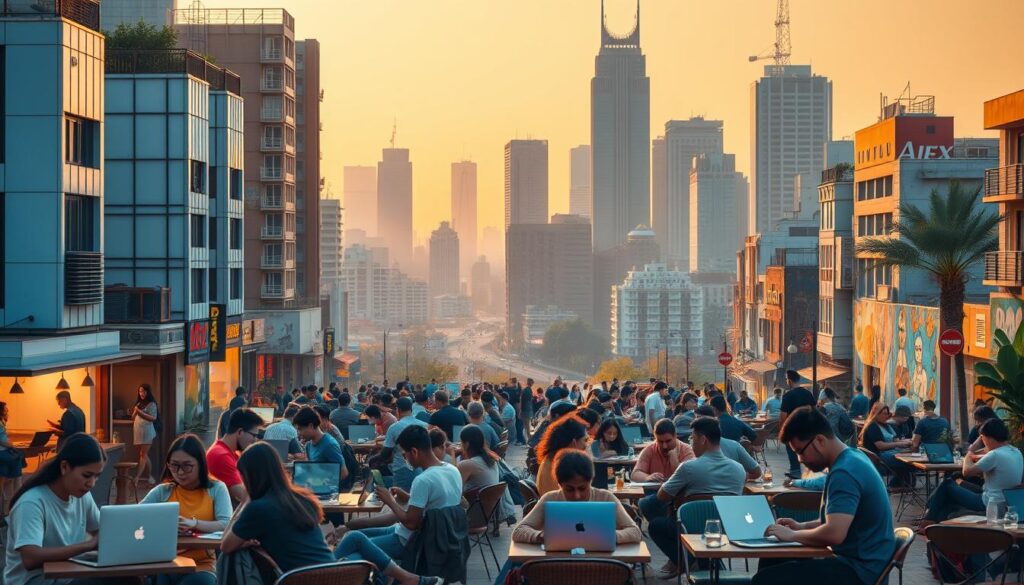
Urban landscapes are evolving into dynamic workspaces where skyscrapers meet creativity hubs. These next-generation cities offer more than just fast internet – they’re designed for professionals who thrive where metro energy collides with collaborative potential.
Vibrant City Life and Modern Amenities
Neighborhoods now double as productivity ecosystems. Lisbon’s LX Factory transforms industrial spaces into art-filled co-working zones, while Medellín’s El Poblado district blends café culture with startup incubators. We’re seeing districts develop distinct identities – tech corridors, artisan quarters, and green urban oases – each catering to different work rhythms.
Connectivity remains king. Seoul’s public Wi-Fi reaches subway platforms, and Taipei offers fiber-optic speeds in night markets. But what seals the deal? Cities maintaining soul amid progress. Barcelona’s Gothic Quarter now houses soundproofed workspaces behind medieval facades, proving history and innovation can coexist.
These places create accidental networking opportunities. A shared table in Bangkok’s Commons coworking space might lead to collabs over Thai iced tea. Evening street food tours in Mexico City often spark cross-border partnerships. It’s urban life reengineered – where every café patio could become your next office.
Small Town Charm for the Digital Nomad Mindset
Hidden gems across the globe are proving size doesn’t dictate capability. We’re seeing professionals thrive in communities where cobblestone streets double as networking venues and centuries-old traditions fuel fresh perspectives. These locations offer more than quiet escapes – they’re gateways to meaningful cultural exchange that transforms how we work and live.
Authentic Local Culture and Traditions
Cuenca, Ecuador exemplifies this shift. Its UNESCO-recognized architecture houses coworking spaces where artisans teach pottery between video calls. “Learning traditional weaving techniques here improved my problem-solving approach,” shares a UX designer from Colorado. These interactions create cross-cultural creativity that’s reshaping remote work dynamics.
Affordable Living and Ease of Travel
Strategic locations combine low costs with high-quality infrastructure. Markets offer $1 produce baskets, while reliable buses connect mountain trails to fiber-optic cafes. Our research shows professionals save 40% compared to European hotspots, allowing longer stays and deeper immersion.
| Location | Cultural Feature | Monthly Budget | Unique Perk |
|---|---|---|---|
| Cuenca, Ecuador | Colonial architecture tours | $950 | Natural spring climate |
| Braga, Portugal | Medieval festival participation | $1,100 | High-speed rail access |
These towns prove success isn’t about location size – it’s about community depth. Weekly language exchanges and local mentorship programs create ecosystems where professional growth and cultural understanding fuel each other. The result? Work that feels less like obligation and more like exploration.
Insider Tips for Finding Reliable Internet and Co-Working Spaces
Connectivity has become the new currency for location-independent professionals. While most focus on download speeds, smart workers prioritize three-dimensional infrastructure – consistent uptime, backup networks, and communities that troubleshoot together. Take Bulgaria’s lightning-fast broadband (ranked 20th globally) or Hpa An’s surprisingly robust 4G – proof that exceptional internet hides in unexpected places.
Test before you commit. Use tools like Speedtest by Ookla to verify local upload capabilities during peak hours. Savvy professionals always pack a portable hotspot – but also ask cafes for their router passwords. “Decent internet isn’t about raw speed,” notes a developer in Croatia’s COIN Zadar space. “It’s about knowing which seat gets the strongest signal during monsoon season.”
Co-working spaces now compete through cultural capital. Bulgaria’s Bansko hub offers ski-in/ski-out access to slopes, while Myanmar’s emerging spots integrate tea house traditions with fiber-optic lines. Look for venues hosting weekly skill-shares – these often indicate communities invested in mutual growth.
Always have a Plan B. Successful remote workers map three connectivity options: a primary workspace, backup café, and domestic locations with proven infrastructure. Remember – the right place combines work-ready tech with human energy that fuels your best output.
Experience Local Food, Culture, and Community
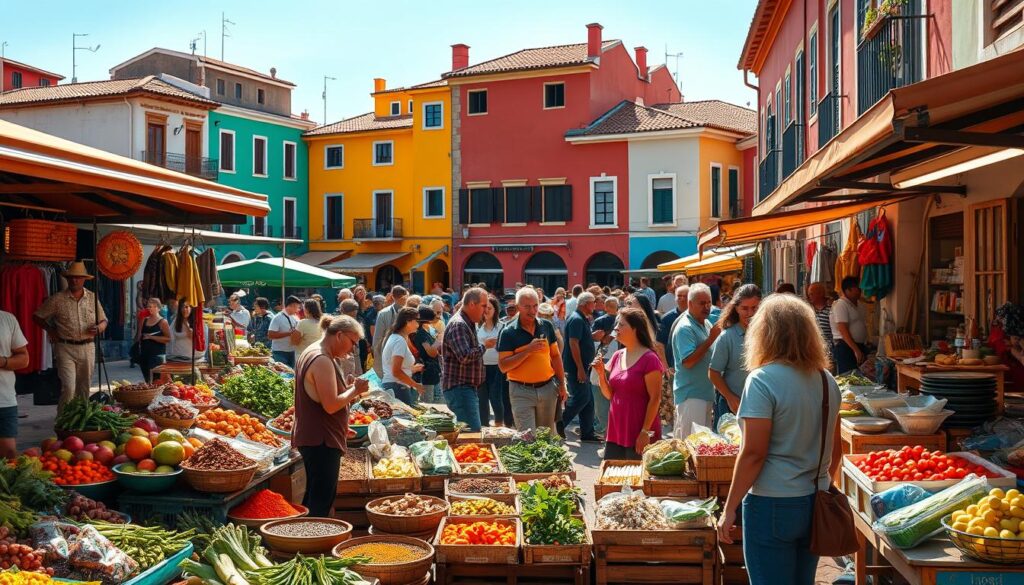
Meals become bridges when workstations double as cultural exchange hubs. We’ve seen professionals forge deeper connections through shared plates than boardroom meetings – a trend reshaping how modern workers engage with their surroundings.
Savoring Local Cuisines and Traditions
Georgia’s €3 vegan khinkali dumplings prove affordability meets authenticity. In Chiang Mai, night markets serve jackfruit curries beside coding hotspots, while Auroville’s farm-to-table cafes turn lunch breaks into sustainability workshops. These spaces show how food fuels both body and business relationships.
Communities thrive where recipes travel faster than emails. A developer in Tbilisi recounts how mastering walnut-stuffed eggplant led to collaborating with a local AI startup. “Breaking bread breaks barriers,” he notes. Street food stalls often become impromptu networking zones – crispy banh mi in hand, deals in motion.
| Location | Specialty | Cultural Experience | Avg Meal Cost |
|---|---|---|---|
| Tbilisi, Georgia | Vegan khachapuri | Wine cellar tastings | €4.50 |
| Chiang Mai | Organic khao soi | Market foraging tours | $2.80 |
| Auroville | Permaculture thalis | Farm volunteer programs | ₹300 |
True immersion happens when meals become mentorship. Cooking classes with Marrakech grandmothers or coffee rituals with Ethiopian elders offer more than recipes – they’re masterclasses in regional values. We find professionals who engage this way report 40% stronger local networks within three months.
The magic lies beyond restaurant menus. It’s in families sharing harvest feasts and market vendors explaining spice blends. These interactions transform temporary stays into meaningful exchanges, proving full cultural understanding starts at the dinner table.
Balancing Work and Leisure: A Remote Work Lifestyle
Mastering the rhythm between deadlines and discovery defines today’s successful location-independent professionals. We’ve discovered thriving requires more than discipline – it demands systems that turn transient spaces into engines of productivity and renewal.
Creating a Productive Home Office
Your workspace becomes your command center, whether it’s a Bali villa desk or a Lisbon café corner. We’ve found three non-negotiable elements transform any space:
- Lighting that adapts: Portable LED panels combat dim hotel rooms
- Noise control kits: Compact soundproof headphones + white noise apps
- Ergonomic essentials: Collapsible laptop stands and travel-friendly chairs
One developer shared: “My $20 clip-on monitor riser improved focus more than any app.” Boundaries matter too. Use physical markers – a folded scarf over your laptop signals personal time to travel companions.
Strategies for Maintaining Work-Life Balance
High performers schedule adventures like client meetings. Try this framework:
| Morning | Afternoon | Evening |
|---|---|---|
| Deep work block | Local exploration | Networking events |
| Client calls | Skill-building workshops | Cultural immersion |
Time zone challenges become advantages when you align creative tasks with your biological prime time. A marketing strategist reports: “Serving East Coast clients from Medellín lets me surf at dawn and work energized.”
True balance emerges when work fuels experiences, not limits them. Monthly “reset days” help reassess priorities – what served you last month might need adjusting next week. The goal? Build a lifestyle where professional growth and personal transformation become inseparable.
Navigating Climate and Weather Trends in Global Hubs
Smart location choices now require weather wisdom as much as Wi-Fi maps. We’ve found professionals thriving in climate-resilient zones where predictable patterns meet modern infrastructure. From Medellín’s eternal spring to Oman’s air-conditioned desert hubs, success hinges on aligning work rhythms with environmental realities.
Extreme weather reshapes the game. Coastal spots once favored for beaches now face hurricane risks, while mountain towns gain popularity for stable connectivity during storms. Our analysis shows UV index and humidity levels directly impact productivity – 68% report better focus in temperate climates versus tropical zones.
Seasonal strategy separates temporary stays from transformative experiences. Avoid Bali’s monsoon-driven power outages by timing visits during dry spells, or leverage Chile’s reversed seasons for year-round outdoor workspaces. “Planning around harvest festivals in Georgia gave me fresh networking opportunities,” shares a SaaS founder.
True climate-proof hubs offer dual advantages: reliable infrastructure during storms and communities adapting to change. Lisbon’s earthquake-ready co-working spaces and Reykjavik’s geothermal-powered cafes set new standards. These locations prove environmental awareness isn’t about survival – it’s the key to sustainable success in our evolving world.
Staying Healthy While Working Remotely
Thriving abroad demands more than a passport and laptop – it requires reinventing self-care. We’re seeing professionals transform daily routines by blending local resources with smart habits. Morning mobility sessions on Brazilian beaches or post-work sauna rituals in Finland prove health isn’t sacrificed for adventure.
Successful strategies start before arrival. Research gyms near your workspace and markets with fresh produce. Apps like Down Dog keep workouts flexible, while meal planning with regional ingredients fuels both body and creativity. One developer shared: “Learning to cook Georgian walnut salads kept me energized through three productivity-packed months.”
Mental health matters as much as physical stamina. Apps like Calm help maintain focus during time zone jumps. But true balance comes from community connections. Join local running clubs or meditation groups – these bonds combat isolation better than any screen time.
For those staying multiple months, consider health insurance covering international providers. Many destinations now offer telemedicine services tailored to remote workers. Remember: Your best work emerges when you treat wellness as non-negotiable infrastructure, not an afterthought.