
The digital nomad lifestyle has evolved from a niche concept to a mainstream phenomenon, fueled by the rise of remote work opportunities and technological advancements. By leveraging the power of modern tools and platforms, digital nomads have seamlessly blended work and travel, offering them unparalleled flexibility, cultural enrichment, and improved work-life balance. However, this lifestyle also comes with its own unique set of challenges, from maintaining work consistency to ensuring reliable internet access and managing time zone differences.
Successful digital nomads are masters at planning ahead, creating structured routines, setting clear boundaries, and embracing the flexibility that this lifestyle affords. They leverage technology to stay connected with their teams and clients, while also immersing themselves in the local cultures and communities they encounter during their travels.
Key Takeaways
- Digital nomads constitute an estimated 29% of the global workforce, with this number steadily increasing.
- 74% of digital nomads prioritize flexible working hours as a significant advantage of their lifestyle.
- Reliable internet access is the most critical factor in choosing travel destinations for 86% of digital nomads.
- Effective communication with teams and clients is essential for successful remote work collaborations, as emphasized by 81% of digital nomads.
- 93% of digital nomads emphasize the need for structured routines to boost productivity and maintain a sense of stability while balancing work and travel.
The Evolution of Digital Nomad Lifestyle
The digital nomad movement has grown steadily, accelerated by the COVID-19 pandemic. As remote work trends have become more prevalent, companies and employees alike have recognized the feasibility and advantages of location independence. This shift has paved the way for a flourishing digital nomad technology ecosystem, empowering professionals to work effectively from diverse locations worldwide.
The Rise of Remote Work Culture
According to a study by Buffer, 98% of remote workers want to continue working remotely at least some of the time for the rest of their careers. This widespread embrace of remote work has been a driving force behind the growth of the digital nomad lifestyle. In 2020, Estonia launched a Digital Nomad Visa, allowing remote workers to live in the country for up to a year, further fueling this trend.
Benefits of Location Independence
The appeal of digital nomadism lies in the flexibility to choose work locations, cultural enrichment through travel, improved work-life balance, and potential cost-of-living advantages. Cities like Bali, Chiang Mai, and Medellin have become hotspots for digital nomads due to their affordable living costs, vibrant communities, and high-quality internet infrastructure. This movement contributes to local economies as digital nomads spend on accommodation, food, and services.
Modern Technology Enablers
Technological advancements have been a crucial enabler for the rise of the digital nomad lifestyle. High-speed internet, cloud computing, and collaboration tools have allowed remote workers to stay connected and productive from virtually anywhere. Platforms like Zoom, Slack, and Asana facilitate seamless communication and project management for digital nomads, while websites like Nomad List provide valuable information on the best destinations for this lifestyle.
As companies increasingly adopt flexible work policies to attract and retain top talent, and as technological innovations continue to enhance the feasibility of remote work, the future of digital nomadism looks promising. However, challenges such as access to healthcare, streamlined visa processes, and enhanced digital infrastructure will need to be addressed to sustain this evolving lifestyle.
Essential Tools and Equipment for Remote Success
In the ever-evolving world of remote work, digital nomads require a specific set of tools and equipment to maintain productivity and efficiency while on the move. From reliable hardware to indispensable software, these essential items empower professionals to thrive in their location-independent lifestyles.
At the heart of a digital nomad’s toolkit is a dependable laptop. Paired with a portable laptop stand, this setup ensures proper posture and ergonomic comfort, crucial for long hours of work. Noise-canceling headphones become a lifesaver, blocking out distractions and allowing for focused concentration. A durable backpack, designed to carry all the necessary gear, completes the essential remote work ensemble.
Beyond the physical tools, digital nomads rely on a suite of software and applications to manage their workflows. Time zone management tools like World Time Buddy help coordinate schedules across global clients and colleagues. Communication platforms such as Slack and Zoom facilitate seamless collaboration, while project management tools like Asana or Trello keep tasks and deadlines organized.
To ensure uninterrupted connectivity, mobile hotspot devices and locally purchased SIM cards serve as backup internet options, safeguarding against potential connectivity issues. Apps like TripIt for travel organization and Google Maps for navigation further enhance the digital nomad experience, making it easier to navigate the world while staying productive.
Whether it’s a reliable laptop, ergonomic accessories, or powerful productivity apps, the right remote work tools, digital nomad equipment, and productivity tools are essential for remote success. By investing in these carefully curated resources, digital nomads can unlock their full potential and thrive in their location-independent lifestyles.
“The right tools can make all the difference in a digital nomad’s journey. They are the foundation for productive and successful remote work.”
Creating a Productive Workspace Anywhere
As digital nomads, crafting a productive remote workspace is crucial for success. When selecting accommodations, prioritize locations with designated workspaces, comfortable seating, ample desk space, and a quiet environment. Ergonomic setup tips, such as using a portable laptop stand and maintaining good posture, can help minimize physical strain and optimize your work experience.
Selecting Suitable Accommodations
Researching and choosing accommodations with a conducive work environment is key. Look for rentals or hotels that offer dedicated workspaces, comfortable chairs, and adequate desk space. Prioritize quieter neighborhoods or properties with soundproofing to minimize environmental distractions. Coworking spaces can also be invaluable, providing reliable internet, power outlets, and opportunities for networking with fellow remote professionals.
Ergonomic Setup Tips
- Use a portable laptop stand to maintain proper neck and back alignment
- Ensure your chair provides adequate lumbar support and allows your feet to rest flat on the floor
- Adjust your desk height to keep your elbows at a 90-degree angle while typing
- Take regular breaks to stretch and move around, preventing muscle strain and fatigue
Managing Environmental Challenges
As a digital nomad, you may encounter various environmental challenges that can impact your productivity. Research accommodation options in quieter neighborhoods or those with sound-insulating features to minimize noise distractions. Secure reliable backup internet options, such as mobile hotspots or nearby cafes with Wi-Fi, to ensure you can stay connected even in the face of connectivity issues.
“Creating a productive remote workspace is essential for digital nomads. Prioritizing ergonomics, selecting suitable accommodations, and managing environmental factors can unlock your full potential.”
Traveling While Working Remotely: Core Strategies
As the remote work revolution continues to unfold, an increasing number of digital nomads are embracing the freedom to work from anywhere. Whether you’re a full-time digital nomad or a part-time remote worker, navigating the balance between travel and productivity is essential for success. Here are some core strategies to help you thrive while working remotely on the go.
Plan Ahead: Before embarking on your travels, research your destinations thoroughly to ensure reliable internet connectivity and compatible time zones with your work schedule. This proactive approach can help you avoid productivity pitfalls and maintain seamless collaboration with your team.
Establish Routines: Creating a consistent daily routine is key to maintaining focus and work-life balance. Set dedicated work hours, schedule regular breaks for exercise and self-care, and make time for leisure activities to recharge. Avoid the temptation to let work bleed into your personal time.
Communicate Clearly: Set clear boundaries with clients and colleagues regarding your availability and responsiveness during your travels. Proactively share your schedule and any time zone differences to manage expectations and ensure uninterrupted productivity.
Build a Remote Community: Feeling connected to others can help mitigate the sense of isolation that can come with remote work and travel. Seek out digital nomad communities, both online and in-person, to forge meaningful connections and tap into a supportive network.
Embrace Flexibility: As a digital nomad, you’ll need to adapt to new experiences and opportunities that may arise during your travels. Maintain a growth mindset and be open to adjusting your plans as needed. This flexibility can enhance your overall experience and lead to serendipitous discoveries.
| Remote Work Strategies | Digital Nomad Travel Tips | Work and Travel Balance |
|---|---|---|
| Research destinations for reliable internet | Maintain a consistent daily routine | Set clear boundaries with clients and colleagues |
| Establish dedicated work hours | Embrace flexibility and adaptability | Build a remote community for support |
| Communicate availability and time zones | Explore local coworking spaces | Prioritize self-care and leisure activities |
By embracing these core strategies, digital nomads can unlock the true potential of working remotely while traveling, fostering a harmonious balance between productivity and adventure.
Building a Sustainable Remote Work Routine
As a digital nomad, establishing a sustainable remote work routine is crucial for long-term success. Maintaining a structured daily schedule is a key component of this process. Set regular work hours and strive to stick to them as much as possible, allowing for occasional flexibility when needed. Incorporating productivity techniques like the Pomodoro Technique or time-blocking can help you make the most of your workday.
Daily Schedule Organization
Organizing your daily schedule is essential for balancing work and leisure. Prioritize important tasks, allocate time for breaks, and ensure you’re leaving room for personal interests and exploration. Regularly review your routine and make adjustments as needed to maintain a sustainable work-life integration.
Productivity Techniques
Experiment with various productivity techniques to find what works best for you. The Pomodoro Technique, with its 25-minute work sessions followed by short breaks, can help you stay focused and energized throughout the day. Time-blocking, where you dedicate specific time slots to different tasks, can also improve your efficiency and reduce distractions.
Work-Life Integration Methods
As a remote worker, it’s essential to establish a healthy work-life integration. Schedule leisure activities and personal time with the same priority as your work tasks. Regularly reflect on the sustainability and fulfillment of your current routine, making adjustments as needed to ensure a harmonious balance between work and travel.
| Metric | Statistic |
|---|---|
| Remote work adoption during COVID-19 | 35% of the employed workforce reported working from home in May 2020 |
| Remote work prevalence in 2021 | 38% of employed persons did some or all of their work at home, compared to 24% in 2019 |
| Projected return to full-time in-office work | 90% of U.S. companies planned to return to full-time in-office work by the end of 2024 |
| Businesses requiring remote work | Only 2% of businesses in the U.S. were projected to require their team members to work from home exclusively |
| Remote worker happiness | Remote workers were reported to be up to 20% happier than those working in an office environment |
By following these strategies, digital nomads can build a remote work routine that is both productive and sustainable, allowing them to thrive in the flexible and enriching lifestyle of a global traveler.
Managing Client Relationships Across Time Zones
As digital nomads embrace the freedom of location independence, navigating client relationships across various time zones becomes a crucial challenge. Effective international client management requires strategic planning, adaptability, and robust communication tools.
To stay organized and aligned with clients around the world, utilizing time zone coordination apps like World Time Buddy or Time Zone Converter is essential. These tools allow you to easily track different time zones and schedule meetings at mutually convenient times, whether that means early mornings or late nights.
- Clearly communicate your availability and preferred meeting times to build trust and ensure smooth collaboration.
- Leverage real-time messaging platforms like Slack and video conferencing tools such as Zoom to facilitate seamless remote communication.
- Set clear expectations regarding response times and work hours to maintain professional relationships while traveling.
Effective international client management, time zone coordination, and strategic remote communication are vital to thriving as a digital nomad. By embracing the right tools and practices, you can cultivate strong client relationships and deliver exceptional work, even from the other side of the globe.
“The ability to work from anywhere in the world has transformed the way we approach client relationships. With the right strategies and technology, digital nomads can seamlessly collaborate with clients across time zones.”
Financial Planning for Digital Nomads
Effective financial planning is crucial for digital nomads who often face fluctuating monthly incomes and unique tax considerations. Budgeting for both travel and work expenses, understanding tax obligations, and securing comprehensive insurance coverage are essential elements of a digital nomad’s financial strategy.
Budgeting for Travel and Work
Digital nomads must meticulously track their expenses using tools like Mint or YNAB to manage both work-related costs and travel-related expenditures. Building an emergency fund with savings to cover at least three to six months of living expenses is recommended to prepare for unexpected events or periods of reduced income.
Tax Considerations
Tax planning for digital nomads can be complex, as they may be required to pay taxes in multiple jurisdictions. Consulting a tax professional specializing in expat taxes is advisable to ensure compliance with reporting requirements and take advantage of available deductions, such as the Foreign Earned Income Exclusion (FEIE), which can exclude up to $126,500 of foreign-earned income from U.S. taxes in 2024.
Insurance Requirements
Comprehensive travel insurance is a must for digital nomads, covering health, belongings, and trip cancellations. Many U.S.-based health insurance policies may not offer overseas coverage, so digital nomads should explore public, private, or a combination of health insurance options that provide adequate protection while traveling. Additionally, travel insurance can help cover expenses like rental car insurance, accidental death, identity theft, and missed connections.
By meticulously planning their finances, digital nomads can ensure their lifestyle remains sustainable and adaptable to the demands of remote work and international travel.
| Expense | Recommendation |
|---|---|
| Emergency Fund | 3-6 months of living expenses |
| Health Insurance | Public, private, or a combination |
| Travel Insurance | Comprehensive coverage for health, belongings, and trip cancellations |
| Tax Planning | Consult an expat tax professional |
By carefully managing their digital nomad finances, individuals can enjoy the freedom and flexibility of their lifestyle while maintaining financial stability and security.
Maintaining Health and Wellness on the Road
As a digital nomad, prioritizing your health and wellness is crucial for sustaining a productive and fulfilling remote work lifestyle. From maintaining a balanced diet to getting regular exercise, there are several strategies you can employ to ensure your well-being remains a top priority while traveling and working remotely.
One key aspect is incorporating regular physical activity into your routine. Studies show that around 80% of digital nomads who engage in regular exercise routines, such as bodyweight exercises, yoga, or running, report better mental health and increased productivity while on the road. Scheduling dedicated workout sessions, even during your workday, can help you stay energized and focused.
Proper nutrition is also vital for digital nomad health. By seeking out local markets and fresh, healthy options, around 70% of digital nomads report improved overall well-being. Maintaining a balanced diet can help you stay energized and avoid the pitfalls of relying on fast food or convenience meals.
Adequate sleep is another critical component of a healthy remote work lifestyle. Studies show that digital nomads who consistently get quality sleep experience a 60% decrease in symptoms of jet lag and are 50% more likely to maintain a good sleep schedule despite traveling across different time zones. Prioritizing your sleep routine and creating a comfortable sleep environment, even in temporary accommodations, can have a significant impact on your productivity and well-being.
To manage stress and promote mental well-being, incorporating mindfulness practices can be highly beneficial. Approximately 75% of digital nomads who incorporate mindfulness practices, such as meditation or deep breathing exercises, report lower stress levels and increased focus in their work. Taking regular breaks to recharge and disconnect can also contribute to a healthier work-life integration.
By prioritizing your health and wellness, you can ensure that your digital nomad lifestyle remains sustainable and enjoyable. Remember to stay hydrated, maintain a consistent sleep schedule, and seek out local activities to immerse yourself in each new destination, all while maintaining a productive remote work routine.
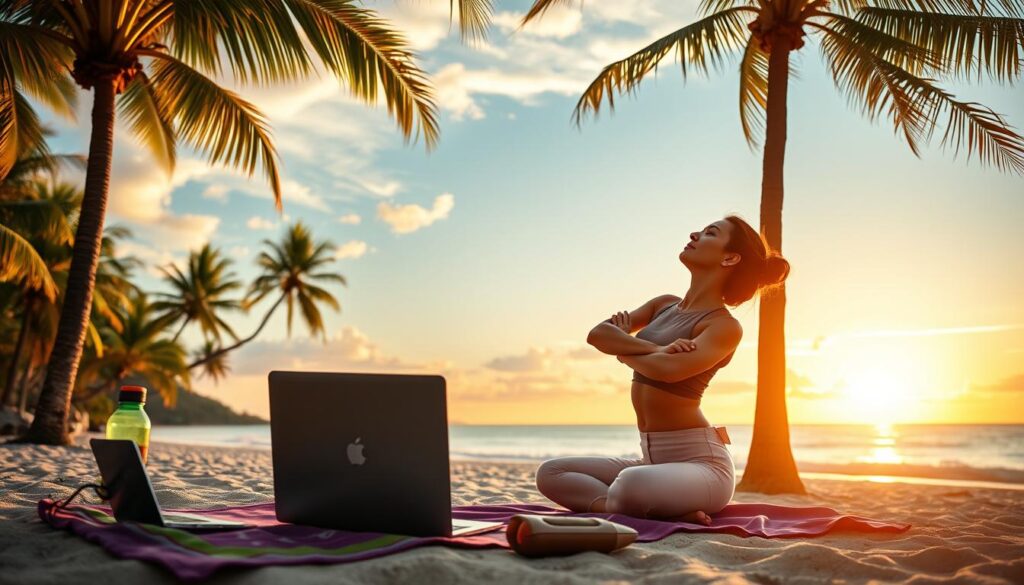
| Health and Wellness Strategies for Digital Nomads | Benefits |
|---|---|
| Regular Exercise | 80% report better mental health and increased productivity |
| Balanced Nutrition | 70% report improved overall well-being |
| Quality Sleep | 60% decrease in jet lag symptoms, 50% more likely to maintain good sleep schedule |
| Mindfulness Practices | 75% report lower stress levels and increased focus |
| Ergonomic Workspace | 40% decrease in work-related strain and discomfort |
| Local Engagement | 85% report increased satisfaction and relaxation |
| Work-Life Balance | 70% less likely to experience work-related exhaustion and mental fatigue |
Conclusion
The digital nomad lifestyle offers a captivating blend of work and travel, granting unparalleled freedom and flexibility. Success in this dynamic world requires striking a delicate balance between productivity and exploration, embracing discipline, and cultivating adaptability.
Key factors for digital nomad success include creating a productive work environment, managing time zones effectively, ensuring reliable internet access, and maintaining a healthy work-life balance. By following these insights and strategies, aspiring digital nomads can thrive in both their professional and personal lives while embarking on transformative journeys around the globe.
The path of the digital nomad is as enriching as the destinations visited, presenting opportunities for personal growth, cultural immersion, and professional development. As remote work continues to evolve and the world becomes more connected, the digital nomad lifestyle stands as a testament to the boundless possibilities in the ever-changing landscape of work and lifestyle. Embracing this paradigm shift can unlock a world of fulfillment, adventure, and self-discovery.