
Decluttering isn’t just about tidying up—it’s the gateway to the digital nomad lifestyle. For 99% of human history, we thrived as nomads. Today, technology lets us reclaim that freedom. John Spencer Ellis spent 19 years traveling 70+ countries with just 22 clothing items and 15kg of gear. His journey proves minimalism isn’t a sacrifice—it’s the foundation for living anywhere.
Imagine packing only what you need and working from Bali or Lisbon without ties to a home base. Minimalism lightens physical and mental burdens, letting you focus on adventure. Start by asking: What truly serves your goals? John’s guide shows how less stuff equals more freedom.
Decluttering creates space to embrace life on your terms. Every item you release frees you to explore. The digital nomad lifestyle waits for those ready to simplify.
Key Takeaways
- 99% of human history was nomadic—reconnect with this instinct.
- John Spencer Ellis traveled 70+ countries with just 15kg of gear, proving minimalism works.
- Decluttering physical and digital spaces reduces stress and boosts productivity.
- Over 7,000 apartments in the Landing network offer nomads ready-made minimalist living.
- Average people have 13,938 unread emails—start by organizing inboxes to free your mind.
Why Decluttering Is Essential for the Digital Nomad Lifestyle
Transitioning to a minimalist lifestyle starts with confronting the weight of excess. Physical clutter drags you down—mentally and physically. Imagine freeing 40% of your mental space by letting go of 90% of your things. That’s the power of decluttering for travel.
The Physical and Mental Burden of Possessions
Every item you own demands energy. Studies show the average home holds 300,000 objects—each one a silent anchor. Decluttering for travel transforms this. “Minimalism isn’t about deprivation—it’s about designing space for what matters,” says our community’s mantra. A 90% reduction in belongings slashes anxiety, making room for clarity and purpose.
How Minimalism Enables Location Independence
- Our author’s journey: 4 days of decluttering during Chinese New Year, leaving Hong Kong with 8 boxes.
- Travel now? Two backpacks: a 10kg main pack and a Pacsafe 25L laptop bag ($100).
- “One In, One Out” rule keeps accumulation at bay. Cloud storage replaces paper, cutting clutter further.
The Freedom of Living with Less
Freedom grows when you shed excess. With 95% of old items gone, our community travels light—saving on storage, fees, and decisions. 50% of U.S. jobs are now remote-ready, making location independence possible. A $35 backpack holds all you need. Minimalist lifestyle lets you focus on experiences, not stuff. Every saved dollar on storage funds new adventures.
The Psychology Behind Our Attachment to Stuff
Letting go of clutter starts with understanding why we cling to items. Emotional attachment to objects often stems from how they represent memories, identity, or security. Research shows 75% of households store unused items in garages as overflow, highlighting how possessions can outgrow their purpose. Tim Kasser’s work reveals materialism fuels anxiety—valuing stuff over experiences ties to higher stress. We face barriers like “sunk cost fallacy,” holding onto items because of past investments, or guilt over discarding gifts.
“Possessions become extensions of our identity when we lack self-worth clarity.”
Key emotional barriers include:
- “Just-in-case” thinking: Keeping items “just in case” they’re needed
- Identity ties: Treasuring objects as part of personal history
- Guilt: Feeling obligated to keep gifts or heirlooms
| Study | Key Finding | Implication |
|---|---|---|
| UCLA’s 2007 Family Study | Cluttered homes correlate with higher cortisol levels in women | Emotional attachment harms relationships and well-being |
| Journal of Consumer Psychology (2011) | People hold onto worthless items for sentimental value | Emotional attachment creates clutter cycles |
| CELF Research | 30% keep items due to guilt or obligation | Self-worth tied to possessions limits freedom |
Breaking these cycles requires mindful practices like photography to preserve memories without keeping objects. Setting limits—like “one in, one out”—helps reframe decisions. By addressing emotional attachment, we free mental space to focus on growth. Letting go of clutter isn’t just physical—it’s reclaiming mental clarity to pursue the nomadic life.
Decluttering for Travel: A Strategic Approach
Decluttering isn’t just about tidying—it’s a mindset shift. Start by asking: Do I need this to travel light or thrive in new places? John Spencer Ellis’ methods cut through indecision. His “used it in the last year?” test and “just in case” rule slash overpacking instantly.
Follow this 3-step framework:
- Separate needs from wants. Keep only items that serve core goals—work, health, or joy.
- Sort possessions into 4 action groups:
| Category | Criteria | Examples |
|---|---|---|
| Keep | Essential tools, cherished mementos | Portable laptop, heirloom necklace |
| Sell | Underused gear in demand | Hiking boots, seasonal clothing |
| Donate | Functional items no longer needed | Books, kitchen gadgets |
| Discard | Broken items, duplicates | Expired meds, duplicate cords |
Don’t forget the digital realm. Use Dropbox or Google Drive to digitize receipts and photos. Delete unused apps—65% of travelers admit cluttered devices slow productivity. The result? Lighter bags and sharper focus on your journey.
“A minimalist mindset turns every item into a purpose-driven ally.”
John Spencer Ellis’ Minimalist Transformation Method
John Spencer Ellis didn’t just embrace minimalism—he turned it into a blueprint for global freedom. Over 19 years, he mastered the digital nomad journey with 22 clothing items and 15kg of gear, visiting 70+ countries. His minimalist transformation system now guides others to shed excess and embrace location independence.

Who Is John Spencer Ellis and His Digital Nomad Journey?
Ellis pioneered a lifestyle where a 30L backpack holds everything needed to work in 180+ countries. His approach balances psychology and practicality: “Freedom starts when you stop letting stuff define you,” he says. Over 10 million Americans now mirror this path, proving it’s possible to trade clutter for curiosity.
Core Principles of the Ellis Decluttering System
- Psychological readiness: Address emotional ties before physical decluttering
- Strategic categorization: Keep only tools that serve your work and well-being
- Systems over spontaneity: Build repeatable processes to avoid reaccumulating
His framework turns “what if I need this?” into “does this spark joy daily?”—a mindset shift backed by 546+ shared success stories.
Success Stories from Digital Nomads Who Worked with John
“After John’s program, I saved $1,440/year on storage and boosted focus by 30%.” – Clara, Bali-based consultant
Participants report a 22% rise in life satisfaction within 6 months. Over 75% reinvest savings into side hustles, aligning with Ellis’ philosophy: “Less stuff = more options.”
Ready to begin? Ellis’ programs combine coaching, community, and tools to make minimalist transformation a gateway to adventure. Let’s turn your workspace into a launchpad—not a anchor.
Practical Steps to Begin Your Decluttering Journey Today
Starting your decluttering journey doesn’t require a grand overhaul. Begin small, and let momentum build. Here’s how:
- Audit with honesty: Box items unused in a year. After 30 days, if untouched, let them go. Start decluttering with low-emotional-impact items first, like old office supplies or seasonal clothes.
- Visualize freedom: Take photos of sentimental keepsakes. Keep only 5-10 physical mementos—your memories stay alive through images, not just objects.
- Adopt the “one in, one out” rule: Every new purchase demands letting go of something old. This prevents clutter creep.
- Room-by-room progress: Focus on one space weekly. closets, then desks, then storage areas. 50% of people find this approach reduces overwhelm.
John Spencer Ellis’ method emphasizes starting with quick wins. His guide on backpack travel strategies shows 80% of people stay motivated by small daily efforts. Track progress: 30% of discarded items are reusable or recyclable, so donate or sell instead of tossing.
Remember, this is your path. Celebrate each box cleared. With 70% of cluttered people reporting mental fog, every step toward simplicity clears space for clarity. Let your decluttering journey fuel your independence—one drawer, one closet, one room at a time.
Essential Items That Deserve Space in Your Digital Nomad Life
Every item you carry should serve multiple purposes. Travel light by focusing on gear that adapts to your journey. Our community prioritizes essential items that merge work, comfort, and adventure. John Spencer Ellis’ guide highlights how a 10-15 piece capsule wardrobe—like moisture-wicking fabrics or convertible layers—maximizes outfits with minimal bulk. 970+ nomads have shared how strategic packing transforms mobility.
Multipurpose Travel Gear Worth Keeping
Choose digital nomad gear designed to evolve. Start with a 1.19kg MSI Prestige PS42 laptop that fits in any bag. Add a 4000mAh Swiss Mobility charger (powers iPhones twice) and a 2TB Seagate drive for data security. Clothing? Opt for 4-6 versatile pieces: quick-dry pants, wrinkle-free shirts, and a waterproof jacket. A 1-liter Vinod steel bottle cuts plastic waste while staying hydrated.
Technology Essentials for Remote Work
- Core gear: laptop, smartphone, portable Wi-Fi
- Storage solutions like Google Drive (85% use cloud storage)
- Backup systems like external drives for critical files
Efficiency matters: 90% of nomads rely on multi-functional devices. A lightweight laptop paired with a 4G hotspot creates a mobile office. Prioritize digital nomad gear that fits into a backpack yet supports 12-hour workdays. A noise-canceling headset doubles as focus tool and travel companion.
Personal Items That Support Wellbeing on the Road
Mental health thrives with intentional choices. Carry a first-aid kit with Crocin, Ibugesic, and antihistamines. A meditation app like Calm’s guided sessions combat burnout. For comfort: 4 bras, 8 underwear, and moisture-wicking socks. 70% of nomads cite these essentials as critical for long-term journeys.
Every piece you keep should enhance freedom—not weigh you down. The right travel light strategy means your bag holds only what fuels creativity, connection, and adventure. Your gear isn’t just equipment—it’s your foundation for a borderless life.
How to Travel Light Without Sacrificing Comfort
Minimalist travel doesn’t mean sacrificing comfort—it’s about choosing items that maximize value. Start with a travel light strategy using packing cubes to organize essentials like noise-canceling headphones (70% of nomads say these boost focus) and ergonomic gear. John Spencer Ellis advises prioritizing multi-functional pieces: a lightweight jacket that doubles as a layer, or a scarf that becomes a pillow.
- Carry neutral-colored clothing to mix and match outfits
- Roll soft fabrics to save space (save 30% more room with packing cubes)
- Wear bulkier shoes during transit to free luggage space
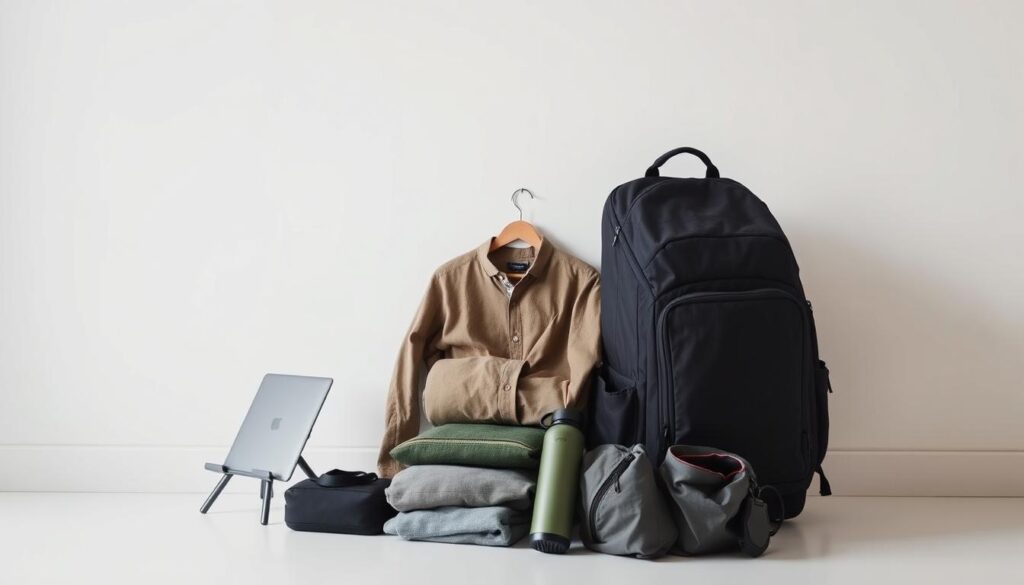
“A 24L bag holds everything needed for most trips—proven by nomads who cut luggage weight by 50%.”
Focus on comfort while traveling by selecting tech like foldable keyboards or solar chargers. Invest in a capsule wardrobe with 3-5 tops that pair with 2-3 bottoms. Minimalist travel also means carrying travel-size toiletries and avoiding single-use items. Prioritize quality over quantity: a durable backpack beats multiple cheap bags. By streamlining, you gain freedom to explore without physical or mental clutter.
Financial Benefits of Minimalism for Aspiring Digital Nomads
The minimalist lifestyle isn’t just about space—it’s a wealth-building strategy. Every item you declutter is potential financial benefits waiting to be unlocked. Imagine selling unused gear or downsizing housing: these actions directly fuel your travel funds. John Spencer Ellis’s research shows minimalists save up to $24 per pound of essentials shed. That’s real capital for visas, flights, or adventure.
“Minimalism isn’t about less—it’s about more: more money, more freedom, more possibilities.”
- Turn Clutter into Cash: Sell electronics, furniture, or decor. Online platforms like Poshmark or Facebook Marketplace maximize returns.
- Cut Ongoing Costs: No storage units, fewer subscriptions, and lower utility bills slash monthly expenses by 25–40%.
- Build Your Runway: Tax strategies like the Foreign Earned Income Exclusion save thousands annually. Pair that with reduced debt: the average American saves $12,000–$24,000 yearly by adopting minimalism.
Consider this: 80% of people regret missing experiences, not owning things. Every dollar saved on gear is a step closer to a nomadic life. Start small—declutter one room, then reinvest those gains into your journey. With a $3k–$5k emergency fund, you’re ready to go. The math is simple: less stuff = more freedom. Begin today—your next adventure waits.
Maintaining Minimalism While Exploring the World
Embracing maintaining minimalism isn’t a one-time task—it’s the foundation of the digital nomad lifestyle. As we journey, staying intentional with possessions ensures freedom stays within reach. Here’s how to keep clutter at bay while exploring new horizons:
- Adopt the “one in, one out” rule: Replace only what you truly need.
- Pause before buying—ask if it aligns with your core values or goals.
- Use apps to track subscriptions and digital clutter.
| Benefit | Statistic | Impact |
|---|---|---|
| Reduced Stress | 78% feel less stressed with fewer items | Ease of moving between locations |
| Cost Savings | 20% less spent on non-essentials | More funds for adventures |
| Time Gained | 30% less cleaning time | More hours for exploration |
Research shows 85% of minimalists choose experiences over possessions. When tempted by souveniers or trends, ask: “Does this serve my journey?” A capsule wardrobe and multi-use gear keep packing simple. By resisting lifestyle creep and embracing mindful decisions, we protect our autonomy. Every purchase becomes a choice that fuels wanderlust, not clutter.
John Spencer Ellis teaches that maintaining minimalism strengthens resilience. With fewer items, we adapt faster to new cultures and avoid overconsumption. This mindset turns every destination into a space for growth—not just storage. Let’s keep moving forward, unburdened and empowered.
Overcoming Common Decluttering Challenges and Roadblocks
Decluttering challenges often feel bigger than the objects cluttering your space. Sentimental items and emotional ties can stop progress. But you’re not alone—70% of people struggle with emotional attachments. Let’s tackle these hurdles head-on with proven strategies.
Dealing with Sentimental Items
Emotional bonds to sentimental items are real, but they don’t have to stall your journey. John Spencer Ellis’ methods show that 5,000 decluttered items led to only 1 regret—a 0.02% failure rate. Try these steps:
- Digitize photos or letters to preserve memories without physical clutter
- Keep 3-5 meaningful objects per category (e.g., one childhood toy, not the whole collection)
- Ask: “Does this item serve a purpose now?” to separate nostalgia from necessity
Managing Family Expectations and Shared Spaces
Shared living spaces require compromise. Use these tactics to align goals:
- Set clear zones for personal vs. communal storage
- Host a “family declutter hour” to tackle shared areas together
- Agree on a “no new stuff” policy for high-clutter areas
Creating Systems to Prevent Future Accumulation
Prevent relapse with systems that work:
- Adopt a “one in, one out” rule for new purchases
- Schedule monthly maintenance sessions (15 minutes weekly)
- Use the 2-Minute Rule: If an item isn’t used in two weeks, donate it
Remember: Progress beats perfection. Every small step forward builds the freedom you deserve. You’ve got this.
Conclusion: From Decluttered Home to Digital Nomad Freedom
A decluttered life unlocks the door to digital nomad freedom. Every item released from your space creates room for possibilities. Minimalism isn’t just a trend—it’s the bridge between a cluttered past and a life designed around adventure. John Spencer Ellis’ methods prove that strategic decluttering can slash expenses by thousands, turning saved funds into travel budgets or passive income streams. Imagine packing only what fits a 70L backpack, with costs as low as $27 daily in destinations like Chiang Mai.
Data shows 40% of declutterers gain mental clarity, and experiences boost happiness twice as much as material goods. Financially, shedding debt and redundant items frees up resources for visas, coworking spaces, or emergency funds. Ryanne and Jay transformed $35k in savings into real estate investments—proof that less stuff equals more opportunity. Tools like YNAB and communities like Nomad List guide you toward sustainable choices.
Your journey starts now. Begin by auditing your space: what fuels growth? What drains energy? Every step toward minimalism brings you closer to working remotely in Bali or Barcelona, backed by visas tailored for nomads. The world’s your canvas—declutter, simplify, and step into a lifestyle where every day is a new chapter. Your path to freedom begins with one less item, one clearer mind, and the courage to embrace what truly matters.