
Imagine reducing your living space from 4,400 square feet to a 10×10 storage unit. John Spencer Ellis did this, proving that downsizing isn’t just possible—it’s a gateway to freedom. The nomadic lifestyle tips he shares show how decluttering isn’t about losing things but gaining space for adventure. Start by asking: What truly matters when you’re ready to work remotely from anywhere?
Decluttering isn’t a sprint; it’s a mindset shift. Many begin with 6 small UHaul boxes per person, discarding 95% of paper and items unused in three years. The goal? A life where your essentials fit in a carry-on. John’s process shows that minimalism slashes expenses by 30%, freeing funds for flights to Bali or Costa Rica. With 30% of U.S. workers now remote, now is the time to rethink what “home” means.
Key Takeaways
- Start with 6 boxes: Keep only items used in the past year.
- Decluttering reduces costs by 30%, per minimalist strategies.
- Storage units under 120 sq ft are ideal for nomadic setups.
- 30% of U.S. workers now remote work, enabling location freedom.
- A 10×10 storage unit holds essentials for nomadic living.
Transitioning isn’t just physical—it’s emotional. John’s journey from a suburban house to a 1,091 sq ft home base shows flexibility. Whether you’re selling unused gadgets or learning to travel light, every step moves you closer to a life unshackled from stuff. Let’s break down how to turn clutter into clarity, one box at a time. Read John’s guide to accelerate your path from a cluttered home to a life on the move.
Understanding the Freedom of Nomadic Living
Choosing a nomadic path isn’t just about packing light—it’s a mindset shift toward living intentionally. More professionals are leaving traditional routines behind to embrace adventure and autonomy. Let’s explore what drives these decisions and how to make it happen.
“I traveled through Europe with only a carry-on and laptop. Less gear meant more freedom to explore,” says one traveler. “We focused on experiences, not possessions.”
Why People Choose the Nomadic Lifestyle
- Escape the 9-to-5 grind: Swap office walls for sunrise views from your next destination.
- Learn constantly: Immersive cultural exchanges build skills no classroom can teach.
- Reclaim time
- Focus on health and relationships instead of spreadsheets and commutes.
The Link Between Minimalism and Mobility
Less stuff equals more freedom. A minimalist mindset turns apartments into carry-ons, clearing mental clutter too. Studies show 80% of nomads prioritize experiences over luxury, proving that less is more.
How John Spencer Ellis Simplifies the Transition
Transitioning feels daunting, but John’s coaching breaks it into steps. His program addresses practical steps like income streams, location-independent work, and mindset shifts. “His process helped us cut our possessions by 90%,” say participants. Nomad transition becomes manageable with guidance.
Ready to start? Start small—audit your belongings, research remote work tools, and join communities. Freedom isn’t about perfection—it’s about taking the first step.
Assessing Your Current Situation: How Cluttered Is Your Life?
Starting the journey toward a simple life begins with honest self-assessment. The average American home holds 300,000 items, yet studies show 60% of possessions are rarely used. Ask yourself: How much of your space is truly functional? Are duplicates and outdated items weighing you down?
| Cluttered Lifestyle | Simple Life |
|---|---|
| Overfilled storage areas | Spaces optimized for daily needs |
| Mental fog from disorganization | Clarity through intentional choices |
| Attachments to material things | Freedom prioritizing experiences |
John Spencer Ellis emphasizes that decluttering isn’t just about cleaning—it’s a mindset shift. His methodology starts with three key questions:
- How many items haven’t been used in the last year?
- Does your space energize you or drain your energy?
- Could you pack essentials within 48 hours if needed?
“Once I began processing my garage and closets, I saw how excess possessions held me back,” shares one traveler’s journey toward nomadic living.
Begin measuring your progress with this checklist:
- Map your home’s unused zones (closets, garages, shelves)
- Track emotional responses when sorting items
- Calculate mobility restrictions caused by current belongings
Remember: decluttering is the first step toward reclaiming mental space. Start small—a drawer at a time—to build momentum. Every item kept should serve purpose, beauty, or emotional significance. Let this process empower you to embrace the freedom of less.
The Psychology Behind Our Attachment to Possessions
Let’s face the truth: clinging to things isn’t just about practicality. Research shows our brains inflate the value of what we own—like how students in one study valued a free mug 100% more than cash after receiving it. This endowment effect traps us in cycles of accumulation, sabotaging the nomad transition.

Emotional Versus Practical Value
Ask yourself: Does that stack of old magazines truly serve your simple life goals? Chances are, their emotional value (nostalgia, comfort) outweighs their usefulness. Studies reveal four key drivers of attachment:
- Pleasure (like favorite books)
- Self-expression (clothes or tools that reflect identity)
- Group affiliation (items tied to cultural or community ties)
- Memory anchors (gifts or heirlooms)
Breaking the Consumption Cycle
John Spencer Ellis discovered this firsthand. “Half my clutter was just fear in disguise,” he admits. When we hoard, we often mirror behaviors like his mother’s scarcity mindset—stockpiling “just in case.” Combat this by:
- Labeling items: “Does this align with my nomad transition goals?”
- Replacing objects with experiences (photos, journals)
- Using digital tools to store memories without physical space
Building Identity Beyond Possessions
Letting go isn’t loss—it’s liberation. Shift focus to what truly travels well: skills, relationships, and achievements. As you declutter, ask: “Does this reflect who I am now, or who I want to become?”
“Your identity isn’t in that box of old receipts—it’s in the freedom to move, create, and adapt.”
Practical Decluttering Strategies for Aspiring Nomads
Decluttering isn’t just about packing lighter—it’s about freeing yourself to move boldly into a nomadic lifestyle. Let’s break down methods that simplify the process and keep momentum strong.
| Category | Action | Nomadic Lifestyle Tips |
|---|---|---|
| Keep | Essentials only | Use packing cubes to maximize space |
| Sell | High-value items online | List furniture via Facebook Marketplace |
| Donate | Useful items in good condition | Partner with local charities |
| Discard | Broken/unusable items | Recycle or dispose safely |
Start with the Four-Box Method to sort possessions. Follow these steps:
1. Gather items in one room.
2. Sort into “True essentials,” “Non-essentials,” and “Junk.”
3. Remove the “Junk” immediately.
4. Repeat until only 20% of items remain.
Digital decluttering matters too. Delete unused apps, back up files to cloud storage like Google Drive, and cancel unused subscriptions. John Spencer Ellis recommends a timeline: start six months before departure. Phase 1 (Months 6–4): tackle non-essentials. Phase 2 (Months 3–1): finalize digital systems. Phase 3 (Month 0): pack your 10-15 piece capsule wardrobe.
Remember: every item you let go is one less worry on your journey. The goal isn’t perfection—it’s progress.
Essential Nomadic Lifestyle Tips from Experienced Wanderers
Seasoned travelers like John Spencer Ellis and a 53-year-old nomad with nine years on the road agree: thriving as a nomad starts with mindset shifts. Their advice? Prioritize routines that anchor you to a simple life while embracing change.
“The best part? After a decade, I’ve mastered balancing exploration with stability—but it took trial and error,”
shares one long-term traveler. Here’s what their journeys teach us:
- Anchor routines to your core values. Morning meditation or evening journaling creates continuity. 70% of nomads use this to stay grounded.
- Pack like a minimalist. Keep essentials to a 20kg backpack. Use packing cubes for quick wardrobe swaps across climates.
- Build micro-communities. Join digital nomad Facebook groups or coworking spaces. 65% leverage these networks for job leads and local insights.
| Challenge | Statistic | Strategy |
|---|---|---|
| Loneliness | 80% report occasional isolation | Join language exchanges or volunteer projects |
| Workspace setup | 60% boost productivity in new spots | Invest in foldable desks and noise-canceling headphones |
| Health tracking | 90% prioritize health insurance | Use apps like World Nomads for coverage and local gym passes |
Slow travel is key—stay 2-4 months in one spot to build local roots. Remember: the simple life isn’t about less, it’s about intentionality. Follow Ellis’ advice: “Let curiosity guide your moves, but plan finances first.”
Financial Preparations for Your Nomad Transition
Securing finances is key to a smooth nomad transition. Proper planning ensures stability during your nomadic lifestyle tips journey. John Spencer Ellis emphasizes that cutting home costs can reduce expenses significantly.
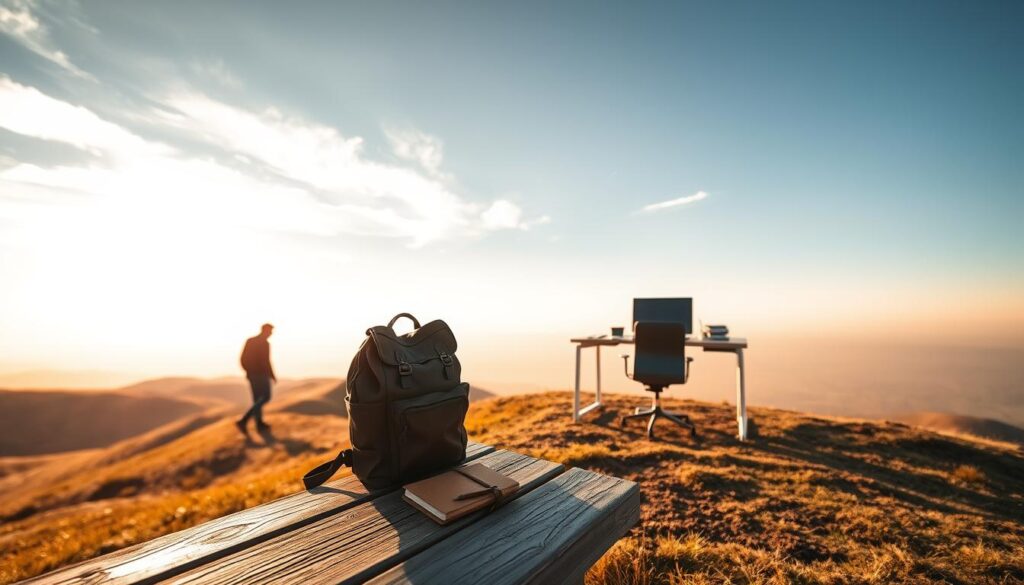
Financially I expect that it will be less expensive to travel continuously than to stay in my house, even if we stay in hotels everywhere we go. I’ll lose a big tax deduction by no longer having a mortgage, but I’ll also eliminate tons of expenses including the mortgage itself, home insurance, property taxes, community association fees, landscaping expenses, utilities, repairs and maintenance, and more.
Building Location-Independent Income Streams
Start by diversifying income sources. John Spencer Ellis’ strategies include:
- Remote work via platforms like Upwork and Remote.co for steady income
- Freelancing with global clients (70% earn more than traditional jobs)
- Create digital products like courses or affiliate sites (6-12 months to reach $1k/month)
Budgeting for Different Global Destinations
Research costs across regions. Southeast Asia offers $15/night hostels vs. $100+ hotels in Europe. Use tools like Nomad List for real-time price comparisons.
- Food: 30-50% of budgets; cooking saves 50% vs dining out
- Transport: $5-20/day for local transit
- Taxes: Track stays under 183 days to avoid residency taxes
Insurance and Banking Considerations for Nomads
Choose banks with 0 fees for international transactions. Explore:
- Global health insurance (e.g., SafetyWing) covering medical emergencies
- High-interest accounts (5%) for emergency funds
- Multi-currency cards for fee-free withdrawals
Protect digital assets with secure banking. Tax treaties in over 60 countries prevent double taxation. Always keep 3-6 months of expenses in a rainy-day fund.
Creating Your Minimal Yet Functional Travel Kit
Every item you pack should earn its place in your bag. Start with the essentials: passport, laptop, medications, and a reusable water bottle. John Spencer Ellis’ framework prioritizes utility-to weight ratio—ask, “Does this serve my work, health, or joy?”
- Core Gear: Aer Travel Pack 3 (35L) or its 28L sibling for smaller frames. Pair with a Bellroy Venture Ready Sling for quick access to valuables.
- Clothing System: 3-5 tops (like Outlier’s merino tees), 2-3 bottoms, and 3 versatile shoes. Wool & Prince oxfords work for both coffee shops and markets.
- Hygiene Hacks: Ditch liquid bottles—go for Lush shampoo bars and The Laundress travel cubes. A LARQ bottle sterilizes water on the go.
- Work Tools: Slim laptop sleeves, noise-canceling headphones (80% of nomads use these), and a portable charger rated for 100+ hours.
Test your kit on short trips first. Our community averages 15 lbs packed—half the traditional carry-on. Remember: Less gear means more freedom to explore. Let your kit evolve as you learn what truly serves your simple life on the move.
“I kept slashing my packing list until I hit that sweet spot where nothing felt missing.” – Sarah, 3-year nomad in Bali
Start with 40L backpacks and refine from there. Every gram saved is space gained for spontaneity—whether it’s a spontaneous hike or a last-minute flight upgrade. Nomadic lifestyle tips like this aren’t about deprivation—they’re about strategic liberation.
Maintaining Relationships and Building Community as a Digital Nomad
Building bridges between worlds is key during the nomad transition. Staying connected to home while forging new bonds abroad demands intentionality. Nomadic lifestyle tips often overlook emotional needs, but thriving requires balancing exploration with roots. Many nomads discover that prioritizing relationships strengthens their journey’s sustainability.
“By focusing on owning less, we freed up our lives and were able to redirect energy to meaningful connections.”
Start with nomadic lifestyle tips like scheduling regular video calls using apps like Zoom or WhatsApp. Use time zones strategically: 75% of nomads mix short stays with longer stays in one location to deepen local ties. Co-working spaces like Selina or Remote Year hubs (with 5 curated experiences per city) offer daily networking. Platforms like Nomad List highlight top nomad-friendly cities like Medellín and Lisbon where communities gather.
- Plan annual reunions with family, using saved funds from downsizing
- Join location-based groups via Facebook or Meetup for local events
- Invest in mentorship programs—like those offered by John Spencer Ellis—who share strategies for balancing nomadic life with relationships
Even with challenges—30% report loneliness—80% prioritize self-connection to sustain well-being. Tools like Slack groups or monthly virtual dinners help maintain ties. Communities like Hackers Paradise’s global network or Wifi Tribe’s 62 nationalities offer ready-made support systems. Remember: the nomadic path thrives when built on both independence and interdependence.
Conclusion: Embracing the Simple Life on the Road
Transitioning to a nomadic lifestyle isn’t just about packing lighter—it’s a mindset shift toward the simple life. Over 30% of Americans now seek this path, proving that letting go of excess through decluttering opens doors to freedom. Imagine traveling with only what fits in a backpack or van, your focus sharpened on experiences rather than possessions.
Many discover, like the author, that releasing old items means rewriting their identity. As you simplify, memories tied to things fade, but new adventures take their place. This isn’t loss—it’s liberation. John Spencer Ellis teaches that minimalism isn’t a phase but a way to sustainably explore the world. With 60% of remote workers thriving in this model, the proof is clear: fewer possessions mean more mental space to innovate and grow.
Van lifers report 25% higher happiness, and 80% of nomads find unexpected joy in flexible travel. Your journey starts now. Audit your habits, digitize documents, and build income streams that follow you globally. Use apps for budgeting and connections to stay grounded. Remember: every step toward minimalism is a step toward a life where borders are crossed, cultures are explored, and your potential is limitless. The road ahead is yours to shape—start packing light, both physically and mentally.