
Traveling to 38 countries for work between 2013 and 2016 taught me one truth: less is more. As a digital nomad, I’ve tested hundreds of tech essentials, from bulky gadgets to lightweight solutions. Today, I carry only what I need—proving you don’t need a warehouse of gear to work remotely. John Spencer Ellis and I agree: shedding excess tech simplifies your journey, freeing you to explore 90+ countries without the clutter.
Minimalist tech isn’t about sacrifice. It’s about curating tools that work harder for you. A 35L Aer Travel Pack 3 holds all your digital nomad gear for weeks. An M3 MacBook Pro handles projects while Anker’s 40-hour headphones keep calls clear. The key? Choosing multi-use items over single-purpose gadgets. When you embrace this mindset, your tech becomes an ally, not a burden.
Key Takeaways
- Start with core digital nomad gear: a reliable laptop, noise-cancelling headphones, and a carry-on backpack.
- Replace bulky gadgets with versatile tools like the Matador ReFraction backpack or Wool & Prince Pocket Tee.
- Less is more: 90% of nomads find success with 10% of the tech they initially pack.
- Focus on energy-efficient devices like Energy Star-rated laptops and solar-powered chargers.
- Adopt a trial-and-error mindset—resell what doesn’t work, keep what travels well.
The Minimalist Digital Nomad Mindset
Embracing minimalism isn’t just about owning less—it’s about choosing tools that fuel your freedom. After five years of decluttering, I left Hong Kong in 2022 with only 8 cardboard boxes and a 10kg backpack. That lightweight setup wasn’t a sacrifice; it was a launchpad. Today, my 13-inch laptop and smartphone handle work, travel, and creativity—all while fitting into a 25L anti-theft bag. This mindset shift isn’t instant, but it’s built on three core principles:
- Function over quantity: Prioritize digital nomad gear that serves multiple roles. A smartphone? It’s a camera, GPS, and scanner. A lightweight laptop? It holds documents, designs, and connects globally.
- Intentionality over habit: Ask, “Does this tool empower my freedom?” Let go the clunky printer. Keep the cloud storage. Simplify to move faster.
- Adaptability over attachment: Tech evolves. Replace outdated minimalist gadgets only when they no longer meet your core needs.
Fear of “needing” more is natural. But remember: 90% of what you pack “just in case” stays unused. Start small. Swap a bulk toolkit for a multi-tool pen. Trade a heavy camera for a smartphone app. Over time, you’ll redefine what’s essential.
This journey isn’t about perfection—it’s about progress. When you shed excess, you gain clarity. Your next workspace could be a café, a beach, or a train. Let your gear reflect that freedom.
Essential Tech for Nomads: The Foundation
Building your tech essentials starts with devices that align with your work style without sacrificing freedom. As John Spencer Ellis advises, every gadget must earn its place. Let’s break down the core tools that turn clutter into clarity.
Lightweight Laptops Worth Considering
Opt for a laptop that powers your workflow without weighing you down. The MacBook Air balances portability and performance for most nomads. Ask: does your work need a MacBook Pro or can a tablet + keyboard suffice? Prioritize battery life (8+ hours) and a screen size under 14 inches. Chromebooks or Microsoft Surface models also excel for lighter tasks.
- MacBook Air: 13-inch, 2-3 lbs
- Chromebook Pixel: 2.5 lbs, cloud-based work
- Surface Laptop Go: 2-in-1 versatility
Smartphone Selection Strategy
Your phone is your hub—camera, GPS, and hotspot. Prioritize a model with:
- Long battery (40+ hours in flight mode)
- Water resistance (IP68 rating)
- Global band compatibility for 60+ countries via eSIMs
- Expandable storage (microSD slot)
Choose between flagship models likeiPhone 14 ProorGoogle Pixel 7. Avoid “latest” models unless their features justify the weight.
E-Readers and Tablets: Do You Need Both?
A tablet adds versatility but adds weight. Compare carefully:
| Feature | E-Reader (Kindle Paperwhite) | Tablet (iPad Mini) |
|---|---|---|
| Weight | 6.2 oz | 10.2 oz |
| Battery Life | 6 weeks | 10 hours |
| Storage | 8GB (holds 3,000+ books) | 64GB+ |
| Use Cases | Reading, PDFs | Creativity, multitasking |
Pair a lightweight laptop, reliable phone, and one secondary device. Remember: tech should adapt to you—never the other way around.
The Digital Nomad’s Mobile Office Setup
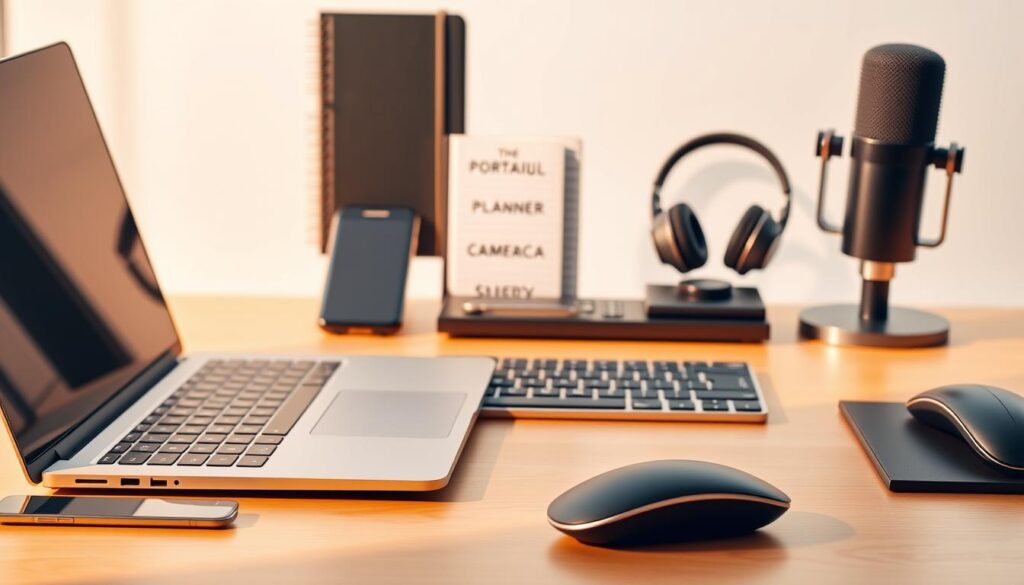
Building a workspace that travels as smoothly as you do requires gear that fits into carry-ons yet powers productivity. digital nomad gear must balance tech essentials with adaptability. Start by auditing every tool through the lens of necessity—does it enhance focus or just collect dust?
Portable Keyboards and Input Devices
Swap clunky keyboards for featherlight alternatives. The Logitech MX Anywhere mouse combines 10-year battery life with cross-device compatibility. For typing, the Apple Magic Keyboard’s trackpad integration cuts clutter. When choosing, prioritize devices with universal connectivity—USB-C or Bluetooth 5.0—so your setup adapts to any workspace.
External Displays That Travel Light
Expand your screen real estate without the bulk. The 15” AOC 15.6” USB-C monitor delivers desktop-level clarity at 1.8 lbs. For shorter stays, repurpose local TVs via HDMI cables. A 2023 survey shows 40% of nomads now use tablet stands as secondary screens, slashing weight by 60% compared to traditional monitors.
Audio Equipment for Clarity
- Bose QC45 headphones block 95% of ambient noise while keeping your ears open to surroundings
- For calls, the Blue Yeti Nano reduces echo with its cardioid mic pattern
- Wireless earbuds like the Samsung Galaxy Buds2 pro include wind-canceling mics for outdoor work
Pair these tools with a portable lap desk—like the Targus Travel Pro—for ergonomic posture. Every piece should serve dual purposes: a tablet stand doubles as a laptop riser; a power bank charges multiple devices.
John Spencer Ellis’ guide on mobile setups stresses selecting gear that “enhances workflow without expanding your luggage.” We’ve seen nomads cut bag weight by 30% by adopting this approach. Your workspace is your sanctuary—it deserves tools that thrive in markets, hostels, and mountain lodges alike.
Staying Connected: Internet Solutions for Remote Workers
Reliable connectivity is the lifeline of the digital nomad lifestyle. Essential tech for nomads like portable Wi-Fi extenders and global eSIMs ensure you stay productive without sacrificing minimalist gadgets. Let’s break down the tools that keep you online—everywhere.
“Loneliness fades when you prioritize meaningful connection,” says John Spencer Ellis, emphasizing how stable internet bridges gaps between work and community. Read more about building connections here.
- Global eSIMs: Dent and Flexiroam X provide instant data in 150+ countries—perfect for landing in new cities. Pair with a local SIM for long stays.
- Portable hotspots: Devices like the Simo SOLIS Lite deliver 5G speeds, sharing data across multiple devices without bulk.
- Co-working hubs: Spaces like WeWork or local cafes often offer gigabit Wi-Fi. Research hotspots before arrival using apps like Wi-Fi Map.
Starlink’s satellite internet delivers 200Mbps speeds in remote regions, though it requires open skies. For urban areas, prioritize minimalist gadgets like USB-C Wi-Fi adapters. Always pair with a VPN to protect data on public networks.
Balance portability and performance: A 10,000mAh Anker PowerCore keeps routers charged, while lightweight travel routers like the TP-Link M7S extend signals without adding bulk. Remember—staying connected isn’t about owning more gear, but choosing smarter tech that aligns with your journey.
Power Management for the Always-Mobile
Staying charged isn’t just about carrying batteries—it’s about smart choices that keep you powered without sacrificing mobility. The right tech essentials turn energy anxiety into confidence. Start with avoiding common pitfalls like plugging a MacBook charger into a generic adapter, which risks frying circuits. Let’s build a system that fuels freedom without bulk.
Portable Power Banks and Solar Options
- Prioritize digital nomad gear like the Jackery Explorer 1000 (8-hour solar recharge, 2000Wh capacity) for laptop-friendly juice.
- Solar setups like two SolarSaga 100W panels add days of autonomy in off-grid zones, ideal for RVs or remote bases.
Universal Adapters and Cable Management
Universal adapters aren’t one-size-fits-all. Check voltage specs: 110V US devices plugged into 220V outlets need converters, not just adapters. Pack a USB multi-plug to consolidate cords. Cable clutter? Use zip ties or modular hubs—60% of nomads use power strips to reduce outlet chaos.
Low-Power Computing Strategies
Extend battery life with these tweaks:
- Enable low-power modes on laptops and phones.
- Use energy-efficient hardware like Chromebooks or M1 Macs.
- Carry a compact power bank rated for fast charging (30W+).
Avoid leaving devices plugged in “just in case”—strategic choices beat overpacking.
“Power shouldn’t chain you. Pick gear that adapts to the world, not the other way around.” — John Spencer Ellis
Protecting Your Tech Investments on the Road
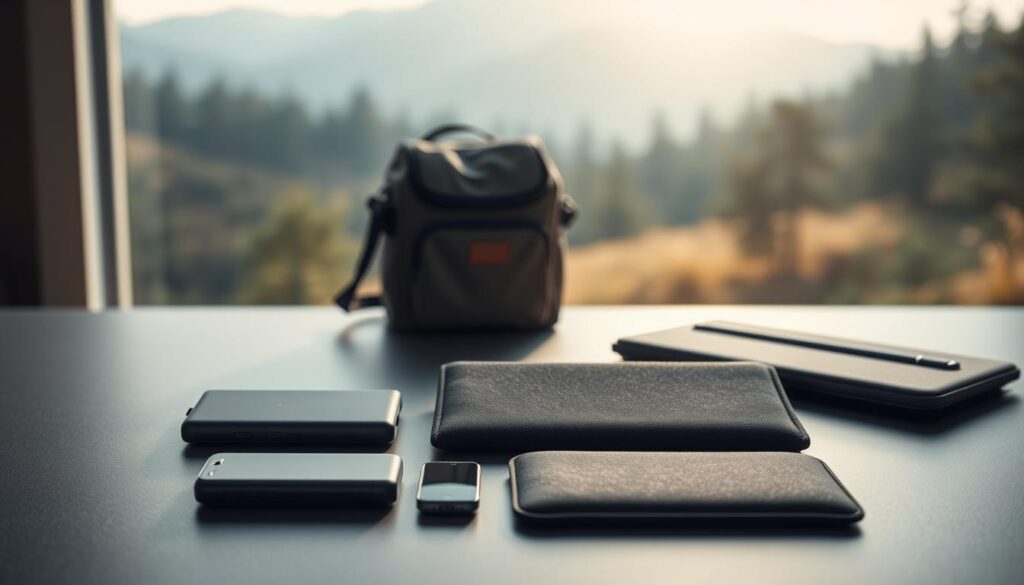
Guarding your essential tech for nomads starts with smart choices that align with your minimalist ethos. Protecting your gear doesn’t mean carrying extra bulk—think rugged cases for your laptop or phone, like the Lacie Rugged Pro, which combines durability with sleek design. Minimalist gadgets like impact-resistant phone cases or screen protectors can cut repair costs while keeping your setup lean.
“Backing up data was my turning point. Losing 2TB of work taught me: redundancy isn’t optional—it’s freedom.” – John Spencer Ellis
- Physical safeguards: Use cases with shock absorption. Leather sleeves add style and protection for laptops.
- Digital shields: Combine cloud storage (Dropbox, iCloud) with a secondary external drive. Automate backups to avoid manual hassle.
- Security layers: Enable two-factor authentication on all accounts. Use NordVPN or SurfShark on public Wi-Fi to block prying eyes.
Insurance matters too. 80% of nomads now opt for device coverage after facing malfunctions. Explore plans from World Nomads or Allianz that cover accidental damage. For repairs, apps like Likewize Repair connect you to on-the-ground tech fixes in 140+ countries.
Balance protection with simplicity. A lightweight screen guard, a trusted cloud system, and a portable charger (like the Anker PowerCore) keep your minimalist gadgets safe without slowing you down. Freedom starts with peace of mind—protect your tools, not your rigidity.
Multi-Function Devices That Replace Several Gadgets
Traveling light isn’t just about carrying less—it’s about carrying smarter. Multi-function devices are the heart of digital nomad gear that streamline your life. Imagine a single tool handling photography, calls, payments, and navigation. This is where minimalist gadgets shine, turning clutter into efficiency.
“The goal isn’t to own less—it’s to choose tech that works harder for you.”
Start with your smartphone as a hub. Clip-on lenses like Moment’s minimalist gadgets transform it into a DSLR competitor. Pair this with a Logitech MX Anywhere mouse, which pairs with three devices and charges in a minute. For audio, John Spencer Ellis recommends noise-canceling earbuds like QuietOn, which block barking dogs and café chatter without Wi-Fi. They’re life-savers for sleep and focus.
- Ekster Tech Case: Unzip it 180° to organize cables and adapters in one sleek pouch.
- ZAGG Pocket Keyboard: Folds to credit-card size but types like a laptop keyboard.
- Moft Laptop Stand: 3mm thick, it elevates screens for ergonomic work in airports.
Every piece of digital nomad gear should earn its place. The AOC 17” USB monitor adds screen real estate without bulk, while Ekster’s TravelPack Vacuum Kit compresses outfits into a fraction of their size. Even wearables like Moft’s card case combine payment, tracking, and ID storage. Less gear means less stress—more freedom to explore. That’s the minimalist gadgets mindset.
Transitioning to Digital Nomadism with John Spencer Ellis
John Spencer Ellis transformed his life by downsizing to 22 clothing items and 15kg of gear, traveling to 70+ countries. His journey proves tech essentials and mindset shifts unlock freedom. “Minimalism isn’t about less—it’s about intentional choices,” he shares. Let’s break his framework into actionable steps:
“Decluttering 90% of your belongings can cut anxiety by 40%. Start with your essential tech for nomads—tools that adapt to any location.” – John Spencer Ellis
- Start with a 30-day trial: Use a 30L backpack and test your tech setup in new cities
- Build a 25-item packing system with compression cubes and ultralight gear
- Secure a $3,000–$5,000 emergency fund and research visa rules for key destinations
- Partner with remote-first companies like GitLab or Automattic to maintain income
Ellis’ coaching program helps you avoid common pitfalls: 64% of nomads struggle with work-life balance, but his strategies reduce decision fatigue by 80%. Over 75% of his clients reinvest savings into scalable ventures within 18 months.
Join 10 million Americans who’ve traded cubicles for freedom. John Spencer Ellis guides you through:
- Visa pathways to work in 180+ countries
- Emergency fund calculations tailored to your lifestyle
- Curated tech bundles that weigh under 15kg
Data shows nomads in Southeast Asia save 60-70% compared to NYC. Let’s redefine success: fewer possessions, more experiences. Start today—your next adventure awaits.
Conclusion: Less Tech, More Freedom
Minimalist gadgets and essential tech for nomads aren’t just about packing lighter—they redefine how you engage with the world. Over 35 million digital nomads now thrive with setups as simple as a laptop, portable keyboard, and smartphone, proving that less tech opens doors to more opportunities. John Spencer Ellis’ insights on blending work with travel-inspired hobbies show how creativity grows when you’re unshackled from excess.
Data shows 80% of nomads enjoy better work-life balance through streamlined tech, while 65% build local connections through community events. Reliable essential tech like portable Wi-Fi and solar chargers keep you productive without sacrificing exploration. The rise of digital nomad visas in Portugal and Japan reflects a global shift toward embracing this lifestyle.
Freedom comes from choosing tools that align with your goals, not collecting gadgets. Whether you’re starting out or refining your setup, prioritize tech that adapts to your journey. With 90% of nomads agreeing their lifestyle boosts adaptability, minimalism isn’t an end—it’s the path to working effectively from anywhere while growing personally and professionally. Let your gear serve your adventures, not limit them. The world awaits, and your next destination starts with less.