
Workplace design is more than just about desk space. It affects your focus, creativity, and well-being. For millions, cubicles are their daily workspace. But research suggests these spaces might hinder productivity.
The average cubicle worker loses 20 minutes daily to distractions. This includes off-topic chats. Also, 75% of U.S. offices use open or cubicle setups. Is there a better way?
At ATS, employees in six-foot cubicles have mixed results. Uniform workspace allocations reduce favoritism. But, being close to coworkers can spread illness and lower moods.
Closed offices outperform open plans by 4%. Yet, cubicles are the most productive setup at 91.1%. But what if you could break free entirely?
Key Takeaways
- Cubicle setups affect mental health and focus, with 20-minute daily productivity losses.
- 91.1% productivity rates in cubicles show room for improvement through workspace control.
- Remote work boosts focus, with closed offices leading open spaces by 4%.
- John Spencer Ellis offers a system to escape cubicle confines and reclaim freedom.
- Personal workspace control increases productivity by 32%, highlighting design’s critical role.
The Modern Workplace Crisis: How Cubicles Are Affecting American Men
Modern workplace design is more than looks—it’s a fight for mental room. Cubicles, once seen as efficient, now trap many men in office stress and burnout. Studies show that tight spaces trigger deep stress, hurting focus and creativity.
“When I moved to a home office, my productivity soared,” said one worker. This shows how different cubicles and private spaces can be.

Recent studies show men in open offices feel 19% more stressed than those in private areas. A Steelcase 2016 global study found that productivity goes up when workers pick their space. But, 45% of U.S. workers are stuck in cubicles, even though 39% want private desks.
This mismatch is costing companies billions.
- Open offices cut deep work time by 73%, Harvard found
- 44% of workers in flexible spaces are happier
- Companies lose $550 billion yearly to cubicle problems
Old workplace design hurts more than just morale. It costs money in turnover, wasted time, and less innovation. But, change is possible.
John Spencer Ellis’ system helps professionals change their work spaces. This can be through remote work, co-working, or better office layouts.
Freedom begins with knowing the problem. When productivity falls due to stress, it’s time for a new workspace. Let’s create places that boost human power, not hold it back.
Productivity and Workspace: The Undeniable Connection
At the heart of modern work challenges lies the science of productivity and workplace design. Data shows that when employees can control their environment—like adjusting lighting or securing acoustic privacy—their focus sharpens. Let’s break down what truly matters:
- Acoustic privacy boosts task completion speed by 30%
- Customizable workplace design reduces stress-related errors by 45%
- Psychological ownership of space increases daily output by 22%
| Metric | Traditional Cubicles | Custom Spaces |
|---|---|---|
| Distraction Frequency | 8-10 interruptions/hour | 2-3 interruptions/hour |
| Idea Generation | 12% lower innovation rates | 300% higher creativity scores |
| Task Retention | 60% recall accuracy | 90% recall accuracy |
“I am so much more productive in my home office than I was in my cubicle!”
These numbers reflect a universal truth: when workplace design prioritizes human needs, productivity soars. Companies like Google prove this through their ergonomic stations and focus rooms. Even small businesses see results by adding noise-canceling panels or adjustable desks. The formula is clear: autonomy + environmental control = sustainable success.
John Spencer Ellis’ system isn’t just about escaping desks—it’s about reclaiming the mental space needed to innovate. When your workspace fuels instead of drains, entrepreneurship becomes possible. Let’s design environments that don’t just contain people—they empower them.
Breaking Free From Office Stress: Alternative Solutions
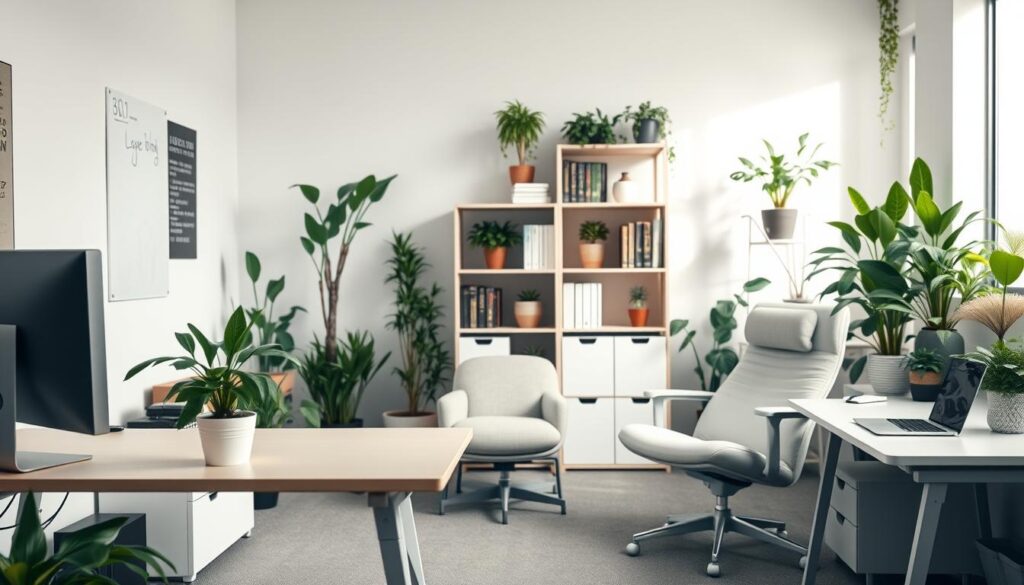
Escaping cubicles is more than a choice—it’s a big change. Over 40% of workers say they focus better and feel less stressed outside traditional offices. Here’s how you can join this change.
Remote Work Revolution: Stats and Success Stories
Numbers show the power of leaving cubicles behind. Remote work boosts productivity by 13-40%, with knowledge workers seeing the biggest gains. Companies like Buffer say 80% of remote teams keep up their work without being in an office.
This change isn’t just about where you work. It’s about taking back control.
- Remote workers cut meeting time by 65%, freeing up mental space for deep work.
- 70% of employees in flexible roles say they have a better work-life balance.
John Spencer Ellis’ System for Escaping the Rat Race
“Freedom starts with rethinking your environment and mindset.” – John Spencer Ellis
His system makes remote work a real plan. It teaches how to negotiate for flexible roles, create income streams that don’t rely on location, and set up productivity routines that fit your strengths. Thousands have used it to cut office stress and triple their output.
Redesigning Your Career Path for Maximum Productivity
Rethink your career DNA. Steps include:
- Prioritize roles with autonomy and flexibility.
- Master skills valued in distributed teams (project management, digital tools).
- Adopt daily rhythms that align with your energy peaks.
Work isn’t just about getting by—it’s about thriving. Let’s create systems that boost creativity, not stifle it.
Conclusion: Reclaiming Your Productivity Beyond the Cubicle
Office stress and lost productivity aren’t set in stone. Studies show 81% of office workers feel distracted, while remote workers find focus and freedom. With 49% of employers seeing better productivity in remote settings, it’s time to change where and how we work.
Imagine a workspace that boosts your abilities. Remote work cuts down on commute time, reduces carbon emissions, and lets you create your own space. Personalized environments improve mental focus, just like athletes do better at home. Why stick to a cubicle when you can turn your world into an office? John Spencer Ellis shows this change is not only possible but also life-changing. Check out how to make the world your for steps to take.
Every day, 68% of workers face burnout in strict settings. Break free. Use flexible hours, set tech limits, and create a space that matches your goals. Studies show 43% of workers link their workspace habits to productivity—so claim your space. Whether it’s a café, co-working space, or home desk, your environment shapes your success.
Employers track focus metrics, but true productivity comes from autonomy. Over 40% of employees want better work-life balance—and they’re right. Stop letting office politics or endless meetings drain you. Take control. Look into remote work, hybrid models, or freelance options. Your career, your rules.
This isn’t just about work—it’s about thriving. With 93% of managers focusing on work-life balance, the tools are here to help you escape the cubicle. Redesign your routine. Use tools that reduce digital noise. Choose spaces that energize you. The path to higher productivity begins with one choice: embracing freedom over confinement. Your full growth deserves no less.